
Here we go again. There are times I almost feel repetitive, bringing the same horse back for another post-mortem beating, but the problem is there’s always some new voice between me and the glue factory. Speaking of beatings, check out that metaphor!
Our latest voice in the “superhero fatigue” movement is Variety contributor Owen Gleiberman and his article, “Why The Fall Of Comic Book Movie Culture Is Inevitable“. The URL drops the names Superman, Batman, and Deadpool for the search engines. I just stick with the title and put names in tags, but they’re the big name website and industry trade publication and I’m the blogger. What do I know? I know he’s wrong in some of his theories in this article, that’s what I know. Variety is part of the Hollywood machine and the elitists still look down on geek culture even while the businessmen see dollar signs because untapped markets equal money. There are those in the entertainment machine who look down on superheroes and comic books…and sadly too many of them are currently making superhero movies.
Admittedly, I actually do think Gleiberman makes some good points or I wouldn’t even bother doing another of these. At this point I’ve gotten sick of trying to explain why a bunch of elitist snobs are wrong about superheroes and totally ignoring their own biases against superheroes, science fiction, fantasy, and other things people like me enjoy–but I’ll totally admit my own biases. I just posted a Christmas superhero minicomic for kids and today I reviewed a comic featuring genetically altered amphibians who are really good at martial arts. Pretty sure I can’t hide that bias, but I’m willing to admit it while still being objective enough that I can tell a lot of this is the “cool kids” trying to speak the end of superheroes into existence. Gleiberman doesn’t come off as that far, but he is part of the Hollywood system, so he’s not without suspicion. Still, let’s see what he actually says, what he got right, and what he got wrong. That’s what I do around here.
Comic-book movie culture didn’t just stumble this year. It face-planted, giving us one movie after another that fans didn’t much care about and that the corporations backing these films took a disquieting loss on. And that’s not how it was supposed to go. According to the Gospel of 21st-Century Hollywood, the words “comic-book film” and “box-office disappointment” are not supposed to appear in the same sentence. When they do, not just once but over and over and over again, the tea leaves are telling us something ominous and maybe definitive.
Will they learn their lesson? I doubt it. They’re still listening to the wrong “experts” when it comes to any creative product right now, which is why I see more praise for movies coming from smaller companies like A24 than I do the corporate giants that seem to be merging into one superstudio that can’t actually make anything super.
Why, in 2023, did this happen? The analysis that has mostly been offered is simple: The movie companies served up mediocre superhero product. That’s why they — and we — suffered. If it had just been one or two duds, the situation might have been explained away. But when you think back on Ant-Man and the Wasp: Quantumania and Shazam! Fury of the Gods and The Flash and The Marvels and Aquaman and the Lost Kingdom, the pattern is clear. It’s not simply a Marvel thing or a DC thing. The primal thrill and popularity of comic-book movie culture took a major hit, and it may be fading away. And yet…
In the very drubbing these movies received, at the box office and in the drumbeat snark of critical reviews, you might say there’s hope. Comic-book movie culture is, after all, only as good as the movies it gives us. And this was the year that the corporations — let’s name names: Disney and Warner Bros. — failed. They made bad movies. What if they’d made good movies?
Warner Brothers has oddly not been good at handling other people’s properties even when they were making good movies on their own. Atari was ruined under their ownership while DC only started to fail when it failed to get people in there who cared about comics and the DC Universe. As for Disney, Marvel was doing better when Paramount was distributing their movies and only bought the comics because the movies were doing so good…then stopped doing the things that made the movies so good while the comics were allowed to fall further into darkness.
The temptation to point a finger at the producers and executives and vilify them for their shoddy product has always been there. But now it’s part of the new couch-potato rebel culture. Critics, on their reflexive high horse, mostly hate comic-book movies, and more and more they have used their reviews of them to chastise The Man. The fans would seem to be on the other side of the fence, but they have their own collective resentments and rebel fire. This year, the critics and the Comic-Con horde stood shoulder to shoulder, joining forces to look the suits in the eye and say, “You did this to us! We’re bored as hell, and we’re not going to take it anymore.”

Remember when lines that that were cringe feminist pandering?
Mild correction here. We don’t hate comic book movies, we hate the comic book movies currently being produced. Unless you mean the Hollywood system elitist critics and not the fan critics who actually care about this material. Previous Superman and Batman versions get a lot of praise. The best Batman movie to many fans in my circles is Mask Of The Phantasm, the animated movie based on the TV series at the time, created by people who cared about Batman. Marvel Studio producers are stating they don’t want to hire anyone who knows about the comics while director Taika Waititi just came out stating he hated the Thor comics and yet still did the movie because he needed the money, but did his version rather than try to understand the characters. The near-parody treatment of the material is so bad Chris Hemsworth doesn’t want to return to the role if he makes the next movie.
All that said, there’s a larger reality about comic-book movie culture that we tend to ignore. [I’ve said that about entertainment news sources concerning ANYTHING comics since before I had a site–SWT] So let’s state it outright: This @#$#@ is starting to fail because it is spent. Because it’s been used up. I’m not just talking about Ant-Man or the Flash. I’m talking about the characters who got us in the door in the first place, the iconic larger-than-life ones: Superman, Batman, Spider-Man, Wonder Woman, Captain America, Thor, The Hulk, Black Panther. They were the mythic engine of this thing, and for a good long stretch we didn’t just want to see them onscreen — we craved it. We needed them to be our gods again. And they were…until they weren’t. Memo to James Gunn: Gods have a way of losing power when you stick them in reruns.
He’s right, and not right. Every character mentioned here has had numerous live action and animated appearances over the years, and all of them date back decades, four of them even dating back to the second World War. (Technically the first Flash was Jay Garrick, not Barry Allen.) Why are we sick of them now? Because they’re not getting good stories. They’re in the hands of creators practically forced to use these characters. Even the good directors and screenwriters fail because they don’t care about what they’re doing, while the bad creators are there to check a box to get into the Oscars regardless of talent levels. Doing a Home Alone sequel with Rob Zombie at the helm is a bad idea. Being good at one thing doesn’t mean being good at everything. Even Bo Jackson knew not to take up men’s figure skating. I’m going to cut a few things out, but that’s why I linked to the article at the start of this commentary, so you can confirm I’m not ruining the context. I’m just not going to put the whole article here because that’s not fair to them.
In the old days (i.e., the first 90 years of Hollywood, up to and including the Lucas/Spielberg revolution), movies were made the old-fashioned way. They were imagined, usually out of whole cloth. Sure, there were sequels and remakes, there were literary adaptations highbrow and low, and “Star Wars,” in 1977, riffed on the pulp sci-fi serials of the ’40s and ’50s (though the vast majority of the audience for George Lucas’s film had never seen those serials). So yes, Hollywood has always been a great big recycling machine.
But there’s a difference between imitation and IP. In 1978, when Hollywood gave us “Superman,” it was pinging off a magical comic-book character who sprung deep from the well of American pop identity. Who didn’t love Superman? And 11 years later, when Tim Burton’s “Batman” premiered (producing the real sea change in the industry — I’ll never forget the franchise frenzy that blanketed theaters the day that movie opened), it was like a deliverance. Unlike “Star Wars,” the Batman pedigree already occupied a place deep in the hearts of moviegoers. It spoke to comic-book fans, to everyone who’d grown up with the late-’60s TV series (still the greatest thing ever, by the way), not to mention the “Dark Knight” and “Killing Joke” graphic-novel generation. You could certainly say that Burton delivered — in the gothic Wagnerian sweep, the palm-buzzer demonism of Jack Nicholson’s performance. But in another sense you could say that the 1989 “Batman” was born on home plate and everyone in Hollywood thought it was a home run.
That’s because Richard Donner and Tim Burton cared about the characters they were doing, or at least their interpretation. I can nitpick Donner’s movies a bit and Burton’s a lot (especially Batman Returns) but there was an understanding about the core of the characters (besides kill-happy Batman) and what they stood for in the culture and mythology of superheroes. You don’t have that now. Matt Reeves and Todd Philips don’t care about the multiversal continuity, and Zac Snyder doesn’t realise he makes fantasy worlds for a living. They care about their type of story and curse you for not sharing their vision.
I sound like I’m shortchanging the awesome craftmanship that goes into a movie like “Batman,” or that has gone into so many of the Marvel and DC films. I am not. I have great respect for that craft, sometimes a reverence for it, to the point that I’ve given a passing grade to more than my share of the comic-book movies (like “Captain Marvel” or “The Expendables”) that Critics Weren’t Supposed to Like. But here’s the real point. The mass attachment to comic-book movie culture has always been steeped in our connection to its most legendary characters. They were the pure-cut cocaine of all IP. And for a while that created a fantasy moviegoing high.
I may be an amateur (professionals get paid) but even I know you’re supposed to put movie titles in italics, not quotation marks. I fixed it the first time but I have enough trouble editing MY writing. I shouldn’t have to fix theirs when they’re supposed to actually have an editor! Also, why the dash between comic and book? Back on topic, we fans still have that connection. It’s the creators who don’t bother putting the same effort Harve Bennett did with Star Trek and do the research to create something that delights fans as well as the casual movie viewer. Compare that to today, when the creators behind superhero and fantasy adaptations show an outright hostility to the source material and its fanbase. They just want the brand…while flipping off the fans that made the brand profitable enough to adapt.
Here and there, the films may continue to do that. I adored “The Batman” — though tellingly, even though it was a great movie that became a huge hit, it seemed to have no cultural impact. And “Spider-Man: No Way Home,” as much as I hated it, demonstrated the sheer power of that character, the more of them on screen the better.
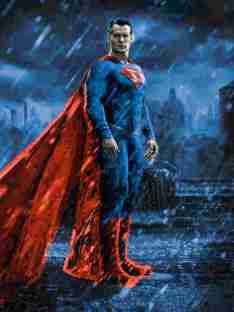
Bright colors and happy things are Zac Snyder’s Kryptonite. Pretty sure he’s actually Murky Dismal in disguise.
I have seen neither film. Just from trailers I could tell Reeves was not telling the tale of the Batman that I grew up with in multiple iterations, while turning the Riddler into the typical “exposing evil by being evil” serial killer cult leader that Edward Nigma most definitely was not. As far as Spider-Man, Sony was worried that the MCU appearances would hurt the brand and part of their deal with Disney’s Marvel was to strip as much iconography out as they could, which showed in Spider-Man: Homecoming, which I didn’t care for. I still have to see the first Spiderverse movie, but he does praise the first one as well as the Deadpool movies. I don’t even like Deadpool the comic character.
So no, comic-book movie culture isn’t on life support…yet. Bob Iger, the CEO of Disney, was certainly right when he acknowledged — in an act of damage control — that the MCU had spread itself too thin, diluting its appeal with spin-off TV series and a general sense of the multiverse as something that was becoming homework even for fans.
Why was it? I didn’t watch any of the Thor movies because I only have slightly more interest in the character than the director but I didn’t need to know what the tesseract was when I saw the first Avengers movie, or the details of the Slovakian Protocols when I watched later Avenger movies despite having no interest in anything with “Marvel” and “Civil War”. Thanks to the comics Marvel could do a story about the battle of Gettysburg and I wouldn’t care. Just like the comics, you shouldn’t have to watch everything but there’s a reward if you at least saw what was being referenced. And it’s not like non-superhero shows have had that problem. The NCIS and Law & Order franchises doesn’t require you to watch every show, and they do the occasional crossover from cameos to multipart stories requiring every episode. I don’t think you need NCIS: Los Angeles to enjoy the new NCIS: Sydney. Both franchises and others like CSI put out new stories weekly, not just one series at a time and a few movies over the year. They have no problem keeping their shows separate but in the same universe. A shared universe isn’t a requirement to see ALL the stories any more than it is in the real world to follow every person in your workplace.
[ADDING A DAY LATER: the Law & Order franchise has done crossovers not only with other shows in the franchise, which includes international spinoffs like the UK series, but with other franchises hosted by NBC, like Chicago PD and spin-offs, while character John Munch has even shown up in shows outside the NBC family like The X-Files. Nobody insists you know who Mulder & Scully are to enjoy Law & Order: Criminal Intent.]
Yet what’s the solution? There’s no real way to put the genie of too-much-product overkill back in the bottle. Because the only way to “solve” that problem is with more product. James Gunn, in his role as the executive guru (along with Peter Safran) of DC Studios, now ready to wipe the slate clean and launch a new universe of DC storytelling, wants to fix it all with quality control. He’s basically saying, “@#$#% those Zack Snyder movies. My Superman will be boss!” Yes, except that his Superman is going to feel like it’s about the 12th Superman.
Now we’re talking about something somewhat different: diluting the character with vastly different interpretations. I grew up with reruns and brand new Superman stories from comics, cartoons, live-action TV, live-action movies, and books. Each continuity was different but the character himself didn’t change all that much. There were only slight alterations between the Christopher Reeve Superman, George Reeves Superman, Danny Dark Superman, two of the three DIFFERENT Bud Coyer Supermans (Supermen?) since I didn’t get to the radio dramas until way later, and the Kirk Ayan Superman, but each of them still felt like Superman. Compare that to the recent takes that seem so different between the DCEU, CW, and Adult Swim takes plus the direct-to-video movies and video games. They’re not only different from each other but from the comics, aka the source material. They don’t at all feel like the same character. They don’t even have the same costume designs. At best they share powers…and I can find you five people in the DC universe that shares at least some if not all of Superman’s powers without touching another Kryptonian. That’s on Warner Brothers for not giving a damn.
The executives, sitting in their Death Star suites, were full of excuses this year. “The movie got rushed into production.” “We overextended ourselves.” And no one can blame them for the personal and legal implosion of Jonathan Majors. At the same time, the critical-rebel establishment, speaking more than ever for fans, saw blood in the water, and with it the opportunity to help kill off the comic-book movie culture it has come to regard as an existential threat to cinema.
It’s not the “critic-rebel establishment” trying to kill off comic book movies, or more accurately superhero movies, but the elisist Hollywood establishment. The rest of us want them to fix their mistakes and start caring about what they’re putting out.
But if that culture is now entering the early stages of its death throes, it will actually be for an honorable reason. Comic-book movies were never going to die because an “Ant-Man” or “Captain Marvel” sequel was bad. The only reason they were going to die is that they had served their purpose. They made us dream of men and women in capes who could fly and who seemed indestructible, because all of that made us feel good. But then it stopped making us feel so good, because we had already been there and dreamed that. And it was time, perhaps, to get back to reality.
And there it is: “get back to reality”. Reality, or rather the cynical “reality”, has been part of the problem. It works for The Boys because that’s what that particular franchise is based on, and the same goes for Watchmen. It’s not what the DC heroes were based on while Marvel was supposed to be relatable but still fantastic. Marvel heroes worry about the rent, dating, cancer, and the strains of the superhero life, but still has Death as a living being…pardon the expression…that Thanos wants to get nasty with and Deadpool has despite her having a skull for a face half the time and mild looks the other half. It still has people with powers real world science insists are impossible like the DC Universe, which until the reign of DiDio was more focused on the fantasy Glieberman is talking about, and only shared the humorous moments of life except when they could find some good drama or send a message without the force of a sledgehammer. If anything, superhero movies and shows are trying too hard to be reality, or at least a cynical, surface level understanding of “reality” and that’s why the appeal is going away. We STILL want “men and women in capes who could fly and who seemed indestructible”, which is not what we get. We get brooding jerks in dark colors who let their loved ones inhabit still living people, terrible fathers if they’re around at all, and killers calling themselves heroes.
Get some bright colors, gain some understanding of the characters by reading GOOD superhero comic stories. Fans can point you to the best Batman stories NOT written by Frank Miller. Let us live in a #$%$#% fantasy world. Make us come out of the theater or living room feeling happy, good about life and our fellow man, and having a sense of catharsis about a world where things make sense, with the heroes and villains clearly defined in ways we can agree with them even if we disagree with some of their perspectives on humanity, and find common ground in superheroes who lift us to the skies, who try to make us better than we are rather than us bringing them down to be as bad as we are. That’s not happening and THAT’S why superheroes are failing.
Tell others about the Spotlight:
Related
 The Clutter Reports (my other site)



 BW Media Spotlight
Here we go again. There are times I almost feel repetitive, bringing the same horse back for another post-mortem beating, but the problem is there’s always some new voice between me and the glue factory. Speaking of beatings, check out that metaphor!
Our latest voice in the “superhero fatigue” movement is Variety contributor Owen Gleiberman and his article, “Why The Fall Of Comic Book Movie Culture Is Inevitable“. The URL drops the names Superman, Batman, and Deadpool for the search engines. I just stick with the title and put names in tags, but they’re the big name website and industry trade publication and I’m the blogger. What do I know? I know he’s wrong in some of his theories in this article, that’s what I know. Variety is part of the Hollywood machine and the elitists still look down on geek culture even while the businessmen see dollar signs because untapped markets equal money. There are those in the entertainment machine who look down on superheroes and comic books…and sadly too many of them are currently making superhero movies.
Admittedly, I actually do think Gleiberman makes some good points or I wouldn’t even bother doing another of these. At this point I’ve gotten sick of trying to explain why a bunch of elitist snobs are wrong about superheroes and totally ignoring their own biases against superheroes, science fiction, fantasy, and other things people like me enjoy–but I’ll totally admit my own biases. I just posted a Christmas superhero minicomic for kids and today I reviewed a comic featuring genetically altered amphibians who are really good at martial arts. Pretty sure I can’t hide that bias, but I’m willing to admit it while still being objective enough that I can tell a lot of this is the “cool kids” trying to speak the end of superheroes into existence. Gleiberman doesn’t come off as that far, but he is part of the Hollywood system, so he’s not without suspicion. Still, let’s see what he actually says, what he got right, and what he got wrong. That’s what I do around here.
Will they learn their lesson? I doubt it. They’re still listening to the wrong “experts” when it comes to any creative product right now, which is why I see more praise for movies coming from smaller companies like A24 than I do the corporate giants that seem to be merging into one superstudio that can’t actually make anything super.
Warner Brothers has oddly not been good at handling other people’s properties even when they were making good movies on their own. Atari was ruined under their ownership while DC only started to fail when it failed to get people in there who cared about comics and the DC Universe. As for Disney, Marvel was doing better when Paramount was distributing their movies and only bought the comics because the movies were doing so good…then stopped doing the things that made the movies so good while the comics were allowed to fall further into darkness.
Remember when lines that that were cringe feminist pandering?
Mild correction here. We don’t hate comic book movies, we hate the comic book movies currently being produced. Unless you mean the Hollywood system elitist critics and not the fan critics who actually care about this material. Previous Superman and Batman versions get a lot of praise. The best Batman movie to many fans in my circles is Mask Of The Phantasm, the animated movie based on the TV series at the time, created by people who cared about Batman. Marvel Studio producers are stating they don’t want to hire anyone who knows about the comics while director Taika Waititi just came out stating he hated the Thor comics and yet still did the movie because he needed the money, but did his version rather than try to understand the characters. The near-parody treatment of the material is so bad Chris Hemsworth doesn’t want to return to the role if he makes the next movie.
He’s right, and not right. Every character mentioned here has had numerous live action and animated appearances over the years, and all of them date back decades, four of them even dating back to the second World War. (Technically the first Flash was Jay Garrick, not Barry Allen.) Why are we sick of them now? Because they’re not getting good stories. They’re in the hands of creators practically forced to use these characters. Even the good directors and screenwriters fail because they don’t care about what they’re doing, while the bad creators are there to check a box to get into the Oscars regardless of talent levels. Doing a Home Alone sequel with Rob Zombie at the helm is a bad idea. Being good at one thing doesn’t mean being good at everything. Even Bo Jackson knew not to take up men’s figure skating. I’m going to cut a few things out, but that’s why I linked to the article at the start of this commentary, so you can confirm I’m not ruining the context. I’m just not going to put the whole article here because that’s not fair to them.
That’s because Richard Donner and Tim Burton cared about the characters they were doing, or at least their interpretation. I can nitpick Donner’s movies a bit and Burton’s a lot (especially Batman Returns) but there was an understanding about the core of the characters (besides kill-happy Batman) and what they stood for in the culture and mythology of superheroes. You don’t have that now. Matt Reeves and Todd Philips don’t care about the multiversal continuity, and Zac Snyder doesn’t realise he makes fantasy worlds for a living. They care about their type of story and curse you for not sharing their vision.
I may be an amateur (professionals get paid) but even I know you’re supposed to put movie titles in italics, not quotation marks. I fixed it the first time but I have enough trouble editing MY writing. I shouldn’t have to fix theirs when they’re supposed to actually have an editor! Also, why the dash between comic and book? Back on topic, we fans still have that connection. It’s the creators who don’t bother putting the same effort Harve Bennett did with Star Trek and do the research to create something that delights fans as well as the casual movie viewer. Compare that to today, when the creators behind superhero and fantasy adaptations show an outright hostility to the source material and its fanbase. They just want the brand…while flipping off the fans that made the brand profitable enough to adapt.
Bright colors and happy things are Zac Snyder’s Kryptonite. Pretty sure he’s actually Murky Dismal in disguise.
I have seen neither film. Just from trailers I could tell Reeves was not telling the tale of the Batman that I grew up with in multiple iterations, while turning the Riddler into the typical “exposing evil by being evil” serial killer cult leader that Edward Nigma most definitely was not. As far as Spider-Man, Sony was worried that the MCU appearances would hurt the brand and part of their deal with Disney’s Marvel was to strip as much iconography out as they could, which showed in Spider-Man: Homecoming, which I didn’t care for. I still have to see the first Spiderverse movie, but he does praise the first one as well as the Deadpool movies. I don’t even like Deadpool the comic character.
Why was it? I didn’t watch any of the Thor movies because I only have slightly more interest in the character than the director but I didn’t need to know what the tesseract was when I saw the first Avengers movie, or the details of the Slovakian Protocols when I watched later Avenger movies despite having no interest in anything with “Marvel” and “Civil War”. Thanks to the comics Marvel could do a story about the battle of Gettysburg and I wouldn’t care. Just like the comics, you shouldn’t have to watch everything but there’s a reward if you at least saw what was being referenced. And it’s not like non-superhero shows have had that problem. The NCIS and Law & Order franchises doesn’t require you to watch every show, and they do the occasional crossover from cameos to multipart stories requiring every episode. I don’t think you need NCIS: Los Angeles to enjoy the new NCIS: Sydney. Both franchises and others like CSI put out new stories weekly, not just one series at a time and a few movies over the year. They have no problem keeping their shows separate but in the same universe. A shared universe isn’t a requirement to see ALL the stories any more than it is in the real world to follow every person in your workplace.
[ADDING A DAY LATER: the Law & Order franchise has done crossovers not only with other shows in the franchise, which includes international spinoffs like the UK series, but with other franchises hosted by NBC, like Chicago PD and spin-offs, while character John Munch has even shown up in shows outside the NBC family like The X-Files. Nobody insists you know who Mulder & Scully are to enjoy Law & Order: Criminal Intent.]
Now we’re talking about something somewhat different: diluting the character with vastly different interpretations. I grew up with reruns and brand new Superman stories from comics, cartoons, live-action TV, live-action movies, and books. Each continuity was different but the character himself didn’t change all that much. There were only slight alterations between the Christopher Reeve Superman, George Reeves Superman, Danny Dark Superman, two of the three DIFFERENT Bud Coyer Supermans (Supermen?) since I didn’t get to the radio dramas until way later, and the Kirk Ayan Superman, but each of them still felt like Superman. Compare that to the recent takes that seem so different between the DCEU, CW, and Adult Swim takes plus the direct-to-video movies and video games. They’re not only different from each other but from the comics, aka the source material. They don’t at all feel like the same character. They don’t even have the same costume designs. At best they share powers…and I can find you five people in the DC universe that shares at least some if not all of Superman’s powers without touching another Kryptonian. That’s on Warner Brothers for not giving a damn.
It’s not the “critic-rebel establishment” trying to kill off comic book movies, or more accurately superhero movies, but the elisist Hollywood establishment. The rest of us want them to fix their mistakes and start caring about what they’re putting out.
And there it is: “get back to reality”. Reality, or rather the cynical “reality”, has been part of the problem. It works for The Boys because that’s what that particular franchise is based on, and the same goes for Watchmen. It’s not what the DC heroes were based on while Marvel was supposed to be relatable but still fantastic. Marvel heroes worry about the rent, dating, cancer, and the strains of the superhero life, but still has Death as a living being…pardon the expression…that Thanos wants to get nasty with and Deadpool has despite her having a skull for a face half the time and mild looks the other half. It still has people with powers real world science insists are impossible like the DC Universe, which until the reign of DiDio was more focused on the fantasy Glieberman is talking about, and only shared the humorous moments of life except when they could find some good drama or send a message without the force of a sledgehammer. If anything, superhero movies and shows are trying too hard to be reality, or at least a cynical, surface level understanding of “reality” and that’s why the appeal is going away. We STILL want “men and women in capes who could fly and who seemed indestructible”, which is not what we get. We get brooding jerks in dark colors who let their loved ones inhabit still living people, terrible fathers if they’re around at all, and killers calling themselves heroes.
Get some bright colors, gain some understanding of the characters by reading GOOD superhero comic stories. Fans can point you to the best Batman stories NOT written by Frank Miller. Let us live in a #$%$#% fantasy world. Make us come out of the theater or living room feeling happy, good about life and our fellow man, and having a sense of catharsis about a world where things make sense, with the heroes and villains clearly defined in ways we can agree with them even if we disagree with some of their perspectives on humanity, and find common ground in superheroes who lift us to the skies, who try to make us better than we are rather than us bringing them down to be as bad as we are. That’s not happening and THAT’S why superheroes are failing.
Rate this:
Tell others about the Spotlight:
Related
Posted by ShadowWing Tronix on January 2, 2024 in DC Spotlight, Marvel Spotlight, Movie Spotlight and tagged BW versus, commentary, DC Extended Universe, DC Universe, Marvel Cinematic Universe, movies, Variety.
Leave a comment
About ShadowWing Tronix
A would be comic writer looking to organize his living space as well as his thoughts. So I have a blog for each goal. :)