
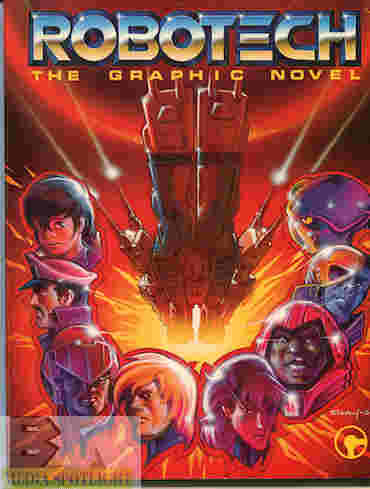
As I grew up with comics there were numerous ways to get your fix. Of course there were the comic strips, and many toys and other products might give you a free mini-comic, but the two big ones were the monthly or bimonthly periodical, often called the “floppies”, and the graphic novel, a bigger story too small to be a regular comic that would take longer to read, like a novel. The periodicals would give you a monthly (or bimonthly but I’m not writing that every time) adventure with a main plot and a running subplot, like a TV series. You’d also have the extra sized annual, one-shot, or other special. These were still quick reads and easy to bring with you. It’s now the comic book got away from the newspapers and became a format on its own.
The graphic novel was a special thing. While some were collections of longer story arcs or collecting the works of a particularly famous creator, the majority were original stories. This is where the big events happened, or a story that could focus on a character than didn’t have enough of a fan following for their own series but still had enough fans or a writer had a story they wanted to tell with that character. There were also the occasional gimmicks like alternate universes, a comic done all on computer (both Batman and Iron Man had one of these), or something along those lines. Graphic novels are not special anymore.
In a time where stories are written for the trade, it might as well be a graphic novel. Few people are writing for periodicals anymore, as I’ve lamented many times and will again. However, I’ve been thinking about how trade writing and so many trade collections coming out has basically ruined what the graphic novel was for. The nature of the graphic novel has been damaged thanks to the trade collections, and even indie publishers are guilty of this.
It was the monthly comics, the “TV show” of comics, where most of the stories happened, and it still is but it isn’t the same. The regular comics could have a done-in-one story, especially a one-shot used as a pilot or a story that didn’t fit anywhere in the main series. The graphic novel is an extension of that one-shot, a longer form story. At least that’s how it used to work. Now graphic novels are trying to be part of a larger story, artificially padded because the folks upstairs saw how trade collections were selling and didn’t get why they were special. As usual, they see money and they want more, without understanding why its making money but sure that more product means more money. That’s not always how it works, and the current state of comic sales and closing comic stores are proof of that. The single issues brought people back to the store each month for the next issue. They could meet other comic fans, and maybe they’d see something else on the shelf that they were curious about.
I’ve heard store owners for years, including stores I went to, say that the graphic novel didn’t really sell and some stores don’t even carry them. Because they’re longer stories, even original graphic novels only come out every now and then. Look at the Rippaverse. Eric July does one title plus running the company, a series of graphic novels that come out every few months. Other titles by other writers do the same thing. The Soska sisters are working on the second issue of Yaira, then it has to be drawn, colored, printed, and at each of those stages they stop to double check it’s up to desired standards before moving to the next phase. For a regular comic, roughly 20+ pages (a declining number as time has gone on), you can get an issue every one or two months. The only reason Marvel had a graphic novel each month in the 1980s was having a different team focus on a different character, and the story both started and ended in that novel. It’s a book in comic form, while the “comic book” is still more like a magazine that is just one story or sometimes two if there’s a back-up story.

It doesn’t count as a webcomic if only the character is in the internet.
Indie publishers also made single issues. When I was getting Star Power, they were six issue miniseries, later collected into a trade. Trade collections were not as demanded but the trend was starting. Eventually the creators had to keep the single issues to digital to cover costs, and the graphic novels were a collection of the webcomic and single issue computer files, a return to the collecting newspaper stories angle that comic books started with, only now with webcomics. Now it costs less to just do the graphic novel and maybe have a webcomic, as Sean Wang’s Runners does. Wang recently came off an extended break and is creating a new story, but it comes out in archives like the miniseries, with the trade collecting a particular arc. If you’re curious, I’ve reviewed both of them in various ways on this site. Just do a search.
Longtime readers may already know how I approach all these types of comics:
- Periodicals: These are the “TV shows”, as mentioned. One-shot stories with running subplots as their superhero life affects their personal life and vice versa. In non-superhero comics these are just the daily adventures or misadventures of the main characters and their supporting casts as they go through life. Either way it’s a quick read while you have a few minutes to kill. This is how comics reached their audience and what’s dying out as far as the industry goes.
- Minicomics: Quick promo for the product it came with or to promote some larger series or event. It takes less time but is a done-in-one story, with exceptions that we see in the Free Comic Inside series like the Aliens toyline minicomics or the Drakes Snack Cake Marvel miniseries. Speaking of which:
- Miniseries: The same as periodicals or a TV miniseries, with a set ending in only a few issues. It’s a longer story but not one that at current is being considered as a full series. This could be a pilot of sorts, or just a story that is longer than a full series but might be more interesting in this format than a graphic novel. Think of it like an old movie serial. The “maxiseries” is just a longer miniseries and even more like a movie serial.
- Trade Collections: A collection of comics from the others listed above. Collect all the minicomics of a beloved toyline like Masters Of The Universe. Collect a special event in the monthly ongoing, or highlight the works of a particular writer or artist. It’s also how comic strips are collected, and we should talk about the death of those sometime later.
Where does the graphic novel fit in? It’s the movie, the one big story that wouldn’t fit into the regular series for reasons I talked about earlier: the really big event, the alternate continuity, and even a flashback story that wouldn’t fit into the current ongoing series. Trade collections are essentially graphic novels, but to use the movie serial allegory again, it’s more like one of those attempts to make a movie from the multi-part serial or episodes of a TV show that never really got popular. This is what the graphic novel has become, either a trade collection or an attempt to be an ongoing series rather than the movie. The graphic novel has lost what made it special because they keep coming out, but they’re mostly trades or an ongoing series. It’s all end of the city/world/reality tales that keep going on but are harder to make a shared universe timeline out of than periodicals, miniseries, and one-shots. Where does the graphic novel stand anymore outside of the self-publishing sphere?

The original graphic novel is dying.
I’m not saying you can’t do a series of graphic novels. Back To The Future was a trilogy of movies ending in cliffhangers for the next one. However, it’s more the rule these days than the exception. Graphic novels in any form are for someone with more time to invest, or maybe not interested in a regular series but just wants an interesting story with those characters from the movie but in a different style and continuity. You could even do stories set in the movieverse apart from the main series, the alternate universe like DC’s “Elseworlds” tales. Nobody writes a graphic novel anymore among the main publishers. They write a miniseries meant to fit into the average length of a trade, meaning you either get an oddly formatted graphic novel or a monthly comic you’re going to hold for a binge anyway unless you actually talk to other people about the events of that issue. With trade waiting, you lost the money you’d get from the monthly readers and with monthly readers they aren’t buying the comic because they already own the story in smaller installments.
I have nothing against trade collections at all, when they’re done right. It’s easier to get a trade than it is to track down every issue of a major storyline or miniseries, and you can see a grouping of stories you hadn’t before by a celebrated artist, art team, or writer. They have their place, but they’re even less special than the original graphic novel because they’re all over the place. They’re no longer a special collection. It’s just a different way to get the same story. I keep getting reminded of that firework show on the lake that never seemed to end. Eventually the pretty explosions get boring, and pretty explosions should NEVER BE BORING!!!!! That’s kind of the trade collection right now. It’s not a special collection, it’s just a different format of a story over-padded specifically to fit the trade when it should have just been retooled into an original graphic novel and let the monthly story tell a new story each month.
The graphic novel is no longer what it used to be, and as we mourn the slow death of the 20+ page floppy periodical let’s not forget that when everything is a graphic novel, the graphic novel is no longer as cool as it used to be. Rarity makes things special. That’s why something wrapped in gold foil is more exciting than something wrapped in tin foil. There’s a lot of tin foil on the shelves right now.


 BW Media Spotlight
[…] How Trade Writing Has Ruined The Graphic Novel: While we talk about how writing for the trades have hurt the monthly “floppies”, we don’t talk enough about how trade collections and writing for that format has hurt the original graphic novel as well. […]
LikeLike
[…] from now on had to be collectable as a trade. I’ve discussed before how that essentially killed the original graphic novel, but it also ruined the monthly comics, which people bought to pass time and wanted a quick read on […]
LikeLike