
Since September of 2024 we’ve been looking at the original sales pitch and the third revision writer’s guide for the original Star Trek series. I’ve gone from wanting to do another writer’s guide/story bible to being read to take a break from it. It’s just a long time, even at an article a week, to go through, but it’s never been boring or annoying. Whether it’s fan trivia, lessons for writers, or both, they’re both worth reading. Here’s when I got my copy and there’s more where that came from. Just not for a while. Maybe in the spring or something.
I also couldn’t just copy/paste the text from the PDF like I have prior story bibles and writer’s guides. The file there was a photocopy, meaning the text is part of the image, so I had to write everything out. I put together a good system for doing that fairly quick, but it still takes time and I had to make sure any typos were on their side, not mine. Although there weren’t even close to the number of typos of the last series I did this with, Transformers: Beast Machines.
So with all that under my wing, let’s take a short look back at what we can get out of reading the sales pitch and writer’s guide for Star Trek not only when it comes to making good Star Trek but in stories in general. What did we learn about making Trek, making sci-fi, and making good stories? If you want the deep dive…where have you been since September? Well, here’s the list from the start. You might enjoy it, but this is just the highlights.
The Pitch
When I did the story bible for Star Trek: The Next Generation, I didn’t get to see the pitch to…I would imagine Paramount at that point since they dropped it into syndication. The only pitch I’ve gotten to read was for ThunderCats so I was really interested in looking at the original ideas for Star Trek after seeing all the differences there. The sales pitch is the basic concept, sent to the network or the distributor (I still don’t know if this was made for CBS or Desilu, who would sell it to Paramount when Lucille Ball got out of the production side of television) with their intent. That doesn’t mean the end product will necessarily match up.
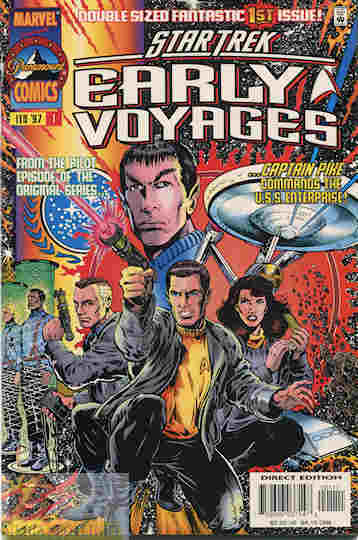
It wouldn’t have here. Instead of the USS Enterprise under either Captain James T. Kirk or Captain Christopher Pike, we might have had the SS Yorktown under Captain Robert April. Spock could have been a Martian instead of a Vulcan and been more Satanic than pointy ears. Of course the suggested cast was closer to Pike’s crew since there wouldn’t have been a pilot to heavily alter. Number One and Doctor Boyce (who would have had the “Bones” nickname) were still present, Mia Colt would have blonde instead of the cute redhead from the first pilot, and Jose Ortega I’ve only seen in the Early Voyages comic from the Paramount Comics run, the superior “Pike years” series.
The pitch also contained an idea of what sets the production company would have to pay to have built. This gives the money people how much it will cost, letting them decide from the rest if they thought they’d get their money back plus profit. They aren’t in it for the creativity, but at least they used to understand how that worked. Unlike today, where you practically reshoot an entire movie because nobody was looking at quality. This also included sample story ideas, some of which were made into actual episodes and one the first pilot, a few being heavily reworked, and at least one that sounded more like an episode of The Next Generation. They came prepared to show what they wanted to do, even referencing non-sci-fi shows like Gunsmoke and Dr. Kildare, both of which would also be used as examples in the writer’s guide. There was even a full cast roster, so they were ready to really make this vision happen.

The Characters
The pitch’s characters are more in line with the first pilot, despite the Captain’s name change. Robert April is still pretty close to what little we’ve seen of Captain Pike, though we never got a sense that him or Kirk was more the action type trying to fit into the diplomat role. Kirk was as capable of diplomacy as Picard was in action. They just skewed in the opposite direction until Insurrection or whatever one is was that Patrick Steward wanted a more action-oriented story so he could play John Rambo or something.
Where April was going to be the central character, the show we got went with a semi-ensemble. I say “semi” because while most of the other cast members had shining moments (Uhura would have to wait for the cartoon to really show off as the main character, but she had some highlights), the show was clearly revolving around Kirk, Spock, and McCoy. All three got their own pages while the rest of the cast (minus Chekov, who hadn’t been added yet) shared the next few, with the ladies getting one paragraph each and all the yeomans shoved into one category despite only one, Janice Rand, having any staying power. Each has a dedicated backstory, personality, and in some cases how well they interact. Even in the pitch, Captain April and the Yorktown crew had backstories and personalities, with Spock originally going to be even more alien than he turned out.

The Lore
I was surprised how many story ideas there were in the sales pitch and how many became episodes. I hadn’t seen that since I looked at the Batman: The Animated Series story bible, the first one I did and what started me on these trips through further guides. Even then, the third revision writer’s guide didn’t have any episode suggestions in it. We got characters, lore, terminology, and technology, as well as some hints of the science.
Said science was thought out, but not to the degree that they couldn’t play with it. While the franchise has become known for its technobabble, there was surprisingly little in the original series. The guide said not to focus on that because consultants would work something out for a later draft of the script, using real enough science to fool the audience just enough to suspend disbelief, not to outright lie to them. Everything had an explanation but not one so focused that they would create plotholes or unintentional loopholes that would kill disbelief. They weren’t trying to create our world, but they did want you to believe in theirs and at least find parallels. A lot of that came from their approach, using non-science fiction shows as examples rather than something like Buck Rogers. Hayao Miyazaki, a noted anime director, discourages newer anime directors from watching anime, worried that they’re focus more on the “anime” than the story, and would prefer influences come from non anime sources, like classic literature and other works. The idea is that science fiction was part of the setting, not the story. That gets us to the final part:

The Approach
I don’t have to say a lot about the story format. Outside of further proof that Stardates are a load of BS meant to make it seem like the future, doing things just because its the future was the wrong approach. (And yet they had laser force fields on their brig instead of good old locks with keys so that the prisoners wouldn’t get out when the power faded, which did happen.) The focus was on people and the human condition. It’s why the guide’s examples of shows to model after wasn’t Flash Gordon and Buck Rogers, or even the less campy years of Lost In Space. The worry is that writers would focus more on science and technology rather than human stories. Nobody watched Gunsmoke and thought about how Marshall Dillon’s pistol worked, they thought about how he would keep two people from killing each other or avenging the one that died by being sure they were tried and if need be punished under the law. Watching the lives of the people of Dodge City mattered more than the technology despite being set in the past. In the same vein, don’t spend time worrying about how the phaser worked outside of being consistent through the series. Don’t tell me it can’t stun someone without killing them when we saw them do it two weeks ago.
The guide and pitch both pushed the idea of “parallel worlds”, planets developing close enough to us to be recognizable and understandable to audiences while being different enough that commentary could be snuck in around the writing. Not that Star Trek wanted you to be preached to. In fact, the guide specifically says that they didn’t want to tell you what to think, but to make you think. Unlike today where they’re more than happy to tell you want to think and how horrible you are as a human being if you don’t think like them. It’s kind of funny how The Monkees’ “Randy Scouse Git” reflects a different group than it used to. Hmmm…there’s a Sing Me A Story idea for the future.
Back on topic. Characters were flawed but the stories didn’t dwell on them. They simply were there to show they were human (or half-human), to not be perfect but to work together by combining their individual strengths and weaknesses. It made them relatable, and you wanted to see them overcome their flaws. They might still be there later, but to get past them to solve a current problem was still important. They got along except when they didn’t, but you could say that about the cast as well, as you hear stories about how they did or didn’t get along (especially William Shatner and George Takei). They weren’t stereotypes or archetypes. They were people, individuals with their individual hopes and dreams, and that made them relatable and believable.
While some of the history would have to come out, and they didn’t want writers to dwell on them too much, there was a history of the Earth, which the original series was determined not to see and we wouldn’t until The Motion Picture, that led them to this moment. The focus was on today, but could peak into the past of the characters like any other show then. We’d meet Matt Dillon’s old friends and get glimpses that he wasn’t always the strict lawman we know him as. In the same vein we learned McCoy used to be married, Kirk had a bully at Starfleet Academy, Spock has always warred with his dual heritages, and so on. Again, the only difference between this and “regular” shows was being in the future.

The Conclusion
Today’s Star Trek writers could absolutely benefit from reading this guide if they actually wanted to know why their Trek tales aren’t as well received as previous incarnation. Their approach is all wrong…but it’s exactly what they want to do. They want moments, actions, situations, preaching, representative stereotypes and archetypes–everything the original series was not. The guide actually has instructions on how to be a good writer in general and Star Trek specifically because they didn’t see this show as any different simply because of genre. The guide opens with a scenario that would be completely off in a World War II naval adventure and thus wouldn’t work in the type of stories they wanted to tell. If John Wayne isn’t kissing the WAC on his bridge as the ship is about to be sunk, Captain Kirk isn’t going to do it with a yeoman. Any other issues could be fixed in later drafts, like science and terminology issues, but they wanted to know you could write their characters and tell their stories properly without some bias about sci-fi.
Harlan Ellison, cantankerous old fogey that he was, told great stories. However, his lone Star Trek entry, “City On The Edge Of Forever”, had to be reworked because what he wanted Kirk to do wasn’t in keeping with his character. They found another way to do what Ellison was trying to do. By making Kirk allow Edith Keeler to die rather than having him kill her himself to restore the timeline and fulfil his sense of duty, it was more in keeping with who Kirk is and his feelings for Edith. Ellison hated that, but the show script editors were right. They kept things consistent but still put the characters in situations that challenged their humanity and themselves, and they overcame. This is what the guide pushed: consistency but being fiction first and science second. It was clearly the right approach as classic Trek through Deep Space Nine, the four shows and series of movies that remember that, are in turn remembered fondly while Voyager, Enterprise, later movies, and the current streaming timeline are not. If you want real Star Trek the way it was intended you watch the original and animated series, the classic movies (ignoring The Final Frontier–sorry, Bill), The Next Generation, and despite acting as a counterargument to Gene Roddenberry’s vision at times, Deep Space Nine. These were the shows that did the homework and showed their process while everything past Voyager (I hear Enterprise tried in later seasons) and especially the Bad Robot/Secret Hideout productions are clearly trying to make something else.
In the end, any writer really should look at this guide for tips on being a better writer even if you aren’t doing science fiction. It built its world but stay true to the mission, being believable without being “grounded in reality” and the cynical overtones that usually come with it. Star Trek was hopeful and optimistic, clearly wanting us to create that world as they created theirs from a worse crisis than the ones the audience had just gotten out of with The Great Depression and World War II behind them and Vietnam in their sights. And here we are in 2025, not having had our world destroyed, and in some cases arguably better stuff–and we still got to keep rock and roll, comic books, video games, and television and movies–going on about how bad things are, and how so much worse it was than WORLD WAR II IT’S RIGHT THERE IN THE NAME “HOLOCAUST” WHILE YOU ACT LIKE “NAZI” JUST MEANS “big meanie” WHEN THIS COUNTRY HAD IT WORSE. The 2020 plague has nothing on the Black Plague and other pandemics, and given how many people died from it in 2020 that should worry you. People who know what real suffering is, real sacrifice is, knew how to make Star Trek because they knew what they needed and what they wanted it to be while the “smarter than them” types have no clue. It’s popular so they must have it, like an anti-hipster five-year-old.
Writers, Star Trek or not, or people who don’t know how to do science fiction, scroll down this page and find the original series pitch and guide, and study it. Do the same with the TNG guide, and in the future I’ll go to the other classic Trek shows they have guides for. I’ll be back to this page in the future, but not for a while and when I do it won’t be Star Trek related for a while. I think I completed this mission for now.



 BW Media Spotlight