

This is not some versus article, or two creators yelling at each other. It’s just two articles that came out recently that happen to come together. I only bring up the Super Smash Brothers and Tekken franchises for an attractive title. I don’t know if these guys even talk to each other, so this is just a curiosity.
Both fighting games are beloved by fans. The Smash Bros franchise is Nintendo’s fighting game, pitting various characters they have the license for together in a series of battles. It inspired stuff like Warner Brothers’ Multiverses and other developers pitting their characters against each other in a large brawl competition. The Tekken series, on the other hand, is a more typical fighter. One on one, it features serious martial artists, a girl riding a giant panda, and everything in between. Both are different takes on the fighter genre and both are fan favorites.
Bounding Into Comics posted two articles the past two weeks by the same author who didn’t appear to make the same connection I did. However, I’m going with Google Translate translations (Firefox’s translation is still in Beta and missed a few words) of the articles Spencer Baculi was summarizing and using my own summarization because what I’m seeing are two different creators with two different approaches to how they make decisions for games, and the advice they gave on purpose or by accident to prospective game developers in how they should approach a game. I just found it interesting because they almost seem to be the opposite advice.
First up, from last week, we have Masahiro Sakurai, creator of the Kirby series as well as the Super Smash Brothers series. The CEO of Sora Co. LTD was interviewed by Entax regarding the success of his award winning YouTube channel, “Masahiro Sakurai’s Game Making” (he also has a channel with English subtitles, Masahiro Sakurai On Creating Games) and it’s here that he gives advice to future game developers. Which I’m going to have to type out because the translations won’t copy/paste, so hopefully there are no typos.
–Recently the overseas game market as been booming, mainly in China. Is there anything you think the Japanese game industry should do?
It’s not necessarily Sakurai‘s own idea (that’s how the bold comes out in the translation) but I think the trend in the game industry is that Japanese people should pursue what they like.
Sakurai A little while ago, there was a culture of making Americanized things because various works were popular in America. You could say it was leaning towards “de facto standards” (products or specifications that have become de facto standards as a result of market competition).
It’s Sakurai , but I think that overseas “Japanese game lovers” are not looking for that kind of thing, but rather for something unique and interesting about Japan. In other words, I think the ideal situation would be to make it the way you want it, and have people who can accept it enjoy it.
I think he’s spot on. There are gamers who prefer Japanese RPGs and other media because it’s so different. It offers story or gameplay that is different from games in the west. Considering how homogenized we’re becoming outside of the Asian sphere right down to our cars looking identical from multiple car companies I’m surprised that games in a particular genre have any differences. Also, the Western games seem to be falling under social pandering, stereotypes, and playing to non-gamers with false history. Assassin’s Creed: Shadows seems to go more and more out of its way to make Japan angry…and it’s working!
–Please give a message to people who are aiming to work in the game industry in the future.
Sakurai :I guess the thing I want to say most is “do what you want.” In creating various programs and channels this time, I actually think it’s not good to force my own ideas on people. What I think and what I convey is merely one way of thinking. As I say in the channel, it is made with the purpose of giving each person a chance to “wear their own boots.”
Sakurai :I think it’s important to see how people take it as a hint and what they do with hit. I hope that each person will push forward in the direction they believe in and sharpen their work in various directions. So “Let’s do our best together!” That’s it!

My money’s on Link.
Corporations want to play things too “safe”, so they don’t innovate, and they’ll shove things into games that are only there because some other game did it, whether it fits this game or not. The insistence on multiplayer maps is probably the best example. When your main game is a single player narrative focused on one player character the player may or may not design themselves, maybe a multiplayer side game is not necessary. We won’t even get into loot crates and microtransactions.
Now, compare that advice with Kobayashi Hiroyuki, creator on the Resident Evil and Dino Crisis games and current CEO of GPTRACK50, and Bandai Namco Studios producer/director Harada Masahiro, jointly interviewed for the website Famitsu. In this article, which I can copy/paste the translations from, the topic of how they approach making games like the Tekken series, and it seems like opposite advice. While Sakurai pushed for doing what you love and letting the audience find you, they actually think about the audience they’re targeting.
Kobayashi
You’re a great boss! By the way, I’m sure that in your current position it’s difficult for you to check every single element thoroughly, but are there any areas that you “make sure to check on your own”?
HaradaIt’s the task of listening to the real voices of fans of the “Tekken” series, or rather their opinions. In addition to checking social media and online bulletin boards, we also visit e-sports tournaments and events around the world. There , we continue to see fans playing “Tekken” directly and listen to their real voices. By doing this all year round, we can get a variety of opinions from each country and region. As we examine them, we can see “user needs that are common among them and apply to all “Tekken” fans.” Are those needs being met? Is the development deviating from what is required? We thoroughly investigate that point and try to correct the course so that fans can enjoy it. Even so, there are times when we deviate.
“Listening to the real voices of fans”? The heck you say? You mean the marketing guys with their charts and social media managers insisting that any engagement is good even if they tell you that you suck eggs and your product is hot garbage in a volcano in mid-July during a heat wave? Not only video games but other media could take a cue from that. Instead of telling the fans they’re wrong, stupid, and hate-filled bigots he gives credit to his team for success and the buck for failure stops with him as the face of the game. From a bit earlier:
HaradaAlso, one thing I mustn’t forget is to give credit for the things that go well to the people on the ground. And for the things that go wrong, I’m responsible, or rather, I’m the one who will be blamed by the public.
It’s almost like he cares about putting out a good product and pleasing the fans. Even the transcriber of the discussion between the two calls one section “Spokespeople are Tekken fans from all over the world!? Looking for a new way to disseminate information?”
HaradaAs I mentioned earlier, by appearing at various tournaments around the world, I was able to connect with the organizers and famous streamers. By connecting the people I met in this way, I was able to create an even stronger network… and now I have quite a few influential people around the world who will be on my side if something happens. So for example, I would like them to participate in an ultra-closed beta test with a minimum number of people. If they could touch the game before anyone else and share their impressions with the world, I think it would be a great promotion. And at that time, I would like them to not only talk about the good aspects of Tekken , but also to share their honest opinions, such as “This was not good, so I told Harada directly that I definitely want you to improve it.” If the statement comes from an influencer who has been playing
For an American studio they’d be looking for shills who will tell you how awesome the game is while they also enjoy a swag bag or a free trip or some other thing, rather than the serious gamers with honest opinions. The guy running the interview then chimes in for the next segment and this is where we contrast with what Sakurai said.
–About the duties and role of a producer. Has anything changed significantly from the past?
Kobayashi
In the past, I started developing a game with a random idea that “this is interesting.” If we made it with members who had some development experience, it would somehow become a hit, but nowadays, it’s not enough to sell just because it’s “interesting.” You have to do proper marketing in advance and analyze what kind of people it will appeal to. We are now in an age where it will not be accepted unless you clearly define your target. The titles currently in development are targeted at the overseas game market, so I’ll say it now: I don’t think they will sell very well in Japan.HaradaYou’re just doing it with a practical attitude.
Kobayashi
If we don’t make that clear from the beginning, then halfway through, opinions like “Let’s make a game that will be well-received in Japan after all” will come up. If we accept that, the game itself will gradually go in the wrong direction, so we have a clear guideline of “Let’s make a game that this demographic will enjoy.”
Harada
As Kobayashi-san said, the process of how a project takes shape is completely different now than it was in the past. When we were young, during the development of Tekken in the 1990s, we were led by the enthusiasm of the creators, who said, “I want to make this kind of fighting game,” and many people followed us. Nowadays, customers have many other options for games and entertainment, so in order to get them to choose from among them, we need to narrow down our target quite a bit.
Kobayashi
Producers are expected to carry out such analysis and narrow down their targets.
Harada
In addition to that, we need to think from the planning stage about how those people (the target demographic) will play the game after it’s released, and how the excitement will spread… I think it’s also an essential skill for a producer to compare the ideal of “how I want it to be,” think about “what kind of needs will surely arise,” and incorporate elements that can meet those needs into the game as specifications from the very beginning.
Kobayashi
If we were to respond to user requests after the product’s release, we wouldn’t be able to complete development in time.
Harada
It takes about 1-2 years to develop content that truly satisfies the players. If we wait until after the game is released, we won’t be able to develop it at the time when we want to make the game the most popular. For example, “TEKKEN FIGHT LOUNGE” in “Tekken 8” is one such example.“Once this game is released, there will be a demand for a place where players can interact with each other in the game,” “However, with content of this magnitude, we can’t make it after the fact,” “In that case, we have no choice but to proceed with development in parallel with the main game,” so we decided to implement “TEKKEN FIGHT LOUNGE” as the main feature content of “Tekken 8” from the beginning.
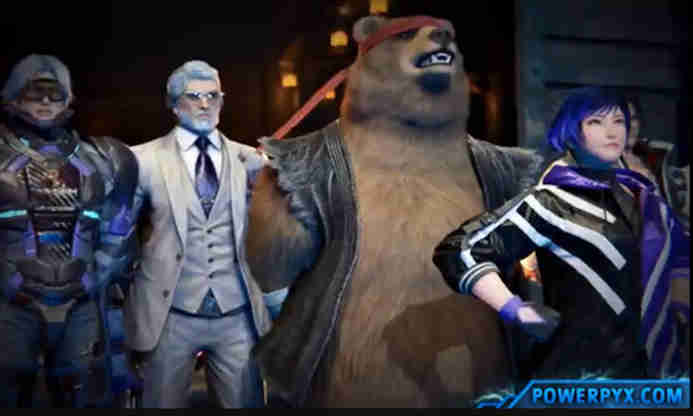
I do know Tekken has an…interesting roster. Yes, I’m pretty sure the bear is playable.
While the Western company will choose by “it worked in this game so it will make us money”, Harada and Kobayashi are looking for what fans want in the game, like a “fight lounge” where players can talk to each other before starting a game fighting other players over the internet. They put research into their target audience and do what they think will best serve that audience once they’ve identified who that target audience is. No trying to get every player when they just want the player that would want to play this type of game. That sounds at odds with Sakurai’s statement that Japanese games should be typically Japanese but that’s also about targeting an audience: Japanese gamers and those in other countries who like what makes the Japanese approach different, while Kobayashi and Harada seem to be looking to target a Western audience if they believe the game will do better there. Not that they’re totally at odds with Sakurai’s statments.
KobayashiAnother thing we have to be careful about is the rating. Mr. Harada was also the director himself, but we have someone else in charge. I basically want to let the director do what he wants freely, but I try to give him a say in the parts that “from the producer’s point of view, that’s just not OK.” That is “not hitting the target audience” and “expressions that will result in a CERO rating of Z.”
They check to make sure the game will match the rating they’re going for, CERO being their version of the ESRB or PEGI. Back to the “target audience” approach:
— Mr. Kobayashi, you said earlier that you are aiming for the titles you are developing to sell overseas, but I think there are many Japanese game fans who want them to be hits in Japan as well. Is that still difficult, even if you rethink the look or marketing strategy?KobayashiI think the gameplay doesn’t match the tastes of Japanese people. Of course, I think there are people who are really happy and will bite, but it’s still a world where it’s evaluated by “how much it sells.” If you think about it that way, it’s a bit risky to improve the game so that it will be well received in Japan. I’m not looking down on Japan, and I personally have a strong desire to sell in Japan, but if I aim for that, it will inevitably have a negative impact on overseas expansion, so as I said earlier, I’m doing it with a sense of compromise.In this way, we are unifying all elements such as the world view, genre, and characters with “overseas-conscious specifications” and proceeding with development, but Mr. Harada, when you create a new character in
“Tekken” , what is the flow of work? I would like to hear your opinion as a reference for character creation.HaradaThings are quite different now than they were in the 1990s when the early series was made. In the 1990s, mixed martial arts tournaments were booming. While watching them, we featured martial arts that we ourselves wanted to feature in “Tekken”, as well as martial arts that are not well known yet but that we felt would definitely become popular in the future. From there, we incorporated them into the characters… and that’s how we created the characters.KobayashiSo you created the characters with a lot of enthusiasm and energy?HaradaThat’s exactly how it felt. However, the procedure for creating characters has changed significantly in the titles released in the past few years. Now, we narrow down the target first, or rather, we carefully consider “which demographic will it appeal to?”, and then introduce new characters after firmly summarizing the concept. For example, let’s say you first have the idea of ”increasing sales in this region.” In order to do that, you need to create “a character that players in that region will like.” You accurately grasp that and put it into the optimal form… that’s how it feels.Fortunately, through my 30 years of activity, I have accumulated data on such demand overseas, so it is relatively easy to create characters that appeal to each region. When I want to “target this area of South America” or “gain new fans in this area of Europe,” I immediately compare it with the characteristics of that region, establish the most likely concept, and then create the character.
KobayashiIt’s an interesting idea to first decide on the country or region you want to market to, and then come up with the most suitable character for that.HaradaBy the way, the new character Reina, who joined Tekken 8 , was not created with a market-first mindset, but was created by the developers’ desire to add a girl with a certain position in the story. Of course, the character was carefully calculated and created not just because it was necessary for the story, but so that a wide range of Tekken fans, regardless of country or age, would like it, so I’m relieved that she has become as popular as I intended.
So there isn’t just one approach. Some Tekken characters were designed to appeal to a certain region while others were the needs of the story (or what passes for one in a one-on-one fighting tournament game). While Sakurai wants to stay Japanese with his games and encourages creators to do what they want (possibly “the game they want to play”), Harada and Kobayashi are doing research for the area they want to attract to the game. I do wonder if they think of the martial arts still? I haven’t played any of the Tekken games so I did research on Reina. Her backstory is unknown but does claim the big bad of the game, their version of M. Bison from the Street Fighter franchise, as her dad. Dude might drop his pants a lot. I don’t know his full deal beyond a few movie reviews. If the games were built on martial arts I’d hate to see them not consider it. Imagine a character from Brazil studying capoeira…oh wait, research says Eddy Gordo exists.
Then again, they’re discussing one game, the Tekken series in general and Tekken 8 specifically, while Sakurai was working in broad strokes discussing game creation. Maybe they don’t compare after all. What do you folks think? What approach would work best for you, being it game creation or other storytelling media?



 BW Media Spotlight