

Some time ago I brought up the campaign by YouTube video creator Ross Scott. Mostly known (around here anyway) for the comedy series Freeman’s Mind, playing through the Half-Life series while hearing the crazy thoughts of Gordon Freeman, Scott also hosts Ross’s Game Dungeon and Dead Games on the Accursed Farms YouTube channel. It’s from that latter show that the “Stop Killing Games” campaign began. Scott had gone over numerous games no longer playable, often due to online DRM, where you had to be on a server to play a game even when it wasn’t an online game. When the servers were no longer supported and shut down there was now no way to play the game without a hack that allowed you to use a fanserver. The last straw was an online only game called The Crew, a racing game with a single-player story, though I guess the emphasis was on the online racing. Because the game got older and totally not to get players to finally move to the sequel, the servers for the 2014 game was shut down in 2023 without much warning, making even the offline story of infiltrating street racers to stop a corrupt FBI agent impossible to play.
Since my initial article, Scott has been succeeding in getting signatures on petitions to force game companies to change this practice. His reasoning is if you buy the game you own that copy and should be able to continue playing it, either on fan servers or at least the offline versions of the game, that don’t require other players. Currently the European Union (EU) is where he’s focusing his efforts, and the European game companies are seeing him as a threat since reaching his legally required goal of 1 million signature. The lobbying group Video Game Europe (link and info courtesy of That Park Place) recently put out a statement defending their clients’ rights to shut down any game anytime they want and not refund gamers. You can read along with the full statement or scroll down to the end of the article and see what Ross Scott himself has to say about their earlier statement. I won’t cover everything because that’s too long an article.
The statement is titled “Why providing continued support do not work for all games”, and while it makes some good points, it also says really stupid things that their clients (full list in the first link) believe about how video games should be sold…as in only what makes them money matters.
The video games industry is committed to consistently providing players with high-quality interactive gaming experiences and recognises the passion and community that grows around its games.
The decision to discontinue a video game’s online services is multi-faceted and is never taken lightly and must always be a matter of choice. When it does happen, the industry ensures that players are given fair notice of the prospective changes in compliance with local consumer protection laws.
Which didn’t happen with The Crew. Remember, we aren’t talking about online only games like World Of Warcraft or Fortnite, where the community is the point. Ross Scott is specifically trying to protect games you should be able to play offline, or allow everyone who bought their games to seek other areas for the online features.
Unlike a book, or a film, an online video game is not a static work. Online video games are interactive entertainment, that combine numerous elements of artistic and intellectual creation with software programming and server infrastructure.
Online video games evolve over time after their initial release, providing consumers with regular new content, experiences, patches, and updates. This is highly valued by players and is required to compete in the market. It involves significant, ongoing development expenditure over years, sometimes decades.
Instead of comparing themselves to books or movies, they should be comparing online games to offline games. They’re not really saying why you have to lose the offline aspects of the game that are only unplayable because you lose the license to play them without being eternally online, something players saw coming back when online DRM was first introduced.
The right to decide how, when, and for how long to make an online video game services available to players is vital in justifying this cost and fostering continued technical innovation. As rightsholders and economic entities, video games companies must remain free to decide when an online game is no longer commercially viable and to end continued server support for that game. Imposing a legal obligation to continue server support indefinitely, or to develop online video games in a specific technical manner that will allow permanent use, will raise the costs and risks of developing such games. It will have a chilling effect on game design, and act as a disincentive to making such games available in Europe. It is far from a trivial modification or a simple addition to the game development phase. It would ignore material reputational, safety, and security concerns.
Whose security? The player? If you decide to go to someone else’s server that you don’t trust, that’s on you. I could see a business for servers for games no longer supported by the main company because for them there aren’t enough players. Although as I alluded to, it could also be a move to push people to play (and thus spend money to buy) the sequel game no matter how much they’re enjoying the old game. When Final Fantasy XIV overhauled their world, not only did you not have to buy an all new game for the updated graphics, but the older “world” was actually factored into the story of the “new” world, the victim of a cataclysmic event you have to foil as the Warrior Of Light during one storyline I watched on PlayFrame. They have a model that allows them to keep making money without ruining things for the player or forcing them to buy a whole new game. They can even afford to allow players to visit older campaigns for free thanks to all the people paying for the new campaigns and gear.
Also, not having online features (ignoring modern updates) can be traced back to Tennis For Two. You know, the first video game!
All video games, whether digital or physical copies, are licensed. As is the case with virtually all digital works when consumers purchase online games, regardless of the country of sale, what they acquire is a personal license to access and play the copy of the game they have purchased in accordance with the game’s terms of service. The consumer does not acquire ownership of that video game. These clear intellectual property rights underpin the entire market and enable the strong investment that the industry has seen for decades. There is no legal uncertainty about the status quo of video games.

Does not require a server to play.
And there’s the whole thing revealed: “The consumer does not acquire ownership of that video game”. Or ‘”you don’t own your games, not even that copy.” That’s the problem with online DRM. It’s the same downside as streaming. To them, you own nothing. If I purchase something on Fandango and they lose the license, I lose that video. I can’t download it, except to their app (you can’t even download on the computer or the Firestick app…you can’t even watch free with ad shows on Firestick, but that’s another conversation), I can’t make a copy of it legally. All I’m doing is making a one-time rental. With services like Netflix or free services by Tubi I don’t even have that luxury. There are shows and movies I missed out on because I didn’t know there was a due date and I didn’t have time to watch them as a result. I have this site, other things in my life, and a huge backlog of things to read, watch, and play.
Video game companies are following Hollywood in not wanting you to own your copy of anything, because they want to keep making money to “allow” you continuing rights to their stuff. It’s why they support streaming games instead of buying and owning them. Meanwhile I can go to Drive Thru Comics and get comics I can download, which I used to be able to do with ComiXology before Amazon raided it, and could with Global Comix if I pay a subscription, or Comic Book + if I sign up for free for some reason. That’s also the secret of always online DRM. You have to pay monthly or annually for the servers. Of course if the server goes down or the game is removed you don’t get the balance refunded , nor your money back for a game you bought but is no longer playable. That’s not buying something. That’s a one-time rental fee, and that’s not what the gamer was expecting when they gave you money in good faith.
It is not clear what the initiators of the stop killing games petition seek to achieve as a legal change. It appears to be a combination of a requirement to provide online services for as long as a consumer wants them, regardless of price paid, and/or a requirement to provide a very specific form of end-of-life plan where the game is altered to enable private servers to operate. We do not believe these are proportionate demands.
From what Scott has said in the past, it’s the latter. Even better, consider that when making the game and you won’t run into this problem since so few games will ever be popular enough forever. Or again. those games with offline modes and single-player campaigns that are now unplayable. I think that’s what he even wanted with The Crew. After talking about how difficult it would be from a technical perspective, they break into all the reasons they can’t do it because of “player safety”.
1. Reduced or No Player Protection: Requiring games to run on private servers would result in the inability for games companies to continue to protect players from illegal or harmful content or conduct, as their moderation and player safety teams would no longer be involved. In particular cheating could become rampant without proper enforcement. Reporting systems designed to allow players to flag problematic content and behaviour to games companies would no longer operate as intended or would have to be disabled entirely. The absence of effective moderation systems would create a less safe environment for consumers and may foster the proliferation of undesirable content while simultaneously frustrating the ability for EU Digital Services Coordinators to act against such content. This not only presents a safety risk for consumers but could also lead to brand reputation issues for the video games company.
I emphasises the censorship part nobody wants anyway. “Let the buyer beware” won’t include you if you’re not involved. Anyone trying to sue you because they chose the wrong server is an idiot or just that greedy. The server operator is at fault and you can easily make that clear in the documentation. Nobody would blame you.
2. Increased Security Risks: Releasing game code or server binaries to facilitate the creation of private servers operated by players could expose games companies and consumers to bad actors, malware, data breaches, and DDOS attacks.
This should have been saved on the next section of these bullet points on impact to the company. Sounds like your trying to stop hackers but it’s more like they don’t want to give away game engine secrets. I could almost buy into this one. Not everyone follows Epic Games in releasing Unreal to any game and movie maker on the internet for free.
3. Significant Engineering and Architectural Challenges: Allowing players to run private servers would present significant engineering and architectural challenges for many games, due to the way in which such online features are integrated with other proprietary systems and services required for the game. Creating a private-server compatible version would be a prohibitive cost, in some cases years or decades after the game’s initial release when only a small audience remains.
Bull. This might be a problem for CURRENT games, but in the future, which is what they’re going for? You would already be prepared for this while designing. Just create something that you can send a patch out for when you know the game’s “shelf life” is done. This shows customers (the name you should be using given the current connotation of “consumers”) that you respect them and want to do right by them. This actually gives them incentive to move to the next chapter if they’re able. The next two just state the same things from earlier, and then we get to…
6. Erosion of Intellectual Property Rights: Mandating games companies to keep their online games operable post-official support would undermine their rights and autonomy in deciding how their intellectual property is utilised. There is a vital interest in maintaining effective copyright protection, including protection against circumvention of technologies that control access to copyrighted video game software, where such circumvention is undertaken in circumstances that would lead to the unauthorised public exploitation of games.
7. Competition from Community-Supported Versions: Such a requirement could lead to community-supported versions of games competing with official versions, potentially jeopardizing the financial investments of the video games companies. This would lead to confusion between trademarks, and the original trademark holder may be held responsible for actions undertaken by a community supported version.
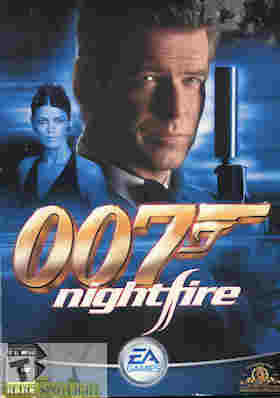
I can still play this game. If I use an older operating system.
There’s a few more along those lines (I did link to it earlier if you want to read the whole thing) but I’m trying to decide which of these two I believe the least. Is #6 talking about game engines? So how do current player run servers operate? Also, #7, if you read between the lines, enforces the theory that they just want you to move to the next game. Players going to a third-party server wouldn’t buy your sequel anyway, or they wouldn’t be trying so hard to keep playing this one.
Or maybe they’re nostalgic for the original and want to play it again. There are a lot of retro game YouTube channels and Twitch streams for a reason. Some people really like playing or watching old games or earlier entries they probably wouldn’t be seeing. Also, if it means losing the online features to still play the single-player story, there are gamers who would be okay with that. And fans already make spiritual successors without using your direct IP or engine.
They might miss the online play with other gamers around the world, but if that’s not their focus, your requirement to connect to a server as alleged copywrite protection means they don’t get to play their games, either. I think that’s Stop Killing Games’ main focus. Heck, some games don’t even need the online game but it was shoved in there because it was popular and publishers were demanding them from studios whether they fit or not.
All of the above would also affect compliance with PEGI ratings. Where a game has a PEGI age rating and offers multiplayer functionality, the games company is contractually bound by the PEGI Code of Conduct to respect various obligations related to online safety and privacy. The inability to do so would expose the games company to legal uncertainty with respect to its contractual obligations under the PEGI Code of Conduct.
What do you care? The game is no longer under your control (that’s what they’re worried about). This isn’t the infamous “hot coffee mod” where someone at Rockstar put a sex mini-game into one of the Grand Theft Auto installments. Are you saying fan mods suddenly makes your game incompatible with Europe’s rating system? They probably are, and I expect that to be used against fan mods in the future. There’s more about rights issues and stuff before this blatant lie shows up.
Video game companies are committed to the preservation of games and their cultural value
It is important to separate the legal proposals being made by the petitioners – for specific end-of-life requirements for commercial video games – from the question of the preservation of games as creative and cultural works.
Video Games Europe and their member companies are committed to, and actively support, serious professional efforts to preserve video games and recognise the industry’s creative contributions under circumstances that do not jeopardize game companies’ rights under
copyright law.
That’s a crock. Again, they want you to either go on to the next game, be it a sequel or “spiritual successor”, so they can make more money. Not making more money is why they’re shutting down the servers and I understand that. They cost money to operate, but you can still salvage the single-player campaign if you really cared. You don’t. That would still be preserving the game, and being prepared for end-of-life at the creation stage would make you ready without further costs. It would just be part of the game’s development. Make it part of the engine. Or don’t force online features into a game that doesn’t need them to operate in the first place like the DRM or unnecessary multiplayer. Again, this isn’t World Of Warcraft we’re talking about. Sending it to a preservation group like they claim shouldn’t make the game unplayable. Gamers don’t just want it in some vault somewhere. They want to PLAY THE GAME and enjoy the story and gameplay.
Scott himself offered his own response which I purposefully didn’t watch until now so these would be my thoughts. Let’s hear from the man behind the movement.
Here’s a link to the Stop Killing Games campaign’s official website, to learn what they actually believe and how to take part. I’m not in the EU either, and Scott notes false signatures will not only be tossed out but could get Interpol on your case. Of course the lobbyists want to protect their clients and their clients want to keep using whatever it takes to get more of your money. Actual game preservation means being able to play them, just as we want to be able to read old books or watch old films. Wasn’t that what you compared games to? They do nobody any good locked in some museum vault.



 BW Media Spotlight
[…] is an update to information in a recent article here at the […]
LikeLike
[…] don’t care about the story, they care about the money. Look at the whole situation with Stop Killing Games. The servers cost money and so does making the game available to be run by fans because they […]
LikeLike