

A recent Forbes article made the case that Michael Eisner, former Chairman of The Walt Disney Company, did a better job at running Disney than Iger after him or whomever before him. Admittedly the article is, for some reason, clearly kissing Eisner’s rear, as it has nothing but praise for Eisner, but there’s a reason Eisner took shots from the fans. It’s just that Eisner didn’t make the mistakes that Bob Iger has, and even when he did make mistakes it wasn’t as bad as Iger’s nonsense.
I went to see when Eisner left Disney and Google AI (question the source) gave me this: “Michael Eisner stepped down as CEO of Disney in 2005, following a period of declining shareholder confidence and public criticism. Key factors included a perceived decline in Disney’s creative output, strained relationships with Pixar and key executives, and a sense of micromanagement that alienated employees and partners.” I highlighted that one part for a reason. Near the end of his time as CEO, Eisner made moves that got Disney fans as upset with him as they are Iger today. However, while I do believe that Eisner was better at some point in his time than Iger has been at any point, let’s not forget that he’s gone for a reason. If he were still making Disney money they would have kept him on. Meanwhile, Iger loyalists on the board may be the only thing keeping him in charge given the string of failures hurting not only the Disney brand, but his acquired brands of Pixar, Marvel, and Lucasfilm.
So how did Eisner succeed in his failures better than Iger has in his? Let’s examine.
Media companies don’t come much more historic than Disney. The eponymous studio was founded by Walt Disney and his brother Roy 101 years ago and, to this day, only two other executives have been as synonymous with the company as they were.
Disney’s current chief executive Bob Iger will forever be associated with the Mouse thanks to his acquisitions of Pixar, Marvel, Lucasfilm and 21st Century Fox. They turned Disney into a titan which consistently ranks as the highest-grossing studio in the movie industry. However, neither Iger nor even Walt himself laid the modern-day foundations that Disney is built on. Iger’s predecessor Michael Eisner can take the credit for that and his track record at Disney really is the fairest of them all.
It took me two paragraphs to realize writer Caroline Reid is just fascinated with Eisner, with the line “not even Walt himself laid the modern-day foundations that Disney is built on”. Without Walt there would be no Disney, and it was when Eisner followed Walt instead of trying to be Walt that the company did well. You could see his ego in place in intros for The Disney Sunday Movie and other Disney anthologies as he would introduce that night’s movie or special along with the characters (performed by physical actors in theme park costumes and the currently official voice actors). He wanted to be Walt now, to be the face of the company. I would have had Mickey and company introduce the shows themselves, possibly in animation. This is one bit I would expect Iger to imitate if I thought he cared about the production, and that’s where the big difference is. Eisner at least cared about the product…later cash grabs aside. At the very least he know what brought Disney all those piles of money and for better or worse worked to follow that formula.
Few executives have cast as powerful a spell on the entertainment industry as Eisner. When he became Disney’s chief executive on September 22, 1984 its stock price was just $1.24 and the studio was in the doldrums. However, by the time he handed over the hot seat to Iger 21 years later, each share was worth $23.80 and Disney was the world’s biggest media company. Impressive as this is, it isn’t the clearest evidence that Eisner really does have a magic touch.
The New York native joined Disney after an eight-year stint as chief executive of Paramount where he launched ground-breaking movies like Saturday Night Fever, Beverly Hills Cop and Raiders of the Lost Ark.
At the time, Disney was a shadow of what it is today. Construction costs at Walt Disney World in Orlando had spiralled and attempts to make more modern movies had led to forgettable live-action films such as sci-fi flop The Black Hole and Condorman, starring Michael Crawford. Combined with a failure to focus on new animation, repeated re-releases of its back catalogue and declining quality standards at its theme parks, Disney was at risk.
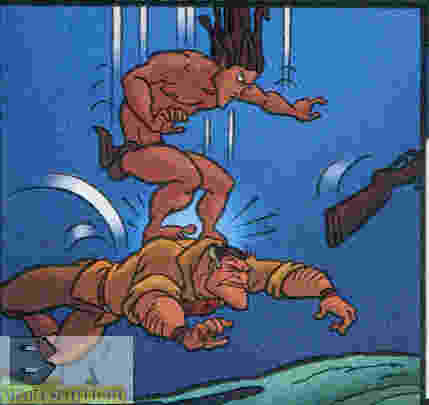
This is how Bob Chapek felt after Bob Iger’s return to take his job back.
In other words, where it is now. Personally I thought The Black Hole was a decent movie considering it’s trying to be Aliens to an age group who should never watch Aliens and their parents. Condorman is admittedly a good idea poorly executed. It’s a movie about a comic creator who tries to make his gadgets work for real to make the story more realistic and ends up becoming a crimefighter. Or at least that’s what I remember as I haven’t seen it in years. I didn’t even remember it was Crawford. For some reason I thought it was Regis Philbin.
Lucas, Spielberg, us at Paramount, were making Disney-esque movies like Raiders of the Lost Ark and such,” he explained. “Disney movies were being made but not by Disney.”
With a wave of his magic wand, Eisner brought Disney back to its roots of hand-drawn animation yielding beloved favourites like Beauty and the Beast, Aladdin and The Lion King.
Yeah, that’s exaggerating. “With a wave of his magic wand” is a bit much. However, Eisner is responsible (or at least it was on his watch) for the so-called “Disney Renaissance”. The movies were low in quality before then, Eisner also noting that they were re-releasing the old movies on home video but not making as many new ones while overspending on Disney World. I don’t really care about the theme part stuff. This is a storytelling discussion site, so I can’t judge any of that. I will readily admit that the movies that came out in theaters had recaptured that Disney magic, even the sequel to Rescuers, as Eisner’s creative teams, many of them Disney legends and legends in the making, actually did remake classic stories with that Disney formula where things worked out and families came out of the theater happy and entertained.
Nobody’s saying that very often of current Pixar, Marvel, or Star Wars content since Iger bought them all, rather than working with Pixar as Eisner did, and none of the current Disney branded output captures that magic because it’s either bogged down by the current political climate, not connecting with anyone while trying to connect with everyone (that moves never works but too many creators and studios still think they can make the One Movie To Rule Them All and bring everyone together in praise of their superior storytelling genius), and almost being antagonistic of the source material. Even Square Enix is making better use of classic Disney than any of the not-Disney studios currently making their shows with original and new characters. Outside of the Ducktales reboot that took more from the old Scrooge McDuck comics, what Disney production with their classic character or new fairy tales have caught an audience outside of those supporting it’s social changes? Let’s not even start on the live-action demakes of the animated movies under Eisner like The Lion King, Beauty & The Beast or Lilo & Stitch. Eisner at least remembered Disney started as an animation studio and didn’t try to pull it from its roots.
What the writer is forgetting in her undying praise of Eisner is that he was also responsible for the home video cash grab sequels, many of which were also lower quality and unnecessary (did we need a Cinderella sequel where the wicked stepmother somehow used magic to undo her happy ending?), while the bigger successes came from TV spinoffs. The story of Aladdin didn’t make sense when they married at the end of that movie but you wouldn’t know it from the series. The Little Mermaid was a sequel while on home video her daughter’s story was basically Ariel’s in reverse and minus a love interest. The Lion King sequels, which were animated, are a mixed bag. All of that was also on Eisner’s watch, and where he got the most flack.
In order to ensure that the studio didn’t get left behind by the rise of computer-animated movies, Eisner signed a pioneering deal in 1991 to distribute Pixar’s modern-day fairytales. Its films like Finding Nemo and Toy Story grossed a total of $3.4 billion during Eisner’s tenure paving the way for Disney’s $7.4 billion acquisition of Pixar in 2006.
As mentioned, even that’s gone downhill. Elio and Lightyear both show how badly Pixar has fallen, while the better Buzz Lightyear “this is why Andy replaced Woody as his favorite” production was the 2D TV series Buzz Lightyear Of Star Command, which annoyed the Pixar movie team because movie and TV don’t always get along.
Ten years after he took over the top job at Disney, Eisner created a new category of entertainment when he gave the green light to a Broadway show based on Beauty and the Beast. It opened at the Palace Theatre in New York in 1994 and was such a success that it set the stage for other shows based on The Lion King, Aladdin, and Frozen. Since then, Disney Theatrical Group’s 10 titles have been seen by around 230 million theatergoers in 38 countries with The Lion King alone becoming the most successful show in theatre history playing to more than 115 million people in 100 cities.
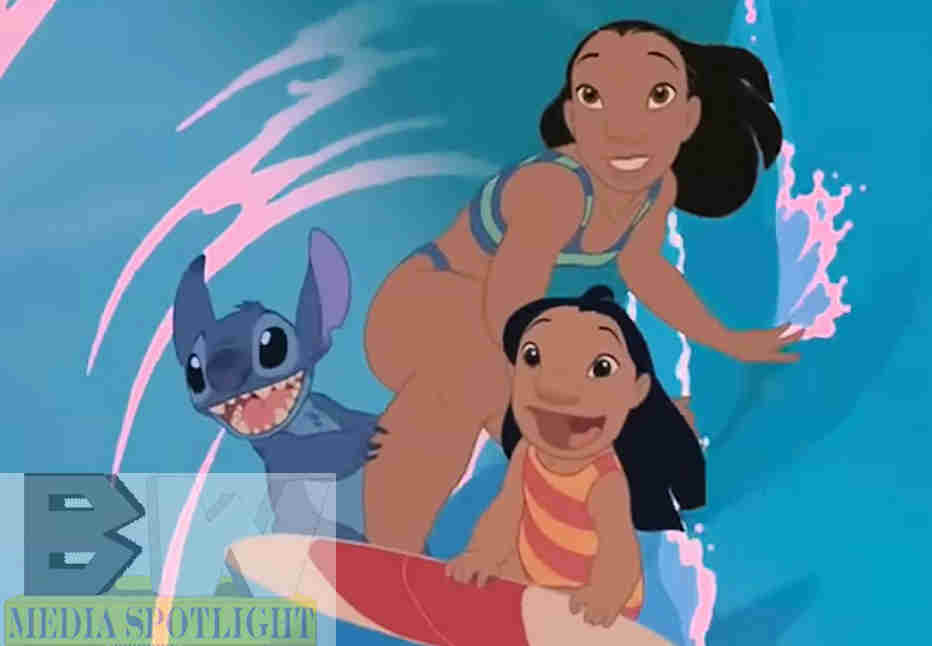
“I’ll never leave you…unless I get a better offer.”
This is one of the few things Iger hasn’t screwed up. Yet. I can’t say the same for Pixar, Marvel, or Star Wars, while the former 20th Century Fox seems to only exist for the library as I couldn’t tell you what the rename is off the top of my head, or what they’ve released. You’d think they’d use the chance to get Star Wars back under that studio, since their studio ID theme is practically tied to Star Wars and the sequels we agree exist. The article then goes into what he’s doing now with a soccer team or something. I wasn’t paying attention. Eisner still has affection for his time with Disney while Iger can’t remember his wasn’t the first Fantastic Four anything, leaves Star Wars in the hands of “The Force Is Female” Kennedy who insists there’s no blueprint for non-movie Star Wars (except for decades of comics, novels, and video games), and allowed Marvel Studios to not care about the comics and can just use the branding as lazy IP creation and promotion. As That Park Place notes, Iger may cause some immediate boosts with a new acquisition, but as they fail to properly capitalize on those new acquisitions while letting what they already have sink in the swamp.
So while the Forbes writer is clearly an Eisner cheerleader, the fact is that of the two, Michael Eisner did a better job keeping the spirit of Walt Disney Pictures alive, while Bob Iger hasn’t. The parks changing to reflect “modern sensibilities” and movies nobody sees, merchandise sales going down because if the movie, comic, or game they’re based on is lousy nobody wants a reminder of it, and the aforementioned movies nobody sees having out of control budgets had hurt the brand and their financials in the long term. Even the acquisitions are practically gimmicks now, on top of all the other gimmicks Disney and their purchased properties are piling on, isn’t helping, it’s hurting. Eisner made his mistakes but even his mistakes were out of a belief in the brand and animation versus whatever it is Iger is doing. Thus in the end, for all his mistakes, Michael Eisner was the better CEO, while Iger ruined his legacy, Bob Chapek’s legacy when he screwed over his would-be figurehead for actually doing the job his title said he should, ruined Walt Disney’s legacy, and the legacies of everything he bought to prop up a streaming service that loses customers at a time when the market is overloaded with streaming services paid and fully ad-supported.
Here’s something I bet nobody thought they’d be saying a decade or two ago: maybe we need Michael Eisner back.



 BW Media Spotlight
I Think Jeff Robinov should be replaced Bob Iger as Disney’s CEO
LikeLike
Shame on Bob Iger for having Meghan Markle & Prince Harry on The Happiest Story on Earth: 70 Years of Disneyland — A Special Edition of 20/20,
LikeLike
Apparently they’re still popular to…someone.
LikeLike
I Think Disney is opening a new theme park In Australia
LikeLike
Last one I heard of was Abu Dhabi. Maybe Nermal will be happy to have Garfield send him there.
LikeLike