

(l to r: Windblade, Bumblebee, and Rubble)
In a previous post in what I guess I’m making a prose series, I talked about how I’d combine the Quintesson and Primus origins of the Transformers. If I had to choose I prefer the Quintessons as they’re more sci-fi and less supernatural, but nobody asked me and somehow Simon Furman’s comic book take bled into the cartoons. I blame Beast Wars, but what can you do? I like my compromise and hopefully someone else did as well. It got a few likes but no real push for more, so I was ready to call it there and move on.
My brain was not.
I’ve mentioned before that I don’t like the modern day backstory for Cybertron, the whole “forced caste system” leading to Cybertron being a terrible place, with Optimus and Megatron simply fighting over replacing a bad system. A system that makes no sense to me since literally from episode one of the cartoon and issue one of the comics we see that they can change their alternate modes pretty easy even before the protoform concept was introduced. (Also blame Beast Wars for protoforms and sparks and things, but I consider them good additions.) I prefer when the Autobots were fighting to protect something, though even before they left Cybertron they seemed to be losing. It made the Autobots seem like cooler characters and I wanted them to restore Cybertron and win the war more than the current ideas. The war is a bit more tragic when something good is being lost rather than the place being terrible and just choosing what terrible idea to replace it with.
So I want to write my own idea of what started the Great War between Autobot and Decepticon, building off of the shared origin. Before I do that I need to create a more positive culture of Cybertron, one that feels right for shapeshifting robotic lifeforms that should still feel like a living world but less like humans. Before I do that, however, I need to come up with the basis for Cybertronian culture, customs, traditions, and society. That means not just how Transformers live but the basis of their entire existence.
In the origin I did mention that the Quintessons created transforming robots for use as merchandise and war, but that Primus created the All-Spark, a copy of his lifeforce the Quintessons were using to power the planet, out of the planet’s energon. I also went over how sparks in my headcanon work (taking aspects from the cartoon and the comic as well as the toys that are the “source material” of this franchise), and how they chased the Quintessons off. The recent compilation update by Transformers: The Basics also helped me try to figure out just how Cybertronians in my version would live, which would be the origin point for their culture and society. Looking at previous takes on sparks, energon, and transforming among other aspects of the Transformers, as re-imagined in different continuities, gave me a starting point, but in order to get where I want to I need to come up with what my version would be like. I’m going to be pulling more from the toys and meta logic when it comes to the concepts I’m playing with, using various media takes to fill in gaps and form the building blocks of life on a planet of robots who can transform into things. Let’s see what I can come up with.
First of all is the question of what happened to the Thirteen. I’m not entirely sure how they work in other media since they’ve rarely shown up, and while they had a presence in the Power Of The Primes toyline, the upcoming Age Of The Primes is really going to boost their backstory. From here out I’m going to be somewhat in character [unless I’m using brackets and this color when I go over my reasoning], but the short version is that the Thirteen created the basis of how Cybertronians live and they disappeared. Where to, we don’t currently know and they won’t be back until long after the Transformers awaken on Earth in the 1980s. It’s going to be a while before I work them in. So I’m starting with what they left behind when they disappeared. And now, our chronicler takes over.
While organic beings debate and sometimes argue about the origins of life, the soul, and who their Creator is, Cybertronian Transformers don’t have to ask. They know, because he exists at the core of the planet. Certain Transformers can practically call Primus up and talk to him directly. However, while a mechanical lifeform has all the emotions, personalities, and self-awareness as we organics do, their form of life does not come the same way. Mind, body, and soul: core consciousness, protoform, and spark. Not one-to-one but a close approximation for the average organoid to understand how mechanoid life works, at least on Cybertron. These aren’t created in nature, but by machine, specifically Vector Sigma. These form the basis of Cybertronian life, which we should examine as well as the act of transformation itself, to fully understand how Cybertronian culture in this reality came to be. Let’s start inward.
The Spark
A “spark” is the soul of a Cybertronian. As mentioned in our previous installment, a spark is a portion of the All-Spark, infused by a primal program called the “creation matrix”, the life code of a Transformer. The All-Spark is formed from energon, a copy of Primus’ own lifeforce. The mass that forms the spark is why Transformers need energon. It’s the lifeforce of a Transformer and forms that ball of energy you see. Created from energon within Cybertron (though methods of creating new sparks have come about on other worlds–which is beyond the scope of this report), it needs to replenish energon as it gets used to operate the body and run its functions, just as Primus powers Cybertron after the Quintessons tapped into what they assumed was just another energy source. The spark is why a Transformer is alive, but the creation matrix is what makes him a living being. Let me explain.
The creation matrix is the “lifecode” of a Transformer, created by Primus using the Quintessons’ own operating systems. This “primal program” is encoded into the spark as energy patterns within the energon mass. It is this program that gives a Cybertronian a personality, the operating system if you will of a Transformer. It gets a “firmware update” (for lack of a better term) throughout a Transformer’s lifespan, though it doesn’t retain that Transformer’s memories. A spark can be transferred to a new body, but all it will have is the lifeforce and some semblance of the personality. To remain the same Transformer, the memories must be transferred as well.
[And I should note I’m combining a bunch of stuff here. The “creation matrix” in the Marvel comics began as a program that alone created new Transformer life, encoded in Optimus’ brain before they left the planet. In Buster’s human brain it also offered a sort of metal telekinesis and actual control over machines, powers we never saw Optimus use. It was changed into a “Matrix Of Leadership” knockoff in Simon Furman’s run, but I’m going by the original concept. The Primal Program, according to the TF Wiki, was the life-giving program within the creation matrix. Also, while I had the ideas locked in when I started this, last-minute research is where I learned to better use the names. It may come off a bit clunky as a result if I didn’t get the chance to do a proper going over. For example, during writing I was calling the energy mass that forms the spark a “laser core”, which I think I mentioned considering after watching Chris’ compilation, but it caused problems later and you’ll see how I use that term later. So the spark is now a mass of Energon infused with the primal program, encoded into the spark as energy patterns forming the creation matrix. Or something. Official sources don’t even fully understand what a spark is, so I’m giving myself a pass there. My narrator is a chronicler, not a scientist.]
The core consciousness, a sort of datatrax of the Transformer’s life experiences, the source of the “firmware update”, is recorded in the personality component of the brain module and must also be transferred with the spark, either the component itself or the datatrax in it. Otherwise, you get a living being with the same, or at least similar, personality as your friend, but none of the experiences and thus not really your friend, just a new guy who has the same personality. He might not even have the same interests, or other characteristics and perspectives kept hidden by the previous persona may take over, like a regenerating Time Lord from Gallifrey. Some Transformers who have had body switches take on a new name even if the memories are intact, believing something was “lost” along the way or just considering this a fresh start to their lives after some serious trauma. [Think Inferno in Transformers Energon.] The brain interacts with the spark, updating the primal program of the creation matrix, with the spark maintained in the laser core of a Transformer’s body. If you want a further explanation, you’ll have to ask a medic. By the way…

“Medics” and “Mechanics”
Before we go on to the body, we should note the difference here because on the surface they seem pretty similar. Medics could be seen as the doctors of Transformers, but since we’re talking mechanical lifeforms you may mistake them for also being mechanics or roboticists or whatever other equivalents come to mind when thinking of human medics or those who fix machines. Mechanical lifeforms are not like biological lifeforms, but neither are they purely machines. Both medics and mechanics do have an understanding of “robotics” and repair the general functions of physical operation like limbs and movement, but that’s all they really share in common in this Cybertronian society.
Using two well known Autobots, one from each function, Ratchet the medic is responsible for maintaining the life functions of a Transformer. This not only includes the parts of the protoform body that maintains the spark but uses it to power the body and allows the being formed from the spark to operate it. Life is in the spark, but the body gives it a receptacle to exist in the world. Yeah, I’m not sure I truly follow that either, but sparks are mysterious things and I’m in the wrong field to know all the specifics. The laser core maintains the spark, and the spark in turn grants the Transformer life. A medic must know how to maintain all the aspects of a Transformers life functions and keep the spark from extinguishing. A spark can go on without the core consciousness but the core consciousness is just data without a spark.
The mechanic, on the other hand, also knows how to repair the body, but someone like Hoist is more concerned with the mechanical functions of the robot and their alternate mode. This became a bit harder with the introduction of organic components like technorganics, but we are a looooooong way before we ever have to touch that stuff, and that just created a new form of Transformer biological science I don’t have time to get into. Mechanics are responsible for general maintenance, but must have at least some knowledge of at least stabilizing the laser core and other things that keep a spark online, while a medic knows how to repair an arm or maintain an alternate mode engine. Mechanics maintain the purely mechanical stuff and focus on alternate modes, some specialising in one type of alt mode over another rather than just routine maintenance, while the medic focuses on the parts that keep a Cybertronian alive.
With that, it’s time to talk about body and alt modes:
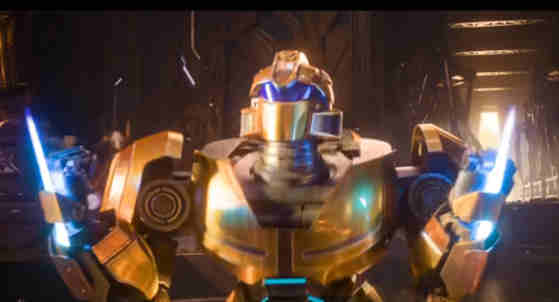
Bodies and Protoforms
The protoform is the base form of any Cybertronian. The body is formed from another substance created on Cybertron during the Quintessons’ creation of the Transformer, a sort of “programmable metal” called Cybertonium. It was combining the two projects that essentially led to the Transformers first coming off the assembly line. Cybertonium can be combined with other metals to alter their hardness or durability, though this is not normally done on Cybertron. (It is, however, a requirement on other worlds during long stays without access to Cybertronian metals.) These protoforms have no alternate mode designed in them, but are formed based on different model types. The body’s model type has influence on usable alternate modes, and those forcing a mode usually result in the alt mode shell being a hinderance to their primary modes, the unnecessary shell bits in robot mode given the nickname “kibble”.
The body of a fully-formatted Transformer essentially has two layers. The core robot, where the protoform originates and in some cases returns to if de-formatting is required, is designed prior to forging. The body and most internal mechanisms are formed from the Cybertonium (or compatible metals on other worlds), originally by external computer, though as Cybertronian technology advanced, having an internal computer sped up the process as well as allowing other advantages in all modes. The Cybertonium can revert to a “protomatter state” for “healing/repair”, though replacement with predesigned parts is a faster method for most components not exclusive to any one body type, or in some cases any extra parts added to the Transformer in question, like exclusive internal gadgets and weapons. Humans would call it “customizing”.
The outer layer is the armor shell, Cybertonium left in a more malleable state until forming the shell of a robot mode, but easy to return to a “liquid metal” state, and thus easier to repair and reform into new alternate modes. This is mainly used to give form to the alternate mode and “reformat” for new or altered alt modes, especially in matters of disguise and utility. However, based on the alternate mode, a particularly clever Transformer can use those parts in robot mode. For example, the body of the car becomes extra armor while the headlights could be used like a flashlight (or, with some additional components, double as a laser, since lasers are made of light). A plane’s jet thrusters could be used for flight or at least increased jumping for a robot. The animal head’s bite force still exists in robot mode if doubling as a robot’s hand. The limits are based on technology, placement, and the Transformer’s imagination. This “kibble” may be a problem if not properly designed to work with a particular body type, leading to blind spots and reduced articulation for movement, or panels not properly locking in alternate mode.
[Or the toy designers messed up; you make the call. This does explain some of the more problematic toy designs being reinterpreted in this fictional world. While I’m here, “body types” explains why Prowl and Bluestreak have the same body design and similar modes while Bumblebee and Cliffjumper have a similar design and transformation but different alternate modes and robot mode differences. Also, it always bothered me that we rarely see Transformers use their alt mode parts in robot mode. I think once chest “headlights” were used in G1, but you don’t really see it. It’s a play pattern that also kept Mini-Cons from reaching their true potential, but that’s another conversation. Now watch how I add the fan reworks and retooling in general into this.]
Adjustments have to be made by the mech, usually just learning to deal with it, though retooling the alternate mode is also possible either just by altering the shell or in extreme cases the core robot. Frankly it’s easier to just rescan something and put up with not being the exact mode you want, or transfer to a new body. This is partly what led to “kitbashing”, customizing one’s body “manually” without a computer-controlled redesign and altering or replacing the existing shell and parts without protoformation, thus changing how the two layers interact with each other.
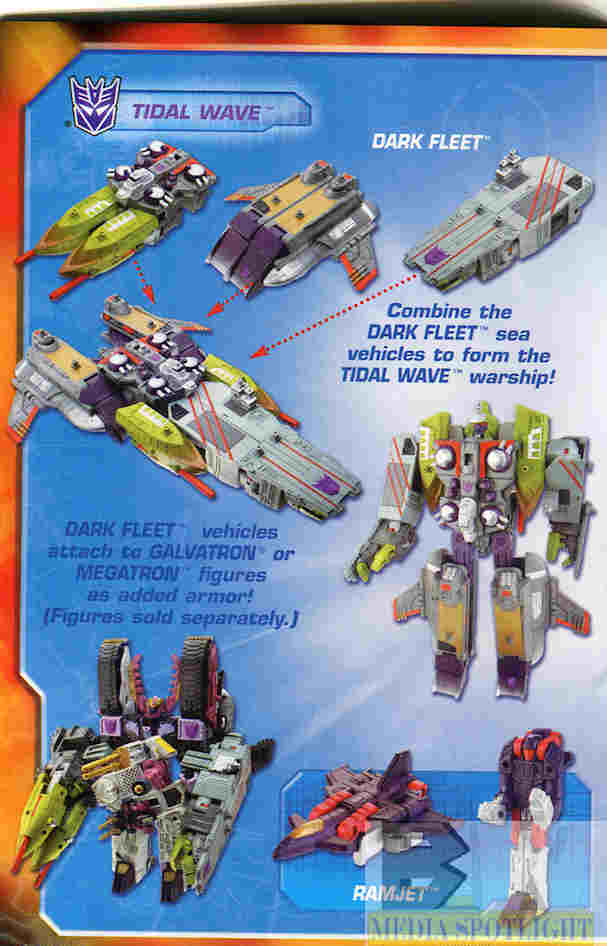
Transforming and alternate modes
This is the crux of what forms Cybertronian society and culture. It’s also the whole point of the Quintessons’ project in the first place. Life on Cybertron not only involves being robotic lifeforms (rare but occurring on other worlds via different methods) but on their ability to transform rather than extensive use of vehicles. The majority of Transformers are bipedal robots who assume the forms of vehicles, animals, tools, and other machines, originally based on the needs of the Quintessons’ clients and now just in maintaining Cybertronian living. Every robot choses the form they want for the function they wish to serve in society, or lack thereof for some mechs. If their function doesn’t require a certain alt mode, however, they may opt for something fun or practical, like a human buying a sports car to go cruising. Alt mode choices are also made based on the personality of the individual robot, though as noted earlier their body type may also play a role in that choice. Some robots have even been known to change to a new body to find a type that can accept a desired alt mode, even though that can be risky should something happen to the spark or datatrax during body alteration or especially transfer.
[As I said, I have an issue with the whole “functionist” caste system since we see Transformers gaining new alt modes from literally the first story. So if I’m going to form a Cybertronian culture of my own fiction, I’m totally keeping that in mind. My Cybertron wasn’t a scrap pile before the war started.]
While technically a Transformer can have any alternate mode that fits their body type, some are more popular than others:
- Ground Vehicles: Vehicles in general tend to be the majority of the chosen alternate modes. After all, the Quintessons had vehicles in mind when creating Cybertron, especially ground vehicles. Thus everything from cars to cargo vehicles to construction vehicles to tanks tend to dominate Cybertron. They are thus the most popular of alternate modes. Even a good chunk of the military are ground vehicles, though there tends to be more of a balance with air and space vehicles when it comes to defending Cybertron from the Quintessons’ disgruntled former customers.
- Air/Space Vehicles: Second in popularity, but only by a thin margin. These are used primarily for defense, exploration, and cargo transporting, but can also be used for rescue operations and by law enforcement. For longer voyages, spaceships controlled these days by Teletraan computers are usually preferable, as they offer a sort of mobile headquarters and faster flight times, requiring fuels other than energon.
- Aquatic Vehicles: The least popular vehicle on Cybertron due to how little of the stuff there are, it otherwise also serves as defense, rescue, and cargo transporting. These became more popular in fairly recent years, as Cybertronians visited planets with water or similar liquids that can be “rode” upon, but is still behind our next category.
- Beastial Forms: Beast forms serve an important role in Cybertronian society, but there is something of a cost when it comes to lifestyle. In practice, beast modes offer the same abilities as animals: covering terrain no vehicle can handle and are difficult for a robot, tracking, guarding, and the Quintessons probably had companionship in mind, like humans do with dogs and cats, clearly unnecessary for Cybertronians. If it wasn’t, they’d just go with the planet’s non-transforming beastial machines, and therein lies the problem for beast mode Transformers. While technically you could induce a “turbofox” mode if you had the right body type, why would you? It also leads to beastial mode Transformers being stereotyped as being about as intelligent as actual animals, though there are a select few that live up to that reputation. (Dinobots come to mind.) They tend to be the exception, but if any alt mode is the target of ignorant ridicule and ostracizing, it’s beast modes.
- And before it’s brought up, I’m aware of the rare “organic” beast modes. These are an update of the short-lived experimental Pretender technology, used by explorers as disguises to blend in and better learn about a planet’s ecology. Pseudo-organic material, especially during the time when Cybertron and Earth kept their distance from each other until after the “Generation Two Conflict”, is hard to come by and harder to repair like the alt modes formed from pure or mixed Cybertonium. It’s not often seen by combat or even civilian operations. Additionally, some robots have a beastial mode as their primary, but this is even rarer, depending on chosen function.
- Miscellaneous tools & devices: Even rarer that beast and aquatic modes, there are few Transformers who would lock themselves in a potentially immobile, smaller form. The technological downsides of “mass shifting” to alter one’s size aside, not many would want such a mode. Even smaller robots like Micromasters or the small band of Mini-Cons, both arguably a better size for these, rarely use such forms. For those that do, weaponry tends to be the most popular, seeing the advantages from the Targetmaster technology developed on Nebulos during the Great War. Molecular compression, a Quintesson experiment started before the Uprising that the Transformers managed to complete and integrate, is hard on the systems, and is used sparingly in most Transformers to enhance disguises. The mechanisms and methods involved, which this chronicler is not exactly equipped to fully understand, are usually used to store weapons and other devices the way humans use a backpack. They’ve mostly been abandoned because just making the device is easier, as is gimmicking it for spy operations that would put a larger Transformer way too far behind enemy lines. Drone tech from minispies to “real gear” AI robots also fit the bill better.
- environmental forms (city or ecological): Forming a full city, though it usually comes off as more of a large building, is a huge strain on resources and requires one very large spark. It also takes “cityspeakers”, a Transformer who can link to a “cityformer” mentally, to communicate with one. Such Titans are rare as a result. As for ecological forms, there are few calls for plants and rocks, which also suffer some of the same issues as organic beast modes to fully work as a disguise. They are listed here to be as complete a list as possible.
Again. these forms are chosen based on function and personality primarily. While there are pushes for certain alt mode types depending on the needed function of a particular unit, operation, or in civilian circles business, Transformers are only limited by resources, imagination, and body type, and new body types as well as new alternate modes to go with both, are designed all the time, not counting customizing.

In Conclusion
To truly understand Cybertronian living and their culture versus organic cultures like Earth, the differences between “human” and “Transformer” need to be clearly identified. I’ve seen other chroniclers treats Cybertronians as if they were large metal humans. This is not the case. They are robotic life, which means they’re not only different from us but from non-living robots and vehicles. Just as our culture is inspired by our nature, environment, biological limitations, and early misunderstandings of scientific phenomena, Cybertronians are closer to their creator. That said, mysteries still surround their early life as the Great War led to losing much of their history along with their culture. Though much of it is being reclaimed, like the Quintessons in the past and more recently learning what became of Primus’ “first thirteen Primes”, there may be things we will never understand, but much of early organic cultures were lost to time by circumstance.
When next we speak of such things, I’ll go more into the pre-war life on Cybertron as I understand it. We’ll see what transforming robotic life creates as a civilization before seeing how it all fell apart, as they try to reclaim as much as they can of what was lost.



 BW Media Spotlight
[…] I’d Write The Transformers’ Origin Story & Transformers: How I’d Write Cybertronian Life: I wasn’t intending to make a series out of it. (I have part three planned; I just need time […]
LikeLike
[…] as robotic lifeforms. None of that pseudo-organic stuff. In the second installment I went into how Cybertronian life works, with how Sparks are created and what components keep a Cybertronian functioning as a living being. […]
LikeLike