

TV Tropes gives it the name “Girlboss Feminist“, but among critics it’s known simply as “the girlboss”.
Whenever I get into the mood, usually when I hear another “there was no strong women heroes until this production” line, I post a list of strong female heroes, super and otherwise, that I grew up with. I knew that girls could do anything a boy can do by example instead of ads or force, though not many girls wanted to do the things boys do, and when they did they had their own way of defining and achieving success. Not counting “tomboys” of course, back when they were allowed to be a straight girl who just happened to prefer sports to Barbie and pants to dresses. That’s a discussion for another time. The point is there were women in fiction that I admired and even as a boy took positive moral and personal lessons from while still being perfectly happy with my boy parts and wanting to kiss girls. For the record I never had a “girls have cooties” phase but I still had to grow into wanting to kiss them. Sadly they never grew into wanting to kiss me during my school days. That’s a discussion for no time you need to worry about.
Nowadays, as the activists have ruined storytelling, we have the “girlboss”, a militant feminist power fantasy so strong that even regular feminists are pushing back against…some of it, and regular women are outright opposed to, from authors to actresses. The girlboss is for the “modern audience” crowd, and if you don’t worship them you’re either a sexist man or a self-loathing woman. At least that’s what they say, but as modern Hollywood likes to forget past Hollywood happened they also ignore the women I grew up watching who were just as awesome as the men, but in their own way. What’s the difference between a strong heroine and a girlboss?
TV Tropes has this to say on the subject, as neutral on the topic as they can get:
The Girlboss Feminist wants to tell her subordinates that she’s a strong advocate for women. After all, look at her. She’s a woman in power.
She’s a feminist in word but in deed, her feminism is shallow and seldom extends beyond white, heterosexual, wealthy, upper-class, conventionally successful women (or, in extreme cases, herself and no one else). She might be a Bourgeois Bohemian but her area of focus is usually limited to money, fame, and other traditional hallmarks of success. She’s a master at co-opting trends, particularly social justice movements, and manipulating them to suit her own selfish ends. This may overlap with the Alpha Bitch if she proclaims the importance of social issues while doing nothing to help people like her.
I’ll save you from the rabbit holes, though those links will let do more research if you want. The “Bourgeois Bohemian” is essentially the hipster that became part of the system and the “Alpha Bitch” is the usual high school mean girl. The woman in power links to the “Hard Work Fallacy”, the belief that you just didn’t work hard enough and that’s why you failed, the “shallow feminism” goes to the Rule Abiding Rebel, the one who thinks he or she is the bad boy/girl by taking an extra cookie or something, and the remaining link calls out the egoistical character, and that’s really where the girlbossing begins and the heroine ends.
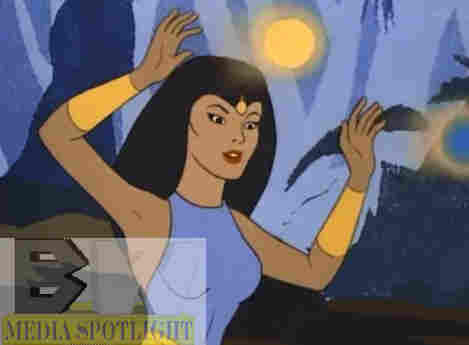
Brains, beauty, and could zap your evil butt into next Tuesday.
The idea that someone who is the hero thinks they’re more important than the people they’re rescuing is hardly new, but the idea is that they’re supposed to be humbled for it, reminding her and the viewer/reader what being a hero is and who they’re fighting for. Not so with the girlboss. She is more like the mean girl, thinking she is more important, but the story tries to convince the audience that she is. Just for being a woman, this character is more important and smarter than the guys in the story, the “strong independent woman who don’t need no man” type. I refer to Hollywood as having a high school mindset (though my small town didn’t have the mean girl who rules the school, and the girls in my grade were all pretty nice), so the “mean girl” title really fits. Critics refer to the “her-o’s journey” rather than the “hero’s journey” for this type of female protagonist. The idea is that her goal isn’t to become a better person but realise she already was the better person because of the extra X chromosome (certainly not the estrogen level, as I’ll get to) and just needs to convince everyone else that she is in fact the most important person in their lives if not the entire world/universe/multiverse. In short, it’s not about having a positive ego but that level of hubris a woman following the proper woman’s version of the hero’s journey, the “heroine’s journey” if you will, is usually supposed to learn to find out how special she really is and become important to the people around her. If the heroines I grew up with were girlbosses…
- The Bionic Woman would be able to repair herself, which wouldn’t matter because her cybernetics would always be 100% all the time
- Princess Ariel would not only be more knowledgeable of the past than Thundarr but would be smarter and have to save the bumbling barbarian and his wookie knockoff buddy rather than the trio working together and helping each other with their particular skills
- Teela would have to save He-Man all the time instead of just when the story calls for it
- Cheetara would have been Lord of the ThunderCats, complete with the “Lord” title
- Isis wouldn’t call on Captain Marvel/Shazam for help now and then and the male teacher would be a hopeless loser lacking the testosterone that Isis had.
See, that’s a factor of the girlboss that TV Tropes ignored: the girlboss is also a Mary Sue who comes off more like a man than the men around her. She doesn’t solve problems like a woman, she solves them like a man. Let me use He-Man and She-Ra as an example. Not the lame Netflix version but the original Filmation versions (and the 2003 He-Man that improved on it by showing Adam’s growth into the job). Anyone remember my theory on how Eternia would have been if Hordak had never kidnapped baby Adora? I theorized that He-Man was intended to be offense and She-Ra defense based on their weapon names (Sword Of Power versus the Sword Of Protection) and that She-Ra’s extra powers included a sword turning into shields and ropes and stuff as well as talking to and healing animals. He-Man was just really strong and his sword could deflect attacks and cut stone like bread. Fate instead made He-Man the defender without She-Ra and She-Ra the offender as she was part of a “great rebellion” to free the world she had been taken to.
In both cases they got help from people of the same gender. He-Man got help from the Sorceress, Teela, his mom at one point, and the occasional guest star. It was a girl and her love that freed the wizard of Stone Mountain from stand-in Satan, who admitted fighting He-Man himself would have been a large stalemate. This didn’t come with He-Man or Adam looking incompetent. As the title hero, He-Man was usually the one who saved the day, and the girl wouldn’t have reached her love interest without He-Man’s aid. He-Man needed help from whomever had the right skills and knowledge to help, or he backed up the one who saved the day for their character arc regardless of gender.
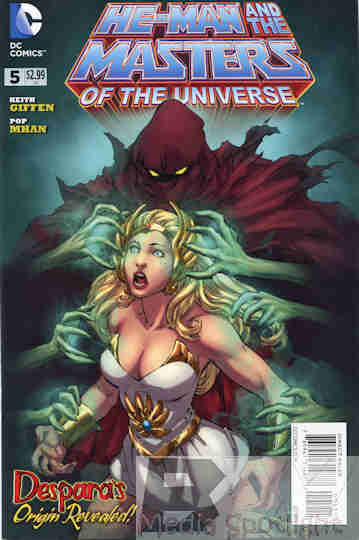
A victim of the modern Hollywood mindset.
She-Ra, on the other hand, also got help from guys despite being surrounded mostly by women (I had a crush on Glimmer, accept no Netflix substitutes), being the girls toyline. Bow, Kowl, Light Hope, Sea Hawk (who was actually a sky pirate who attacked the Horde–also Adora’s love interest in the show while She-Ra was pursued by Bow in other media as Sea Hawk never had a toy in the Princess Of Power line), and her visiting grandfather would help her out in addition to various visits by her brother. They were quite competent, but She-Ra had the skills and powers to truly save the day, which she did not through his physical strength as much as her emotional strength, while He-Man was the opposite. He was compassionate as he was strong, but it was usually his cool powers that came through. She-Ra relied more on her femininity (not sexuality but other aspects of being a woman) than on her powers. She didn’t do things Adam’s way, but relied on what made Adora special…which just happened to include military training as part of the Horde and the secrets she learned as Force Captain before finding out the “evil” part. She was a strong woman, but nobody in the fight against evil can be independent and there were times she did need a man, just as men needed her to save them. It’s called teamwork.
The girlboss is not feminine. She’s more manly than the men around her. There was a time when “could a man do this instead?” would be met with “maybe, but the girl can also do things in her own unique way and make for a more interesting story in this situation”. Now it’s “shut up, sexist, she’s more important because she’s a woman”. A woman who acts more like a man, thus making her boring for some longtime actresses to play because she doesn’t grow, doesn’t get to actually be a woman, and is really just a dude with breasts…which you shouldn’t notice because male gaze or something. Sorry, lesbians. It means the heroine really doesn’t stand out as anything special despite being told she is special because woman. TV Tropes points out a couple of other flaws with the “girlboss feminist”.
While some portrayals tend to characterize the girlboss feminist as an antagonist, she can also be the hero or another sympathetic character who merely did what they had to do in order to climb the corporate ladder or who is on their way towards redemption through character development. In more extreme cases, she’s a straight-up Female Misogynist who doesn’t believe a word of what she’s saying and doesn’t care about other women at all.
Though aspects of her character have been around for much longer, the girlboss feminist remains one of The Newest Ones in the Book. She exhibits a particular kind of backlash that started around the late 1990s but only became recognized in mainstream culture around the 2010s.

I save you. You save me. That’s teamwork.
Even militant feminism wasn’t a rejection of the feminine. Wonder Woman was praised by Gloria Steinem, founder of the National Organization For Women, for showing a powerful woman, while everyone else praised her femininity (her creator, William Morrison, even believed embracing the feminine was the future of men as well as women) and her compassion, a goddess of truth and beauty before she was ever retconned into another of Zeus’s bastard children. More recently, she was bounced out of the honorary UN ambassadorship to girls around the world (she is fictional) because of her more feminine depictions, including her cleavage. Now she’s less like a strong but feminine woman and more like Lady Kratos, goddess of war. Not even Xena, Warrior Princess because they want her more violent rather than Xena’s arc as she learns to be more compassionate and protect others while still being a warrior. The girlboss rejects all femininity in favor of just being a man, and the story often requires the men to be stupid and the woman to be an unstoppable Mary Sue who despite a lighter frame is taking on dudes too big for your average male hero with half to none of the training of not only male warriors but most of the women I’ve mentioned in this article. Those were actual heroines who struggled as much as the dude, did things their own way, and made us cheer them on for it the same way we would the guys.
No wonder actresses who aren’t trying to be every woman and just wants to play an interesting role reject the girlboss, and writers of both genders look at the girlboss as a boring character to write, better suited to early fanfic than professional storytelling. It leads to a boring power trip character, the same kind defenders of the girlboss think male leads are, which doesn’t match up to actual viewing. Conan’s only recurring enemy is a camel, and does have to learn humility at times. The animated version also relied on allies, including a warrior woman who still had feminine qualities, while Red Sonja was a comic creation from his world. He-Man we already discussed. Rambo suffered serious PTSD from his time in the war and could never live a normal life again, while his toned down cartoon counterpart was joined by a mechanic (a black man for those of you who also think we didn’t have those until Black Panther got a movie) and a mistress of disguise who Rambo couldn’t have succeeded without. These made those characters interesting, while women like Sarah Conner and Ripley became stronger due to their encounter with Terminators and xenomorphs, not presenting as a woman. Sarah was also a mom protecting John not only because he was the future savior of humanity but because she was a mom, and we all know what “momma bear” refers to.
The girlboss, or “girlboss feminist”, may be a new trope but it’s the female version of old stupidity and poor writing boosted by social activism and a hatred of traditional femininity. That just makes it worse because it’s considered sacrilege to question it. So we get boring characters that ruined the heroine. Remember last week and Lady Midnight? Writer S.A. “Literature Devil Rivera had trouble promoting it on one stream because they took one look at the female protagonist and just assumed it would be a girlboss even if she was dressed and posed like a woman, not a porn star but certainly attractive. Other movies recently with heroines at the forefront were immediately written off as girlbosses because the belief is that no modern woman protagonist hero is going to be anything else. The girlboss has essentially ruined the heroine, and as someone who grew up with heroines alongside male heroes that bothers me. It takes away great story potential in favor of a feminist narrative that is the girl version of the very “toxic masculinity” they ramble on about, which is a whole other discussion.
Write strong heroines. Write good women. Write interesting characters. Do not write girlbosses, because they are neither of those things.


 BW Media Spotlight
[…] Trope Shark> The Girlboss Versus The Heroine: Now that “girlboss feminist” is an official trope I get to dissect everything wrong with this trope, while trying to convince the haters that not every female protagonist is a girlboss because the current girlbosses have ruined the reputation of heroines. […]
LikeLike
[…] surprising that fans are concerned. Any form of masculinity is “toxic”, except for the girlboss feminist protagonist (and sometimes antagonists), and any form of femininity is “sexist”, except […]
LikeLike