
Here we go again, folks. I should state for the record that yes, I know it’s not out yet. Yes, the quality might be good. No, I haven’t seen other adaptations Netflix made for their Netflix Jr line, but given recent controversies their history still precedes them. However, trailers are supposed to get you excited for a new production, even if only to show it to your kids. I’m judging the promotion and what’s already out there about what is coming in November. That’s what a trailer does.
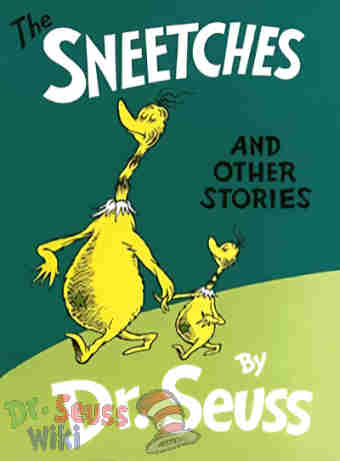
The trailer in question is Dr. Seuss’s The Sneetches, an adaptation of one of the books from the 1961 children’s book The Sneetches And Other Stories. The book includes another story about a creature called The Zax, unrelated to the first story, but is still the length of a regular Dr. Seuss book together. We don’t know as of this writing if this special will be 30 minutes or a full-length story, but already there’s a padding issue. Then you watch the trailer and you find some adaptation errors, which could lead to worries that Netflix will treat it like so many other cartoon and anime adaptations in recent years. I wouldn’t put it past them.
I don’t have the information to say it’s “woke” or whatever. This isn’t some rage fest. It’s more that I have questions about unnecessary decisions already clearly made and concerns about what’s to come. Let’s see the trailer first.
Let’s start with the most minor of complaints, barely worth mentioning if I wasn’t going over so much…and wasn’t me. Why the moons? In the original book, the two groups are star-bellied and no-stars. For whatever reason the moons were added to the other side. It seems like an unnecessary change. This isn’t the first time the story’s been adapted, and nobody changed it before. That’s just the artistic commentary. Now let’s discuss all the changes.
There’s no narrator in the original book, so adding one isn’t a bad idea. Other kids shows have added them in the past. However, the changes of concern start with what he says. In the original, we’re told that the star-bellies exclude the bare-bellies. The star-bellies believe themselves superior and exclude the bare-bellies. In this one both sides consider themselves the superior Sneetch, the stars and the moons. (Someone call Lucky the Leprechaun to negotiate.) You know, before we go any further, why don’t we look at the original book. I found a read aloud video on YouTube that should get us all on the same page.
Catch more from MrsMorrisReads on YouTube
Now there are two ways to look at this. I’m betting Netflix is going to go for the racism angle, but the stars are treated more like status symbols than race. It could just as easily be interpreted as pushing back against elitist snobbery. Seuss could be trying to be opened ended and look at any foolish thing that keeps people apart, making one feel superior to the others. The elitist theory is enforced by the point where all the bare Sneetches now have the literal status symbol and point out “we’re no longer lesser than you”, while the formerly only star-bearers get freaked out and insist they need to be the “superior” ones again, thus now the stars are out.
This is how Sylvester Monkey McBean manages to con these guys out of their money. He didn’t even start the snobbery, but he was willing to take advantage of it. By putting stars on the bare-bellies, he makes money. Then he starts messing with them to pull the actual con job. By having another machine (just so happened, right Syl?) that takes the stars away, he gets the snobs to remove their stars for triple the money. Now the snobs still get to be snobs because to them being different makes them superior, not the stars. It’s only after their out of money and not able to tell who is supposed to have what that they realize what idiots they had been. McBean gets the money, and unknowingly helps his rubes open their eyes to it not mattering, laughing at them all the way while driving off with all their money.
Instead we get two kids who want to hang out together, and make a machine that switches their symbols to see each other’s home area. It could lead to a similar ending, where the Sneetches learn the symbol isn’t what makes you good or bad, but it’s not like that story hasn’t been made before, and if they are going the “racism is bad” angle, that means the kids just created the Sneetch version of blackface. Having the con man involved makes it easier to believe that they’d go running through the machines and changing their symbols or lack of symbols around (or in this case stars and moons) when they’re being tricked by their own snobbery than whatever these kids will come up with. If both sides are repressing and excluding each other instead of status-less Sneetches wanting to finally be seen as equal, something feels…lost.
Then there’s the run time. Notice that the original book’s reading only took about 6 minutes, including titles. While a few of Seuss’s books have been made into half-hour specials, the attempts at making them feature length was unnecessary padding. To use the two most well know, the Grinch gets bigotry and bullying added to his backstory, while the story now has to teach everyone the real meaning of Christmas. The Lorax’s movie added more than even the special did. While the animated half-hour specials added seeing the Grinch commit his bad acts and the animals all leaving as the Onceler doesn’t even realise he’s not replenishing his own supply (any logging company can tell you why that’s also a bad business decision), the movies add in extra subplots and side themes that feel unnecessary to the proceedings.
Meanwhile, this story can’t even fill a half-hour as created. When it was originally adapted, it wasn’t on it’s own any more than the book did. Dr. Seuss On The Loose was a collection of the short Seuss stories in order to fill a half-hour. In addition to it’s book mate, they also used Green Eggs & Ham. Some Russian studio apparently released this as a short, but with changes of their own like Sylvester now being a bird and the Sneetches not learning anything. I’m going by the Fandom wiki (question the source). This looks more like the central situation but a whole new plot by adding kids who actually do everything in the story, the girl questioning society and making friends with the boy. (Or at least a character voiced by a boy. These day’s who knows?) So no con artist, a reimagine of why everything started, and practically a different production that has the paint job of Seuss but not his story. I will call it out for that.
I don’t have Netflix so I won’t be able to check it out…but even if I did I’m not sure I’d want to. These modern reimagines and remakes of the Seuss stories I knew as a kid just don’t feel like actual nostalgia. It’s more not-stalgia they think they can get away with because of kids, but any parent who grew up on Dr. Seuss probably already showed the books to their kids. The story is already timeless so there’s no need to be contemporary. It might end up being good in spite of Netflix’s history, but artistically it feels so…unnecessary. Just adapt the story properly, do an anthology if time padding matters, and stop shoving things into the stories that weren’t there. Unlike what the old adaptations did, these changes affect the theme, tone, style, and in this case the story itself, making yet another “original” story using branding to get past studio execs who don’t care enough to check their work. Could it be good and still find a way to have the same theme and message? Possibly. Are the changes unnecessary when the story already exists and been beloved since 1961? Obviously. And if this is a movie length special instead of just a half hour? I just don’t see the point.


 BW Media Spotlight