
The above tweet caused quite a commotion when I woke up yesterday morning and I was prepared to write about it, and I still might for tomorrow. Then I went to the actual article for linking, Chrome decided to translate it for me, and then I saw a lot more to write about when it comes to Jim Lee’s comments. The article in question comes from Japanese entertainment site NikkieXTrend. Reporter Kaori Maeda asked the current DC Comics publisher/chief creative officer and the creator of the Wildstorm Universe about DC’s recent successes…and got a few facts incorrect. Then again, so did Lee.
Now, I don’t know if Lee was just trying to be nice but he’s not wrong in that currently Japanese comics are beating the daylights out of American ones in America. Before the fans get on my case, “manga” translates to “motionless pictures”, aka “comics”, and the previous name for the software I use to make my comics was “Manga Studio” in the US and “Comic Studio” out of Japan. Manga are comics. We favor no elitism here, even from fandoms. I will call them manga to set them apart from US comics easier and for the sake of argument, but if I mix them, deal with it! Yes, this is an issue with “manga” fans, including pronunciation for the really pedantic ones.
Credit where it’s due. Lee is a good storyteller and artist, which is why his work for both DC and Wildstorm has been praised to the hilt. His recent actions as COO, however, has left fans cold. The full interview is worth going over, but we’ll come back to the part the X-Twitter post focused on because that deserves its own article. The problem is so does the rest.
–Works and characters you’ve been involved in have been adapted into films, and new fans are being born one after another. How do you feel as the original author?
Jim Lee (hereafter referred to as Lee): It’s really exciting and a huge honor to see my ideas and concepts come to life through TV shows and movies.
But it’s interesting. I’ve been making comics for over 30 years because I love the characters and the world they create. I never thought, “Someday it’ll become a movie.”
So it’s a real unexpected surprise, an extra “reward” that comes with doing this job.

Comic based on the Saturday morning cartoon, so far the only Lee-created property to get adapted into anything as far as I know.
I’m not sure what has been translated in the live-action front. I haven’t heard an update on the Authority’s movie (Wildstorm’s version of The Boys) in quite some time. Everyone’s focused on James Gunn leaning heavily on Superman’s crew and his own take on Peacemaker, and we’ll get to that. The “Hush” story arc has been adapted into animation, but he was the artist on that, while WildC.A.T.S. had a one season Saturday morning cartoon on CBS. I do like that he calls this an “extra ‘reward'”, meaning his focus when making comics is making comics, not if it will be turned into a movie or TV show. I’m guessing his bosses at Warner Brothers don’t really care, and I don’t expect Netflix (or Skydance if they actually win their attempts, which isn’t looking good for them at the moment) to be any more interested. They may even be less interested than Zaslav in the drawn “kiddie” stuff.
It’s also a very rewarding feeling. It’s really nice to see other creators, directors, and showrunners take your ideas seriously and lovingly incorporate them into their work. So it’s a huge honor and a very fulfilling feeling.
One more thing to add: when I started working in comics, almost no one knew about American comic book characters. Even in the United States, comics were like a secret society. No one thought, “In 10, 20, or 30 years, they’ll be made into a major movie and become one of the biggest pop culture events in the world.”
At the time, I was really just working within the pages of the comic.
The world we created because we love comics has become a central part of pop culture—it’s like a crazy dream, and I still can’t believe it.
To Hollywood it seems to be a nightmare seeing how the directors, screenwriters, producers, and their “shill media” allies work to undermine it. Comics were treated with more respect before Marvel Studios was taken over by Disney and everyone followed them instead of the Marvel Studios that worked, or the works that are still praised like Richard Donner’s Superman: The Movie and Sam Rami’s first two Spider-Man movies. On television, superhero shows did well, too, though animation tended to handle them better because they could get away with a bit more creatively even when parent groups kept them down “to protect the children”. For more grown-up targeted shows like Invincible that isn’t a problem, and there’s more praise for that show than Peacemaker.
–Recently, DC Comics adaptations have been doing well. In the summer of 2025, the film “Superman” directed by James Gunn was a hit, and TV shows such as “The Peacemaker” and “The Penguin” have also been successful. What do you think is the reason for this success?
One out three is right. The Penguin seems to be doing well, especially with some of the fans I follow (it’s not for me and neither is Matt Reeves’ take on Batman). However, Peacemaker is an internet joke while James Gunn’s Superman By James Gunn has had its own share of problems and hasn’t been a big hit, if you can call it a hit at all. It’s certainly not doing what WB would have hoped it would.
Lee Hmm, yes. To me, the character of Superman is very interesting. He represents hope and humanity, even though he’s an alien
In this film, he says, “I’m just like everyone else.” We have to face the various struggles of everyday life and move forward one step at a time. We keep putting one foot in front of the other and somehow try to get through each day. I feel this is very appropriate for the times we live in.
The world is in turmoil, both politically and economically. There’s a lot of change. But people find hope and inspiration in these fictional characters because they empathize with them, understand their goodness, and want to believe there’s good in ourselves, too.
Too many writers, even within the comics themselves, haven’t lived up to that belief. One of the architects for the Gunnverse is Tom King, who seems to bringing his personal traumas into the stories and giving us a broken Batman, a suicidal Mister Miracle, and a Wally West that accidentally kills everyone at a mental health retreat for superheroes (and that’s a list of blunder on its own). The darker elements added in by Dan DiDio and the people he brought in are still there, as are the people he brought in that haven’t rocked the activist boat. Harley Quinn…well, that’s more JesterBell’s territory than mine. It gets harder to find hope in DC stories than it used to be from everything I can tell.
Lee’s praise for Gunn and the very panned Peacemaker in the next bunch of paragraphs is either professional courtesy or ignorance. We’ll move on, except for this paragraph.
So I think the storytelling he’s (James Gunn) showing us now is a continuation of the experience he had as a child, reading comics and feeling the world start to move. The works he’s making now are an extension of the stories he’s had ever since his childhood.
Then he read only one comic because he seems to be on one setting, repeating what he (and the movie’s screenwriter) did with Guardians Of The Galaxy, as most of the stuff he’s done for DC follow the same formula, including his take on Creature Commandos that nobody’s talking about. Even G.I. Robot seems to have vanished from the discussion, and he’s the only character that got any interest. I’ll save the manga section for the next article since I’ll have plenty to say there so we’ll move to this question:
–In an interview, you said, “DC’s main goal is to balance moral lessons with entertainment.” As the world becomes increasingly chaotic, it must be very difficult to portray heroes in the same way as before, but what do you think is required of DC Comics now?
Lee: Well, I think it’s a really difficult time right now because readers are so divided and even the definition of “right and wrong” is constantly shifting and changing.
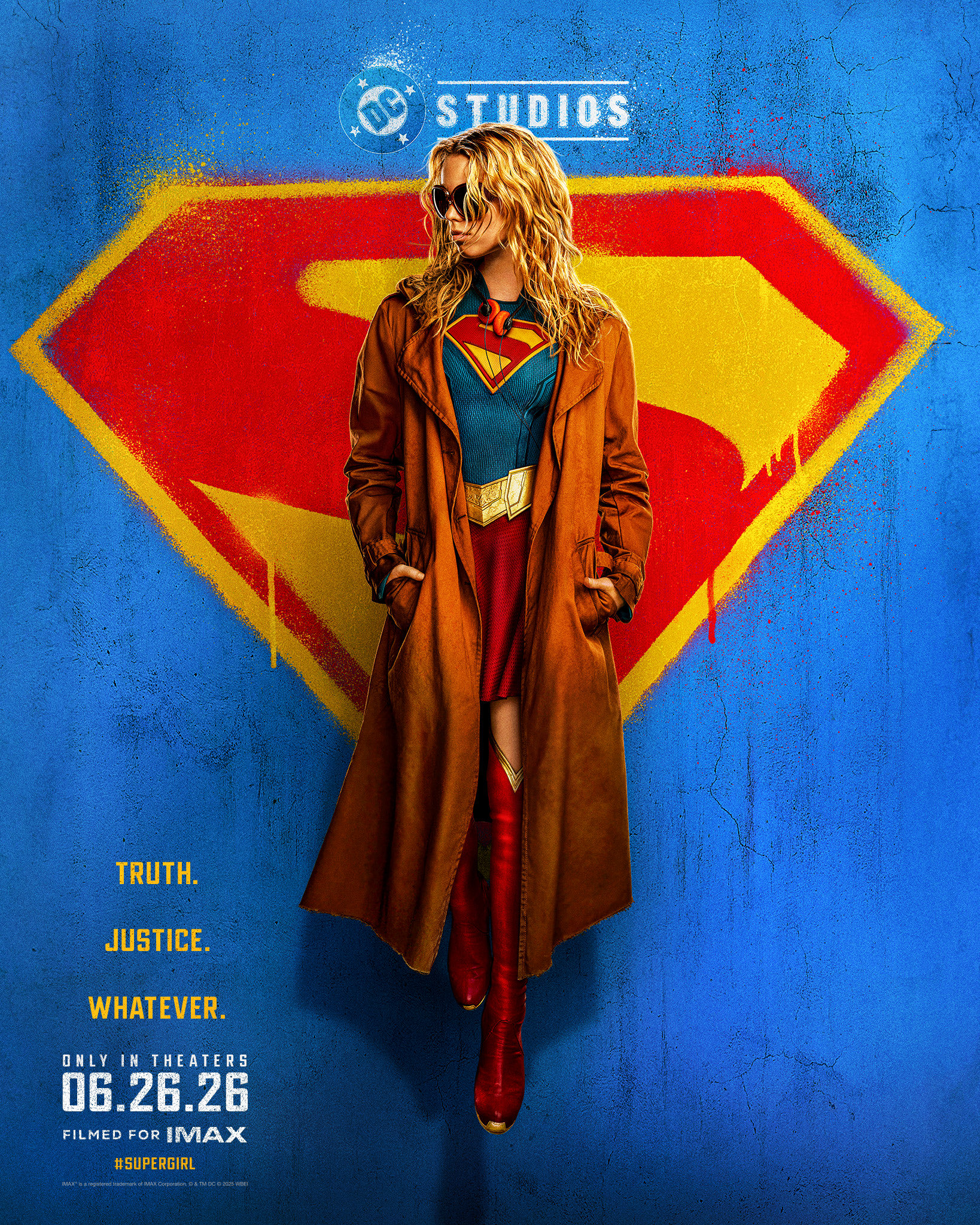
pictured: hope and optimism?
That’s not on the audience, that’s on your creators. Even the ones who aren’t driven by politics think that set right and wrong, good and evil, is bad storytelling. Nevermind that it used to set DC apart from Marvel with tried and true heroes who knew the difference and gave us great adventures, one of the reasons I became a DC fan over Marvel as a universal whole. Moral relativism is new to DC and it’s inclusion, again mostly thanks to Didio and Identity Crisis, marks when DC started falling away from everything I loved about it.
I don’t really want to talk about politics, but unlike in the past, today’s younger generation has a completely different view of “world order” than older generations.
I don’t want to talk politics either but you’re creators seems to be one of the big reasons I have to, and we’ll discuss that in the next article, as well. The only reason “today’s younger generation” has a “different view”, and I’m not even sure that’s right given DC’s numbers, are because activists pretending to be educators got to them, and even then it’s only in parts of the country like Hollywood and New York, the hubs of entertainment and the media. DC used to be in New York until Warner Brothers dragged them from their home to be closer to Hollywood as part of a restructuring that hurt the whole company. Instead of letting each division do what they were doing best, everybody became part of one system whether it worked for them or not. Usually it didn’t and that’s when AOL Turner Time Warner Brothers Comics Games Whateverelse started failing as a company. Warner Brothers was never really good at anything besides movies and television, which is how they killed Atari.
That’s why we turn to writers and artists: they’re on the front lines, they have real life experiences, and those experiences influence their work.
However, the company (management) has told them, “Please don’t use your work as a political document or to make a political statement.” What’s needed is a “story.
If DC had been doing that, we might not need two articles to explain why I’ve had a “Death Of DC” category since your predecessor. If it isn’t politics and leftover grimdarking hurting you it’s the cringe humor by writers chosen for their political views or race/gender/orientation instead of their talent. The only real life experiences they’ve had are limited and it’s those views that influence their story so that every character agrees with them and hates the same people they do, especially online. Stop listening to your marketing people and social media managers, both of who are as politically motivated as the “consultant groups” you and the rest of Hollywood and AAA gaming are listening to and try checking out comments from actual and former comic readers to see why the “former” count is so high.
A story needs to be a “story.” And ultimately, it is the power of the “story” that changes people’s perceptions, not a direct assertion. If you make it too obvious, the reader will have a negative reaction. That’s why “emotion” is so important. The “emotion” of a story moves the reader’s heart and mind. Emotion, not the content itself, is the key to opening people’s hearts.
Furthermore, I believe the most successful stories are those that have emotion and ultimately create empathy in the reader.
By telling a strong story, rather than simply saying “this is right” or “this is wrong,” the reader is able to understand both sides of the characters’ perspectives and empathize with them. That empathy is more powerful than any attempt at persuasion.
It’s much more powerful to help readers understand the world through empathy than to force their opinions on what is right and wrong, and for me, empathy is a very worthwhile goal in fiction.
I’m not sure what’s sadder, the fact that you know all this or that you aren’t practicing what you preach? You’re the guy in charge. You get to decide who works on these books. I know you can’t afford the best creators right now thanks to the upper people not giving a fig about comics outside of IP engines for the “more important” media, but surely you can find people who actually agree with everything in that section. The problem is right now you don’t and that’s why DC is suffering.
But we’ll go over that in the next feature article as we see what Jim Lee and DC Comics can learn from manga.


 BW Media Spotlight
[…] Remember this from yesterday? This was the part of the interview with Jim Lee, conducted by Japanese entertainment site Nikke X Trend about his work in DC Comics and it being adapted by James Gunn. All anybody who I saw post about this or in podcasts focused on one section in particular (translation by Google Chrome): […]
LikeLike