
If you’re looking for amazing and helpful advice about how to use magic systems, and their science counterparts, in your stories, you’re reading the wrong article despite some of the tags. I am in no sense an expert. If anything, this little string of consciousness is me trying to think about how such systems work, and I welcome any discussion from people who understand it better than I do. I’m the one asking for tips on this one. Any design of magic system I’ve used to this point has been more dumb luck than any actual thought put into it. I want to do more complex stories than my Christmas superhero minicomic and four-panel gag strip in the future, so it’s worth thinking about. Popping “magic system” into Google gave me this term description from Laterpress:
What is a magic system?
Magic, in the realm of fantasy novels, is essentially a catch-all term for non-scientific, non-physical feats. This usually includes things like ultra-realistic multisensory illusions, teleportation, instantaneous creation or destruction, and similar tricks that aren’t possible in the real world. When we talk about a magic system, we’re talking about the way that magic works in a particular setting and how it interacts with the story. I’ll go into more detail in a bit, but for now, it’s enough to say that magic systems answer the who, what, when, where, and how of magic in a fictional setting.
Why do you need a system for magic?
Because magic is so inherently unrealistic, it almost necessarily makes writing harder. If your characters have magic, why do they have any problems at all? Couldn’t they just snap their fingers and will it all go away? Shouldn’t they be living in a utopia full of dragons and fireballs?
Magic systems impose rules on the magical power in your setting so that your reader can understand why there are problems in the narrative at all. They make it possible for you to include magic without breaking your setting or making your story really boring. To put it simply, magic systems prevent the presence of magic alone being a deus ex machina.
In addition to that, having a system for your magic means you can up the ante by breaking out of that system. Establishing a rule and then breaking it can, if done well, introduce an element of intrigue and make your reader desperate to uncover why that rule isn’t holding up and what the characters are going to do about it.
So let’s discuss.
If you’ve read my Golden Age comic reviews you’ve possibly seen when I get to magical or occultic heroes like Zatara, Zanzibar, and the like. Those stories seemed to be just about messing with villains. They and their counterparts can make people disappear and reappear, change their forms, turn them into living skeletons (yes, this actually happened to one villainess), and other sorts of chicanery. Limits weren’t in the plans. They could make actual currency appear out of nowhere and nobody asked where they got it from or if it counts as counterfeit. They could tank the whole economy by making New York City into a new El Dorado that somehow never succumbs to the elements. Surprisingly, the only villains who think of this are ones destined to lose those powers…if they’re lucky and don’t succumb to an even worse punishment than going to jail. That whole living skeleton thing isn’t the creepiest punishment that happens in those stories. You should see some of DC’s The Spectre and what he does. Kind of makes me question God’s involvement in his “vengeance”.

“My locator spell will find…oh, my wallet’s in my front pocket.”
Those heroes seemed to have no limits to their powers. It made them capable of doing anything the writer wanted them to…and it was as boring as it was insane. If your hero has no limitations, the same crime Superman is often falsely accused of, then there are no stakes. Deep down we all know the title hero is probably going to live…or at least come back at some point in some dramatic fashion. The stakes are more about making you wonder how the hero is going to get out of it. The mountain coming down on top of Zarko The Great isn’t interesting if he just teleports away or turns the mountain into cotton candy.
So a magic system helps limit your characters whether they’re in a linear story or an RPG. The latter is also important because that struggle keeps your game from becoming boring. If you can do anything you want, why go on an epic quest to get gold when you can just turn the rocks into gold and move on with your day. In the same vein your magic system needs to have limits like not being able to transmute things into gold so as not to ruin the local economy. In a game you have to balance fun game play and making sense in the lore and world around you. I once posted a video by The Closer Look about a game that in his mind had a terrible magic system because, while fun to play around with, made no sense for the world around it. That video didn’t even limit the system to magic as he compared a fantasy game, the very popular The Elder Scrolls: Skyrim, to a science fiction game, Death Stranding. In this case the term “magic system” is just an easy application. In both genres the “magic” system is just a set of rules that limits your magic and keeps your science fiction from looking like magic, even in a “science fantasy” situation (Star Wars or Masters Of The Universe comes to mind). Campfire lists nine types of magic system.
- Nature-Based Magic
- Divination Magic
- Conjuring Magic
- Psychic Magic
- Life and Death Magic
- Animal- or Creature-Exclusive Magic
- Magitech Systems
- Eclectic Magic
- Uncommon Magic Systems
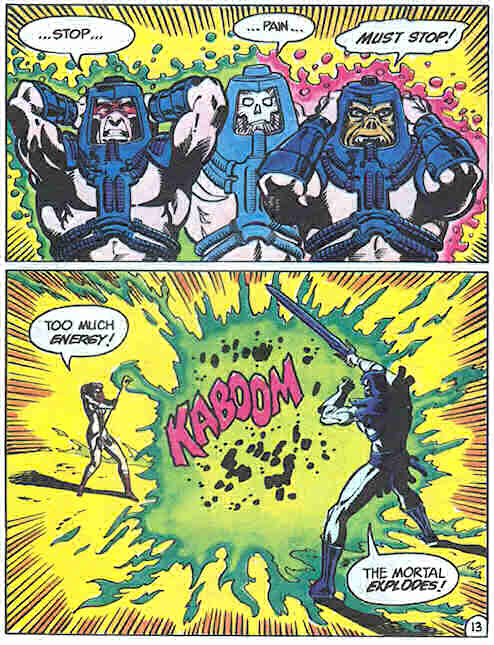
I understand the monster form. That was Skeletor with a potion. But if these were magical transformations, explain the robot.
You can dig into those more in the article itself if you’re curious. Captain Yuletide aside I tend to fall more into science fiction, but the shared idea is manipulating the world around you. To someone from the Middle Ages, your smartphone would be very magical, which is why there’s an isekai called In Another World With My Smartphone. Other manga, anime, and light novels out of Japan treat magic systems with the same rules as a typical RPG video game based on European folklore, with stats and ranks. Sometimes they can even bring up a window of “displays” in shows that aren’t about being trapped inside a video game. Science by nature has rules. You can technically fly if you have the right equipment but it requires a lot of things that we don’t have the technology for. Magic is about manipulating science but still shared rules with science.
In sci-fi we can play nature. It’s part of how we survive as a species in rough environments or weather. In the comics, Iron Man’s armor could fly around the world because of the rocket boots, which required fuel. How boots carry that much fuel and still has room for rockets and Tony’s feet is anyone’s guess, but the MCU playing with his repulsors got around that. There isn’t a lot of explanation about Superman’s ability to fly, like how does he levitate and what provides thrust. You can blame his body processing yellow sunlight only so far, and that’s not how Martian Manhunter does it. We usually don’t care. We’re here for the cool powers/tech and the heroes using it in the service of good while the villains are in it for themselves but there are still limits. Tony’s fuel can run out. Superman dealing with other forms of light or radiation messes with his powers. Meanwhile, when a real world scientist pointed to the “Heisenberg Uncertainty Principle” as a reason teleporters couldn’t work, writers for Star Trek: The Next Generation came up with the “Heisenberg Compensator”, a system that could map the position AND motion of subatomic particles. Someone still needs to explain food replicators. Even a 3D printer needs the right materials, not just anything out of the blue.
Magic in turn can take on scientific emulation to limit how powerful magic is. Magic requires a source of power, usually mana or some kind of crystal with mystical properties. In Outlaw Star, a primarily science fiction work, mana is said to have run low in the galaxy, though we see a group that can still channel magic and protagonists Gene Starwind and Jim Hawking use a gun and “caster shells” that basically shoots magic at their enemies. Each shell represents a different spell that gets released as the shell reaches its target. Potions require the same kind of recipe as medicine or food. Spells can be cast with incantations but there are different kinds of those, and some fantasy anime play with how they can be used. Skilled enough magicians can alter an incantation to alter a spell or even develop magic without an incantation or magic circle or anything, and these are considered enhanced or forgotten techniques in some series I’ve seen clips for. In Harry Potter’s world you need magic wands and not any old stick or rod will do. There are also people who can use magic and people who can’t, similar to the quirks of My Hero Academia or the X-Gene of Marvel’s mutants. Some people get superpowers from electricity and others just get extra crispy. There’s a science to how the magic works, but darned if I understand it all.
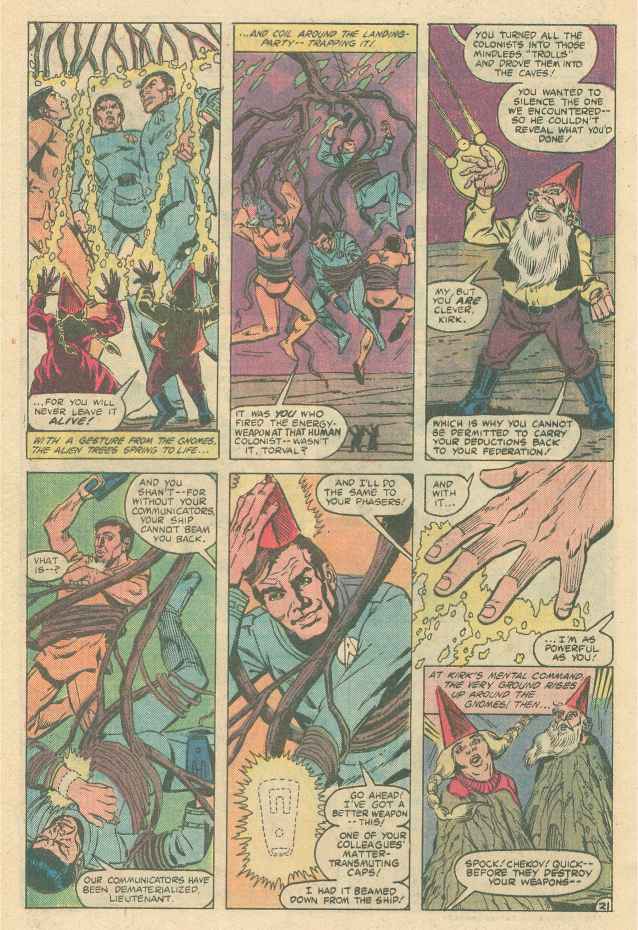
I don’t even know what to make about Kirk with a magic hat.
So you have magic, science, and plain old superpowers that seem to rank somewhere between. What about spiritual energy, like the chi in the Dragon Ball franchise or shakra in the Naruto franchise? While magic exists in Dragon Ball, Goku and company use spirit energy to fly and shoot ki blasts at each other. Naruto takes the mythology of ninjas and changes them from stage magician magic to actual magic superpowers, but various ninja study or can use only certain techniques. Rock Lee and his mentor don’t even have shakra but use some other source, whatever the whole “gate” thing is. I’m not even sure where transmutation in the Full Metal Alchemist franchise fits into these divisions. Parts of it are scientific in nature, parts almost seem magical, and I’m not sure where they get the energy to make any of it happen. There are limits, usually draining the body or lifeforce of the user if overutilized, or FMA’s “equivalent exchange” rule that led to the protagonists having a metal arm and a soul trapped in a suit of armor for violating that rule while attempting to bring their mother back from the dead, with the “philosopher’s stone” being able to bypass that rule. That’s not how it works in the Harry Potter universe, is it? The Force is a powerful…force…that binds the universe together, gives bad premonitions to people who don’t know how to interpret it (Anakin), but also cloud men’s minds like the Shadow.
Come to think of it, what do we call the Shadow’s abilities? Magic, science, spirit (yes, yes, wrong guy, haha), or some mix? Marvel’s Power Cosmic adds in more wrinkles, or the “Masterforce” of Japan’s Transformers universe and their “Godmasters”. It can get crazy without thinking through the abilities and weaknesses of all of these. Don’t get started on elemental bending in the Avatar franchise that doesn’t have blue people, which is its own can of worms when it comes to science and spirit. So even the terms are up for debate.
I can see why magic is usually based on the European folklore and Tolkien’s Middle Earth formula. It’s already thought out and easy. You can ape it directly or mess with how it works and come up with ways to break those rules in a way that’s unusual to the world. In science fiction you can come up with new scientific principles but they have to make sense in that world even if they don’t in ours. It’s all kind of crazy, and yet to give your world stakes and make some kind of sense you can follow, it’s important to figure out your magic/science system. That much I can advise. In Captain Yuletide it’s pretty easy. Our heroes’ shared power comes from the Christmas spirit. Whomever is using the power that story basically flies and has enhanced speed, durability, and anything else comes from their unique talents. Bryce’s limitations are something I haven’t explored yet beyond only having his magic active when one of the elves is using the power of Captain Yuletide since Bryce’s magic comes from being in the “backwash” of the mystic energies the first Captain was hit with and granted the powers. So he’s hardly the Sorceress of Grayskull levels of magic user. Meanwhile you have Winterfrost, one of the enemies, who came to life by a magic hat but became an evil warlock type. Frosty would be so disappointed.
Well, my brain is spent. What do you folks think? If you use magic systems, or their science equivalent if not some mix of the two, how do you approach it. If you read a book, watch a movie/show, or play a game (video or tabletop), what do you look for in a good magic system? I’m curious what people think on this one…and everything else I talk about here, really. It’s one of the reasons I started this site. On this particular topic I am not an expert and could use a bit of learnin’.



 BW Media Spotlight