

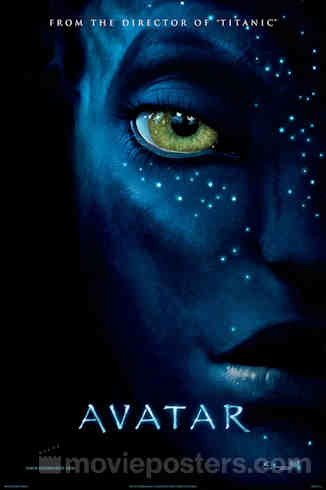
Most people that think of “Avatar” will think of the Avatar: The Last Airbender, whether it’s the amazing animated series or the terrible live-action attempts. The reason the movie was just called The Last Airbender is because James Cameron got the rest of the people (I don’t have actual math here, folks) with his movie and the sequel, Avatar: The Way Of Water. Both movies are praised for their animation and some even have positive things to say about the worldbuilding when it comes to the Na’Vi and the “plug and play” connection between “man” and “nature” of Pandora. Do people who even wasted time on this movie remember?
Regardless, nobody praises this movie’s story except for James Cameron, who is convinced these two movies are some of his best work. It isn’t. I have yet to hear anything positive said about the movie’s story or writing outside of the worldbuilding. I think Cameron spent so much time on his lore and his theme of anticolonialism that he forgot to make the story…what’s that word…good. The question is WHY is the story so bad?
Well, Henry Boseley of The Closer Look on YouTube thinks he has the answer. And the problem may come from how Cameron approached his anticolonialism and “we should all get back to nature” theme…done using mostly computer effects that probably had nothing to do with nature outside of simulating one that doesn’t exist in reality. In the following video, Henry goes over the issues with how Cameron approached his themes and why they don’t work.
I think Henry gave Cameron too much credit when he was talking about Cameron ignoring the more questionable acts of the human tribes that inspired the Na’Vi. One thing we’ve seen, especially recently, is how modern movies seem intentionally ignorant of the crimes of these tribes, not wanting to make them look bad because it’s politically incorrect. Sure, they’ll blame all their technical advancements on ancient aliens or some crap because it’s a false glorification anyway. They don’t want to believe these ancient civilizations could be capable of doing this stuff on their own…often being the same races they’re trying to supposedly raise up and “represent”. It’s kind of insulting, and to do so Cameron may not even be aware that those tribes took part in human sacrifice and slavery, or that not all Native American tribes (when they remember there were more than one and each tribe had their own culture in the same way Connecticut and South Dakota have their own local cultures) were good people. I’ll even defend the broken English by pointing out the differences in grammar between the two languages, but there’s some warped view that English is easy. Ask any kid with an F in English class if that’s the case.
Hollywood writers do not understand culture. They don’t understand that different languages have different grammar and someone just learning Japanese or Native American languages will sound as broken to them as a Japanese or Native American (back in the Old West…today they probably learn both languages in schools in Native American areas and reservations) does in old movies trying to learn English. They try to depict other religions as part of a culture, as if only Jews and Christians have religion, and Islam is just Middle East culture instead of worshiping a deity, or many deities in Hindu, Japanese, Chinese, and Egyptian societies, which is what a religion is. They have such a narrow view of other societies because they only know Hollywood life and Hollywood perspectives. They can’t even get another state right, because they may set a show in my state but still treat it like theirs.
 Earlier today I posted a video about the various histories of the Transformers’ Great War. That was a show and comic meant for kids, with the “heroic” and “evil” tags right on there. And yet Transformer society, especially recently in the non-kid targeting media, has more nuance than the Avatar movies. Among the Autobots each has their own personalities, some of which are actually leaning away from fighting. First Aid, one of the Protectobots, was an outright pacifist. The Autobots were made of liberals, conservatives, and in between, as least as close as we’d describe them as humans from Earth. The Decepticons, on the other hand, were the war mongers, the punks, the anarchists, the tyrants, the greedy…all the worst aspects of the human race represented through alien robots. “Kids, don’t be like the Decepticons, be like the Autobots. They have different views but they get along and try to find common ground to make the world a better place.” Again, the kids shows we’re all told have no thought put into them. You could have the occasional Autobot who acts more like a Decepticon (the Dinobots mostly) or the Decepticon who questions what his fellow ‘Cons do (Thundercracker’s tech specs or Skullgrin in the comics after his time as a movie star among humans) but they mostly stuck to the heroic/evil labels because that’s what they represented narratively.
Henry points out that the humans are all evil until a few see the light and the Na’Vi are always good. The difference is we know not all humans are evil because we are humans. Even among the Transformers they became Autobot and Decepticon out of a shared viewpoint, whether they were built that way or came to a certain point of view, and even then I question the split. There are warriors among the Autobots and noncombatants among the Decepticons. There’s more variety than what Cameron is doing because Cameron wants us all depicted as terrible so his heroes can see the light and his villains can be punished, while using the Na’Vi as…pardon the term…avatars for his message. That’s what his character are according to Henry’s description: avatars of his message rather than thought out characters with their own perspective. Even soldiers know when they’re CO is over the deep end and there are methods to properly oppose them or have them stand down without being declared mutineers and treasonous. All the soldiers are evil except the one who “learns the truth” and I guess none of the Na’Vi are extremists on their side.
As far as the medical example, there are natural remedies out there and some may work better than all the chemicals in the lab. Some of those medicines even use natural ingredients. Much of modern medicine has a lot to thank these ancient methods of healing for, but it’s called advanced medicine for a reason, and “superstitious nonsense” isn’t the reason. Natural remedies shouldn’t be looked down on. Acupuncture is based on actual science as much as superstition may or may not have played an early role. The example here is trying to show that but in a really stupid way and really doesn’t represent actual medicine be they medical doctors or witch doctors. The message is more important than making medical sense. If an actual remedy was introduced or if the process used was found to have actual science behind like, like with acupuncture and acupressure, that would be one thing. It doesn’t sound like that’s the case.
The story is paramount. This is the first rule of storytelling. It’s in the name. You can have themes, you can have messages, but to do either the story must make sense, to our world or the world of the story if it’s not our world. When you try to force your message into a poorly thought out story you get a terrible message, and that’s what Hollywood has been doing more and more. By doing a one-sided, heavy handed theme that ignores the real world interactions, you get a terrible story. But at least the special effects are amazing.



 BW Media Spotlight
Did you see sideways’ comment on Avatar?
LikeLike
I have not. I don’t even know who that is. What did he/she/they say?
LikeLike
What brought it to mind is that his entire point is that Cameron ended up “colonising” (per Cameron’s definition of it) his own soundtrack.
LikeLike
I’m watching it now and it’s rather interesting. Yell at me if I don’t give you credit for the Daily Video posting.
LikeLiked by 1 person
lol no biggie if you forget 😉
LikeLike