
Too bad those dreams are becoming nightmares.
Well, we had to get a commentary into this week somehow.
According to The Hollywood Reporter, Warner Brothers Discovery head honcho David Zaslav is showing that he doesn’t understand what the problem is. Like most of Hollywood he’s taking to broad an overview of the situation. To wit and emphasis mine:
The mood inside the Colosseum could be markedly different Tuesday afternoon when Warner Bros.’ movie studio bosses Mike De Luca and Pam Abdy take the stage. The duo have come under intense scrutiny following several high-profile box office misses, with Bloomberg going as far as to report that their boss, Warner Bros. Discovery chief David Zaslav, is speaking with potential candidates to replace them. (If Greenstein is up for leaving Sony, he would be an obvious name to put on Zaslav’s call sheet.)
Sources close to the situation say Zaslav wants to focus on big IP, versus the sort of filmmaker-driven fare that Abdy and De Luca are known for, including Ryan Coogler’s upcoming Sinners and Paul Thomas Anderson’s One Battle After Another. He is also said to be unhappy with the amount of money the two are spending on these non-IP projects. Abdy and De Luca allies say the two executives are consummate professionals and are resigned to the fact that their fate at Warners is uncertain amid a changing climate. (It remains to be seen whether Abdy and De Luca acknowledge the elephant in the room when appearing on stage.)
Big IP, especially in the hands of current Hollywood structure full of elitists, activists, and people who don’t care about fans or source material, is a mistake. Today’s filmmakers are too egotistical to do these properties justice, and apparently that’s being missed. Also being missed is how that’s hurting the studios AND the big IP.
Without dragging in the culture war, where decisions are made based on appealing to people who also don’t care about the IP to show themselves as “allies” and “the good white people who really care”, today’s filmmakers don’t want to make things based on existing IP. That’s not across the board, but those are also not the people getting the gigs. If DEI policies aren’t dictating who is being hired (some critics would say “cast” for the promotional “look who we hired stuff”–okay, so SOME culture war dragging), they’re still being chosen for their names and not their interest in a particular property.
Let’s say I was going to make a Herodude movie. Should I hire director 1 or director 2? Director 1 likes the characters, or at least the superhero genre and likes a good parody, and wants to do a fair adaptation, making changes that are only necessary between media formats (webcomic strip to theatrical movie) and to put some personal touch to it. Ultimately they want to show how good they can be on this property in the hopes that he or she will get their dream project down the line.
Director 2 couldn’t care less about superheroes if not outright hostile to them. They can’t wait to create the dream project he/she has had in mind for years, or has a particular scene they’ve always wanted to film but never had a place for it and won’t settle for doing some short subject because that’s not where the fame and glory are. They have a script they think they can slap the names of the IP onto for branding purposes and trick the studio into thinking it’s actually an adaptation of something they have no understanding about and just want the money. Director 2 is better at selling them on letting them in or was chosen for some race/gender/ideology checkbox to look good in the press.
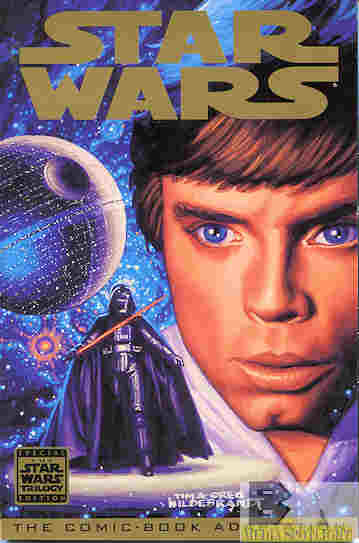
I’m sure this thing won’t go anywhere.
The smart person would, if director 2 is proven enough, give them their original movie and let director 1 do the IP regardless of current talent, because you can always find director 1 a mentor. Let the project you know will draw people in pay for the uncertain one, and if you get a sleeper hit, you win. Remember, nobody thought Star Wars was going to be worth anything…and it turned out to be one of the biggest franchises of all time until the people who didn’t care about it were put in charge of it. Iron Man used to be rather obscure but Marvel Studios pre-Disney took a chance on it (because they had no choice) and it worked for them and Paramount, who has since done the same damage to Star Trek (although some of that is also to be blamed on a man who hated Star Trek wanting to flip off his former bosses at Viacom as he was shoved out the door and purposefully ruined the brand by handing it to the wrong people).
The big IP alone is no longer enough because now fans are wise to how the director 2s couldn’t care less about anything besides their own ideas, and will subvert nostalgia and popularity for the branding. Thus what used to get theaters filled with paying customers no longer do. The rare Joker of the world, a movie the director openly said was an F-U to the “comic book movie”, is lost in the Joker 2, the Captain America: Brave New World, the Madame Web and She-Hulk: Attorney At Law–movies and shows created to trash fans or to use the branding to hide a terrible movie they were sure would be received if only they tricked people into watching it. The level of trust that brought fans out to a theater or turning in to streaming channels is gone. We don’t believe they can, will, or even want to do it justice. One Marvel Studio producer even stated he didn’t want you on the project if you know the comics, because to them the names are just an excuse to make their movies, their characters, because studios like Warner Brothers Discovery won’t give them an outlet, they don’t see “if I get people in by doing a good job on this thing they might be more open to me doing something original” as an option, and only care about themselves and which peers will praise them for their “brilliance”.
Concentrating on the big IP means those same directors will have LESS of a chance to make their movie and will just have to paint the names of some random DC character that vaguely matches the character of an existing script or can be tweaked to fit in (like poorly whittling that square peg to barely fit into the round hole) into what they really want to be telling. This gives you superhero movies without superheroes, movies the exact opposite of what everyone liked about the show or comic its based on (and video games are on that list, too), and something barely if at all recognizable to what they love. Then you DO have the activists who will race/gender/orientation swap a character, insist all tomboys are butch lesbians or trans, go after whomever they don’t like, and further ruin what the ego-driven elitist snobs already destroyed without social agendas. Sometimes on purpose. Again I remind you, people tried to talk George Lucas out of making Star Wars just because it was sci-fi, the original Doctor Who fought to survive because of people upstairs at the BBC hating the low-budget sci-fi kids show, and pro wrestling haters at Turner Broadcasting is one of the reasons World Championship Wrestling died and was absorbed by Vince McMahon. Stupid people will put themselves above anything they hate whenever possible, and happily use their position to “fix” what’s “wrong”, which to the everything for meeeeeeeeeeeeeeeeeeee crowd is whatever wasn’t made for them. Then they hypocritically tell you “it’s not made for you” when it was until the “more important” people showed up to decide what your taste should be.
This is ultimately Zaslav’s mistake. Instead of focusing on existing IP, do the same thing that led to that existing IP exist in the first place: take the risk on something that sound like it could be something, even if it isn’t the biggest thing ever that gets you all the money. That’s how Walt Disney built a media empire, taking risk after risk and now his company is the hands of people who disagree with everything he was trying to build. That’s how Star Wars started. Someone at 20th Century Fox took a risk, George Lucas put in his own money and just took merchandising rights for a movie noone thought would have that much. That’s how Star Trek started. Lucille Ball at Desilu gave it a shot when sci-fi was thought of as silly kids stuff, and even helped out according to a YouTube short I recently saw.
I’m all for using the properties you have, but you need to put it in the hands of people who care and let the ones who don’t have an outlet, or convince them that if they do Superman right, they’ll show they can make money and the studio will be more open to something original. This gets the best work out of everybody, creates a NEW big IP that YOU own, and will be a big step of making everybody happy, including the people who will give you money to make good products. Focus on making good products and putting the right people in the right position to make that product. Fail to do so…and you get the past decade of Hollywood crap and failing studios. Fix the problem, Dave. Don’t keep doing what’s already making you and everyone around you fail.
It doesn’t work if nobody is coming to see it get further destroyed.



 BW Media Spotlight
[…] Existing IP Alone Will Not Save Hollywood: Trying to save your studio by pushing stuff already proven to be a fan favorite and get butts in seats doesn’t work if you hand those IP over to people more interested in their own projects than in the things that made those intellectual properties successful in the first place. I even ended up with an unintentional follow-up about the slow death of long-running franchises. […]
LikeLike