

Big studios and publishers no longer seem interested in the smaller projects. Video games and movies seem to be the hardest hit by this, but you can’t have a new character that isn’t using an old character’s brand in some way. I can remember when in comics there were complaints about derivatives, but now it feels like that’s all you get. All the studios want to make AAA games, though the reasons those are failing are a whole other article. Movies have to be big, flashy blockbusters. None of the smaller stories seem to matter anymore, and while that’s killed innovation it has also ruined the smaller projects.
Smaller projects are very important to the future of media. This is where up-and-coming creators should be honing their skills to one day take over major project as the creators of old get too old and take retirement, with a few staying around because they still can or to train the next generation. It’s also a good place to test new techniques and IPs. If you can’t make a franchise, one good standalone may still stick with people. Does anybody even remember Gone With The Wind had a sequel, or that it was only made as a cash grab, failing because nobody heard of it? I don’t even think the book got a movie adaptation. Some of those smaller projects, like the Evil Dead franchise, gain a cult following but would never make it to being a big budget film, though Army Of Darkness tried. Not being a horror fan, that’s the limit of my knowledge of the franchise beyond bringing Bruce Campbell to his own cult status. The only big project I even know him being part of was cameos in parts of the Spider-Man movies because Sam Rami is one of those directors who loves to stick his favorite actors to work with into anything he works on.
There are a number of reasons why: impatience and ego certain play a part, but I want to focus on one particular reason: greed. One of the “seven deadly sins” of Roman Catholic theology. Not just financial greed, although we’ll be starting there, but other forms of greed. From Britannica:
Greed is defined as the immoderate love or desire for riches and earthly possessions. A person can also be greedy for fame, attention, power, or anything else that feeds one’s selfishness. As a deadly sin, greed is believed to spur other sins and further immoral behavior.
Or sometimes really stupid behavior like only trying to make the biggest thing ever in the believe you can own all the money and bring all the people to see it. Or your version of it. Or something completely unrecognizable. Instead we get proof that large may not necessarily be in charge.
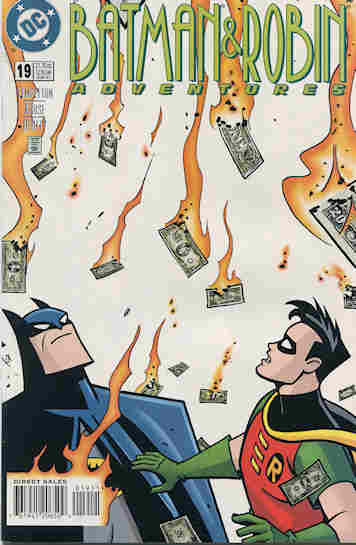
“It would have been cheaper and probably safer to just by firewood.”
Financial greed is usually what one thinks about when looking at greed. The misquote from 1 Timothy 6:10 is “money is the root of all evil”, which sounds very hippie. I remember it as a sign in the Monkees’ beach house. However, the quote is inaccurate: “For the love of money is a root for all kinds of evil.” Money can be used for charity. It can buy you goods when you have nothing to barter in exchange for those goods. It’s why currency was created in the first place. Money makes the world go ’round because it’s the best way to ensure everybody gets something they want and/or need. I don’t need an ox. Everyone needs money. Money wins, the ox gets owned by someone who has the money and space to care for it and has a use for it, even as a beloved pet. (It happens. I think. I live near farms, not on one. Last time I was on a farm was as a kid. Saw a horse crap and threw up. Fun story. Sorry if you were eating at the time.)
A more accurate quote is “you have to spend money to make money”, a business principle that is definitely true, but you have to spend that money wisely. A lot of studios and publishers right now aren’t, but that’s another topic. The idea is that the bigger the movie or game the more money it will make because it’s bigger and that should draw more attention and thus more bucks. It doesn’t work that way in the creative sphere because your product could still be junk. In other business avenues this would be a huge mistake leaving to lawsuits because your car blew up, the air conditioner conked out, and the bridge collapsed because it was made of the metal equivalent of balsa wood. Some of those might get you thrown in jail as well. Not so in Hollywood and those industries which follow in their footsteps, like comics and video games have been lately. Even streaming shows want to be movies, but we’ll come back to that. If the bridge collapses and you find out someone was pocketing the extra cash, whether it was the CEO or the foreman, somebody’s going to prison, especially if someone died. There are theories that Disney is using their movies to benefit Disney+ or that directors may be grabbing a bit of the outlandish movie budgets for their own pockets. Nobody dies, but the entertainment suffers.
Let’s not leave investors out of the problem, even when it isn’t their idea. Investors spend money in the hopes of a strong return, but because they’re part of the corporate system that desires ALL the money, not just a decent profit, their greed insists only a big blockbuster or AAA game with all of the features of every game ever (not counting loot boxes, overpriced DLC, and spending more money on gear that is practically essential to finish the game or “skins” that puts your character in an evening dress or something) because surely that will bring in more money. It’s being greedy about what’s in the game. “What do we put in?” “Yes.” “Yes?” “Did some other game do it?” “Yes, but I don’t know how you have multiplayer when your the lone survivor of the apocalypse.” “Doesn’t matter, do it anyway. Everyone loves multiplayer and we can sell new maps to those rubes.” “You mean players.” “There’s a difference?”
It’s easy to bilk you for money when they don’t respect you and only see you as a slot machine.
Smaller projects, unless they become a surprise sleeper hit (and who wants to take that risk despite having more money than the smaller studios who have to take those risks just to get noticed), won’t make enough money as far as they believe. It has to be big, it has to be flashy, it has to have all the things to make all the money because somebody will clearly like something. Then it turns out they hate everything else and aren’t interested in what ends up a bland and boring product because it doesn’t even do anything interesting, never mind revolutionary. Since they’re playing to people who have already seen it all because they’re the ones with the money, while doing nothing for the older folks because they don’t have disposable income anymore thanks to rent and raising a family (darn kids ruin everything) and believe in things like fiscal responsibility (wish the studios did), they end up losing because they don’t really think. They see the $ in front of their eyes and their brains shut off to the easiest, laziest methods possible they think will cost less…and end up spending more money than they should with little profit if any to show for it.
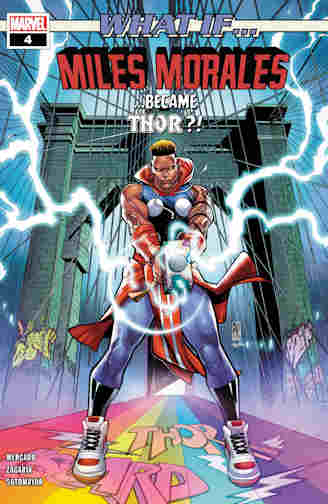
However, there’s another kind of greed involved: status. Fame, attention, and even a bit of power come from this. In addition to the higher-ups at game companies wanting to shove in all the gimmicks, you have producers of movies and shows who want to add something in so they feel like they contributed. Investors will sometimes get in on that game as well. Being greedy for power will be part of our discussion going forward. “Control the origin, control the character” is a philosophy I’ve noticed for years, which is why there are so many origin stories no matter how well we know the character’s history. James Gunn didn’t bother doing a Superman origin because he doesn’t really care about Superman. He wanted to use the character to make his kind of movie, and it sounds like the sequel will be more interested in Lex Luthor the same way Tim Burton was more interested in the Joker when he made his Batman movie.
Status greed comes out of that, and gets into both bad adaptations and the activist race/gender/orientation swaps, as well as how the entertainment industry “recruits” creators rather than hires them. You have “creators” who can’t wait for their character to reach the levels of Iron Man or Black Panther, though as I’ve stated before they weren’t household names for decades and a turn of the century mark. Even better is as famous as Superman or Spider-Man, known internationally with Spidey even having appearances in Japanese media even if none of them were Peter Parker, just wearing their outfit. When Brian Michael Bendis wanted to create a superhero for his son, he might not have had “diversity” in mind, but he did want to create a character for his son, which I guess qualifies as “representation”. Rather than risk him going the way of Spider-Boy decades later, a character who failed to connect despite being part of the Spider-Cluster (I looked that up; Spider-Clutter could have worked and is probably more fitting given current Marvel but I made it work), he took over the role of THE Spider-Man in an alternate universe, and with that universe destroyed (apparently even universes can’t stay dead anymore in comics) someone was unwilling to let Miles go with it and tossed him into the main 616 universe. (That’s supposed to be the comic universe, not the movie universe.) Bendis really wanted “his son’s” character to be popular and co-opted an existing identity, which has led to a big mess.
The same with Riri Williams, only Bendis was creating for his daughter. Whether Bendis intended or not, Riri almost took over for Tony Stark in the main universe. Having ties to Iron Man as Ironheart, there were people so invested in having their new young diverse heroes connect with an audience, the same reason they keep shoving Ms. Marvel at us, that being Iron Man’s replacement was supposed to make her more successful so their character didn’t have to wait for her to be as popular as Iron Man. This plan backfired because it seems like almost everybody who is put on the character’s writing duties make her a terrible person, and nobody wanted to give up Tony Stark. Even my first comic Iron Man, James Rhodes, eventually graduated to being his own character, which if you’re going to make the connection that’s how you do it. Riri has tried being her own character but she’s a badly written one, while Miles needs to get his own hero identity and step out of Peter’s shadow. Even turning the Falcon, Sam Wilson, into the new Captain America, which was totally done for political points since they decided the title was more important than the character despite Falcon being a long beloved character on his own, was done because they didn’t want to wait for the character to be as popular as others. It’s impatience manifesting as greed, and when you throw the activists into the mix it gets even worse.
Smaller projects would allow these original characters, including the diverse ones under proper writers like Miles used to have and Riri only had in a cartoon that nobody but me talks about, to find their own footing, especially original characters that aren’t tied to existing characters. Same for new intellectual properties. Even with all of the sequels and reboots, video games understand this better than Hollywood and comics, but video games and comics also have indie and smaller studios that need to take those risks and make smaller projects. Most self-publishing comic creators can’t form a full studio like Eric July, and even Rippaverse Comics only puts out a new graphic novel every few months, no smaller series outside of their anthology magazine (a throwback to how the Golden Age used to do it and Japanese comics/manga do it today in Japan). Indie game companies have to take risks to get noticed, and sometimes they were created because someone wanted to try something new in a particular game type or story genre. The larger companies, who in theory should have more money, should be making these smaller projects that wouldn’t work as a big budget movie, high budget TV/streaming series, or AAA game, don’t because the investors want all the money possible, not just a profit, and push gimmicks over story.
 Do you know who would most benefit from those smaller projects? All of those racial/gender/identity “diversity” people they want in the entertainment industry. It shouldn’t be enough to have a gay black trans woman making a movie. If you really want them to succeed (and I question if they do since it means not relying on the “good white people” to give them things and say “thank you, kind sir, may I have more”), you would start them on smaller projects, let them learn the ropes and tell a story that wouldn’t make it as a big movie or long running series, and let them get it out of their system while improving their craft. If they’re as awesome as you say they are, they should be able to learn like the white men who came before them. Smaller projects are when they earn their reputation, hone their skills, and find their niche in the storytelling industry. A short story in an anthology would help even more people get better at the same time.
Sure, you could make a movie and put it on YouTube or Vimeo or something, but that requires funds that you either have to be rich for or can successfully crowdfund. Not impossible, but easier in a comic than in a movie or video game, and good luck making a full season, even when today’s TV/streaming seasons are six episodes long…wow, six episodes. I remember when thirteen felt short and the average was sixteen weeks worth, meaning more episodes for weekdays. Technically you could hone your skills, and when it comes to comics anyone who can write AND draw will have the best bet unless they can find what they’re missing. Even if they never reach the heights of Steven Spielberg, George Peréz, or Hideo Kojima you can still find a big enough audience to make a profit, and the studio that helps you can benefit as well while giving you more exposure and more people to learn from and improve on the next project. You don’t need to be the biggest name on the biggest project with the biggest character. The Asylum has found a way to succeed and their movies are garbage that are mostly ripoffs of better movies.
It won’t happen. Ego, social pandering, laziness, impatience, and mostly plain old greed to have the most money or the biggest name for either you or your character, is the order of the day. Good ideas fall to the wayside for being unfunded or shoved into another brand (that one’s been going on for as long as there have been adaptations and sequels), and the public loses out as much as the creators. Except the public can go elsewhere while the creators fail at their craft and ruin the industry they’re apart of. It’s foolish, but that’s Hollywood (and every media format that tries to be a Hollywood movie), baby. Turns out Wall Street was wrong. Greed doesn’t work.



 BW Media Spotlight