
Watergate was a scandal so big that they started calling conspiracies “(x)gate”. Comicgate and Gamergate are the latest examples, but something words just leave their meaning and get used wrongly. Mary Sue and “woke” are both victims of that in our current discussions on lazy storytelling. Also in that discussion is “fatigue”. A certain genre or franchise is losing audiences? Must be “fatigue”. Then they keep making it so what was the point of that label?
Added to the list of fatigues are sequels, prequels, reboots, and re-imaginings, because Hollywood goes to the well too often since they’re afraid of new things. The old stuff is more familiar, they reckon, more safe. It’s actually lazy marketing even if the people who make those movies, video games, and shows try to do it justice. Among other media but for this discussion I’m sticking mostly to movies, as that’s where most of the examples are coming from, but we’ll discuss the other stuff as well.
To help frame the discussion I’m going to use this recent article by Variety contributor Rebecca Rubin. “Don’t Call It a Sequel. Or a Reboot. Or a Remake. Why Certain Words Trigger Hollywood” goes over some of the more familiar terms when it comes to these various forms or remake or continuation and I wish I could find the Nerdrotic video where Gary Buchler goes over even more divisions because I wouldn’t be able to find the list, either. It gets ridiculous, but even what Rubin lists here shows that Hollywood doesn’t like that term because they don’t think the audience likes that term. However, like all of the other fatigues in entertainment discussion, it’s not that sequels and company are bad, it’s that the current people in charge are doing them wrong.
What do you call a movie that takes place after the events of a previous film, features the same characters and has the same creative team?
That’s not the set-up to a joke; it’s a real question that’s plaguing marketing executives at studios. As audiences grow wary of Hollywood’s tendency to revisit and recycle, words like “sequel” and “reboot” have become taboo.
The words might have but not the sequel and reboot themselves or we wouldn’t be seeing them. That’s the corporate mindset for you: buzzwords and gimmicks are all they really have because they’re afraid to attempt innovation and expansion unless someone else already did the innovation and the expansion is into something already proven.
It’s no secret that the entertainment industry relies on remakes, spinoffs and prequels to survive. This month’s “Scary Movie,” the sixth installment in the horror-parody franchise, just riffed on this very notion, branding itself a “rebootquel.” So why is Hollywood so sensitive to these terms?
“Audiences have been trained to think ‘sequel’ means homework. People want something new, so when you put a ‘2,’ ‘3’ or ‘4’ in the title, it gets a groan,” says veteran marketing and distribution executive Marc Weinstock, who recently consulted on A24’s “Backrooms” and executive produced “Scary Movie.” “’Reboot’ just sounds like something was underperforming so we’re going to redo it. ‘Remake’ is the same. People think, ‘Oh, you’re just recycling stuff we’ve seen before.’”
Because they are. Most remakes are more like reimaginings, taking the base concept and making it so different it’s practically something different. Syfy’s Battlestar Galactica and the Kelvin movie timeline of Star Trek are examples. And she does bring up reimaginings later in the article:
Sony isn’t the only studio that’s getting linguistically creative to convince the masses that it isn’t just rehashing what’s worked in the past. Disney has pushed for live-action adaptations of animated classics like “Aladdin” and “Beauty and the Beast” to be called “reimaginings.” A24 used the same word to describe “Obsession” director Curry Barker’s upcoming take on the 1974 horror classic “The Texas Chainsaw Massacre.” Universal billed 2024’s sequel “Twisters” as a “new chapter” of the 1996 disaster movie of (nearly) the same name, since the original stars didn’t return to chase more storms.
It’s a waste of time because nobody’s buying into that. We’re not as stupid as Hollywood mindset thinks we are. We also don’t need movies and shows to be reimagined. We liked them the way they were. Some shows hide their reimagining when the culture war comes into play, or when they want to replace existing characters with new ones, usually out of diversity than the next generation. Compare how the Expanded Universe continued the characters lives and the next generation versus how Disney Star Wars did it. There is room to properly replace characters but Hollywood, and especially Disney, wouldn’t. I’d also point to Disney’s Pete’s Dragon from a few years ago, bearing no resemblance to the original outside of a kid named Pete has access to a dragon, otherwise requiring the “in name only” banner.
“There’s a desire to focus on what is fresh and worthy of discovery,” says one marketing executive. “If something is a ‘reboot’ or ‘remake,’ you think ‘I’ve seen this before.’ If it’s a ‘reimagining,’ you think, ‘Oh, I want to see what they’ve done.’”
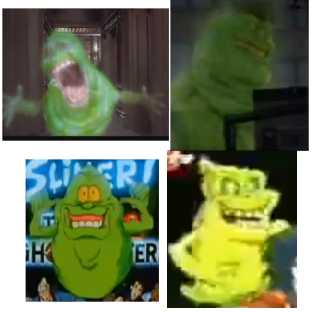
Slimer has reboot prints in his butt by now.
There was a time, sure. Nowadays more and more fans see a pale shadow of the things they liked. Forget the culture war, though it’s played a part, the issue is that there wasn’t a story to tell. The story was complete. While Star Wars had room to create an expanded universe, and God Of War could take the first game series’ protagonist to another mythology, Terminator should have ended on the second movie and Highlander at the first. Though I rather enjoyed Highlander: The Series, it worked by (until that poorly thought out theatrical movie came out) following a different continuity with an expanded lore that didn’t connect to the first movie and thankfully ignored the second, which made no sense on its own or in connection with the first film.
This isn’t even a new phenomenon. When Ghostbusters II came out the animated Real Ghostbusters series showed you could do more with the concept. Instead it created a reunion movie, something I’ve grown to dislike enough that it could be its own article. That was in a year of mostly sequels, even prompting a parody song in the style of the first Ghostbusters theme song. I’d play it, but I can’t get Google AI to find me a copy of “No More Sequels”. The thing is, with exceptions like Star Wars or Back To The Future, which were planned with at least the hope of a sequel in mind, it was because they had more story to tell, but only enough to make a trilogy. Star Wars got lucky and had room to expand while Back To The Future had a ride and cartoon that, like most cartoon spinoffs to movies, were practically their own thing. Interestingly, the Fox Kids Godzilla: The Series managed to continue the Roland Emmerich movies while Men In Black: The Series had to ignore the end of the first movie and only really good movie in that franchise.
Part of the aversion to certain words is that studios don’t want audiences to think they have become too safe or too lazy, relying on extending popular properties when they could be investing in new ideas. Brand awareness gets people in the door of multiplexes, but executives feel that “reboot” and “remake” don’t always properly reflect the artistic ambitions of movies that take a known story in new directions.
Problem with that is that we KNOW they’ve become too safe and lazy. Like a bad adaptation, the property was handed to people who didn’t care about the source material or the existing fan base and only wanted to play to the fans they usually do, their “cool kids”. Studios now only hire people for projects based on previous success or the Oscar’s current “diversity” guidelines because heaven forbid they don’t get an Academy Award attached to the home video or TV/streaming replay. It’s become another gimmick. The end result is something unrecognizable to the original version, sometimes based on a property that didn’t need a “new, hip, modern” version because the original was still already popular. All they did was dilute the property and now we have to remember what year our favorite version came out at and who was in it.
“There are sensitivities around ‘reboot’ in particular because it implies you’re just reheating the property, when there’s an actual differentiation,” says a studio source.
There’s your problem. You either changed too much or it didn’t need changing, or even updating. Some director wanted to make the movie equivalent of the cover song of a movie they liked but was sure they could do better. The studio wanted to use easy marketing for quick cash. The end result was both obvious and depressing. There are so many versions of Miracle On 34th Street but only one that has stood the test of time. (Yes, you might be the exception, but most of us want to see Natalie Wood tell Edward Gwenn that he’s a nice old man with whiskers over the others.) There’s a reason a classic is a classic decades after it hit theaters.
It’s not that younger moviegoers are opposed to familiarity. “Backrooms” was IP, after all. But the demo isn’t showing up for new installments in known properties just because they used to be popular.
They could have been if that’s what they were making. Backrooms is a recent property based on a YouTube sensation. The pre-Abrams Star Trek movies were good because they had more story to tell, even though a couple of stinkers made their way in there. (To be fair all the shows had some bad episodes, even in good seasons or series.) Top Gun is brought up in the article, and how the sequel wasn’t Top Gun 2 but Top Gun: Maverick, as if that was a new phenomenon. It screwed up the Rambo/First Blood numbering system playing that game. She also mentions that sometimes a franchise needs that number, siting the upcoming Toy Story 5 as an example.
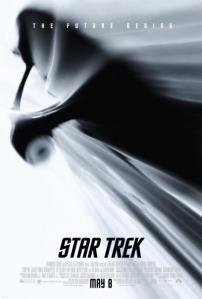
A overly elaborate ship’s bridge and an engine room that looked like it was filled in the studio’s boiler room were the least of their problems.
Not mentioned is the relaunch, like all the Star Trek spinoff shows or Doctor Who. The latter stuck to the same timeline, though now there are concerns of a reboot because they screwed it up so badly with the last two showrunners. Star Trek only has one show in it’s timeline, the animated series. Maybe the movies count though it’s in the crew’s later years, but every other show and movie is either in the far future, the distant past, or another timeline entirely. Until Abrams they were all in the same timeline, with The Next Generation being a relaunch and the other shows being spinoffs or prequels. That’s fine if there’s more story to tell, but we can tell when the studios have no plans, the creators either don’t care or couldn’t continue a finished story properly, or if there wasn’t any more story to tell with those characters that would be interesting enough without undoing or ignoring growth of the characters and the world around them. Some stories can totally continue and many can’t. The entertainment industry’s problem is they can’t tell the difference. “This made us money so we should do another one. Just come up with a reason so-and-so survived a flaming explosion. I don’t care. Make our investors rich so they keep giving us money! I have a yacht too, you know.”
Video games have it easier. Nintendo fans are excited for a graphics and engine upgrade for The Legend Of Zelda: Ocarina Of Time, which is already a branching timeline tree because the creators never really cared. They were probably thinking “anthology” when the first game did well enough, but like the Halloween movie they got us invested in the same world, which is what killed Halloween III: Season Of The Witch because it wasn’t more Michael Meyers chasing babysitters. Final Fantasy did a better job at being an anthology. Meanwhile, Sonic Team is so full of ideas where to take the Sonic franchise, which has had a few fails of its own, that they have no plans to update the older games. It’s timelines are only slightly stricter than the Super Mario Brothers franchise, which is approached more like a series of stories with the same characters. Super Mario Brothers 3 literally was designed to look like a stage in the theater. One very big theater. They also have a bunch of series, sequels, subseries, and alternate media with alternate takes on Mario, Luigi, and their friends going back to the original Donkey Kong, which has its own sequels and subseries.
Old movies and shows can find a new audience without a near planet-wide lockdown forcing us to watch them. Fathom Entertainment seems to subsist primarily on bringing old movies back to theaters for special events, inviting the nostalgic to bring others along to see what the fuss was all about. Streaming channels and on demand offerings show old movies and shows all the time, some even having their own dedicated channel. The Star Trek MOVIES alone have had their own channel on Paramount-owned Pluto TV. There is still money to be made even from home video, a one-time purchase that still gets made and more people rediscover those older movies and shows all the time and want their own copy, or just something on the TV.
Sequels are not a bad thing, provided it’s a story that needs to or can be continued. Prequels are not a bad thing if they flesh out history rather than replace it. Reboots and reimaginings are a case by case basis. Relaunches work for continuities that never should have ended or enough time has passed that fresh ideas came up. Family Ties knew when to end and there’s never been a sequel, unlike Full House. Old media can still find a new audience. If Hollywood and those who follow the mindset in other media outside of TV and movies were smart instead of lazy and greedy they’d be able to figure out which is which and use the existing media or at least the intellectual properties better, and still make enough money to take the risks on new projects. Backrooms and the other YouTube inspired movies this year are tappable technically, but like with video game movies you have to know what you’re doing, and scouring Reddit isn’t the answer. The answer is coming off your elitist high horse, try to actually understand your audience instead of some demographic poll chart, and actually have the vision to see what you can do with the stuff you have that will be best for everyone involved. Don’t fear or replace the past, and build on what exists while creating what doesn’t exist but could.
The problem isn’t using the word “sequel”, it’s putting out a bad sequel and thinking you’re going to make all the money in the world instead of barely making your budget back.
Tell others about the Spotlight:
Related
 The Clutter Reports (my other site)





Watergate was a scandal so big that they started calling conspiracies “(x)gate”. Comicgate and Gamergate are the latest examples, but something words just leave their meaning and get used wrongly. Mary Sue and “woke” are both victims of that in our current discussions on lazy storytelling. Also in that discussion is “fatigue”. A certain genre or franchise is losing audiences? Must be “fatigue”. Then they keep making it so what was the point of that label?
Added to the list of fatigues are sequels, prequels, reboots, and re-imaginings, because Hollywood goes to the well too often since they’re afraid of new things. The old stuff is more familiar, they reckon, more safe. It’s actually lazy marketing even if the people who make those movies, video games, and shows try to do it justice. Among other media but for this discussion I’m sticking mostly to movies, as that’s where most of the examples are coming from, but we’ll discuss the other stuff as well.
To help frame the discussion I’m going to use this recent article by Variety contributor Rebecca Rubin. “Don’t Call It a Sequel. Or a Reboot. Or a Remake. Why Certain Words Trigger Hollywood” goes over some of the more familiar terms when it comes to these various forms or remake or continuation and I wish I could find the Nerdrotic video where Gary Buchler goes over even more divisions because I wouldn’t be able to find the list, either. It gets ridiculous, but even what Rubin lists here shows that Hollywood doesn’t like that term because they don’t think the audience likes that term. However, like all of the other fatigues in entertainment discussion, it’s not that sequels and company are bad, it’s that the current people in charge are doing them wrong.
The words might have but not the sequel and reboot themselves or we wouldn’t be seeing them. That’s the corporate mindset for you: buzzwords and gimmicks are all they really have because they’re afraid to attempt innovation and expansion unless someone else already did the innovation and the expansion is into something already proven.
Because they are. Most remakes are more like reimaginings, taking the base concept and making it so different it’s practically something different. Syfy’s Battlestar Galactica and the Kelvin movie timeline of Star Trek are examples. And she does bring up reimaginings later in the article:
It’s a waste of time because nobody’s buying into that. We’re not as stupid as Hollywood mindset thinks we are. We also don’t need movies and shows to be reimagined. We liked them the way they were. Some shows hide their reimagining when the culture war comes into play, or when they want to replace existing characters with new ones, usually out of diversity than the next generation. Compare how the Expanded Universe continued the characters lives and the next generation versus how Disney Star Wars did it. There is room to properly replace characters but Hollywood, and especially Disney, wouldn’t. I’d also point to Disney’s Pete’s Dragon from a few years ago, bearing no resemblance to the original outside of a kid named Pete has access to a dragon, otherwise requiring the “in name only” banner.
Slimer has reboot prints in his butt by now.
There was a time, sure. Nowadays more and more fans see a pale shadow of the things they liked. Forget the culture war, though it’s played a part, the issue is that there wasn’t a story to tell. The story was complete. While Star Wars had room to create an expanded universe, and God Of War could take the first game series’ protagonist to another mythology, Terminator should have ended on the second movie and Highlander at the first. Though I rather enjoyed Highlander: The Series, it worked by (until that poorly thought out theatrical movie came out) following a different continuity with an expanded lore that didn’t connect to the first movie and thankfully ignored the second, which made no sense on its own or in connection with the first film.
This isn’t even a new phenomenon. When Ghostbusters II came out the animated Real Ghostbusters series showed you could do more with the concept. Instead it created a reunion movie, something I’ve grown to dislike enough that it could be its own article. That was in a year of mostly sequels, even prompting a parody song in the style of the first Ghostbusters theme song. I’d play it, but I can’t get Google AI to find me a copy of “No More Sequels”. The thing is, with exceptions like Star Wars or Back To The Future, which were planned with at least the hope of a sequel in mind, it was because they had more story to tell, but only enough to make a trilogy. Star Wars got lucky and had room to expand while Back To The Future had a ride and cartoon that, like most cartoon spinoffs to movies, were practically their own thing. Interestingly, the Fox Kids Godzilla: The Series managed to continue the Roland Emmerich movies while Men In Black: The Series had to ignore the end of the first movie and only really good movie in that franchise.
Problem with that is that we KNOW they’ve become too safe and lazy. Like a bad adaptation, the property was handed to people who didn’t care about the source material or the existing fan base and only wanted to play to the fans they usually do, their “cool kids”. Studios now only hire people for projects based on previous success or the Oscar’s current “diversity” guidelines because heaven forbid they don’t get an Academy Award attached to the home video or TV/streaming replay. It’s become another gimmick. The end result is something unrecognizable to the original version, sometimes based on a property that didn’t need a “new, hip, modern” version because the original was still already popular. All they did was dilute the property and now we have to remember what year our favorite version came out at and who was in it.
There’s your problem. You either changed too much or it didn’t need changing, or even updating. Some director wanted to make the movie equivalent of the cover song of a movie they liked but was sure they could do better. The studio wanted to use easy marketing for quick cash. The end result was both obvious and depressing. There are so many versions of Miracle On 34th Street but only one that has stood the test of time. (Yes, you might be the exception, but most of us want to see Natalie Wood tell Edward Gwenn that he’s a nice old man with whiskers over the others.) There’s a reason a classic is a classic decades after it hit theaters.
They could have been if that’s what they were making. Backrooms is a recent property based on a YouTube sensation. The pre-Abrams Star Trek movies were good because they had more story to tell, even though a couple of stinkers made their way in there. (To be fair all the shows had some bad episodes, even in good seasons or series.) Top Gun is brought up in the article, and how the sequel wasn’t Top Gun 2 but Top Gun: Maverick, as if that was a new phenomenon. It screwed up the Rambo/First Blood numbering system playing that game. She also mentions that sometimes a franchise needs that number, siting the upcoming Toy Story 5 as an example.
A overly elaborate ship’s bridge and an engine room that looked like it was filled in the studio’s boiler room were the least of their problems.
Not mentioned is the relaunch, like all the Star Trek spinoff shows or Doctor Who. The latter stuck to the same timeline, though now there are concerns of a reboot because they screwed it up so badly with the last two showrunners. Star Trek only has one show in it’s timeline, the animated series. Maybe the movies count though it’s in the crew’s later years, but every other show and movie is either in the far future, the distant past, or another timeline entirely. Until Abrams they were all in the same timeline, with The Next Generation being a relaunch and the other shows being spinoffs or prequels. That’s fine if there’s more story to tell, but we can tell when the studios have no plans, the creators either don’t care or couldn’t continue a finished story properly, or if there wasn’t any more story to tell with those characters that would be interesting enough without undoing or ignoring growth of the characters and the world around them. Some stories can totally continue and many can’t. The entertainment industry’s problem is they can’t tell the difference. “This made us money so we should do another one. Just come up with a reason so-and-so survived a flaming explosion. I don’t care. Make our investors rich so they keep giving us money! I have a yacht too, you know.”
Video games have it easier. Nintendo fans are excited for a graphics and engine upgrade for The Legend Of Zelda: Ocarina Of Time, which is already a branching timeline tree because the creators never really cared. They were probably thinking “anthology” when the first game did well enough, but like the Halloween movie they got us invested in the same world, which is what killed Halloween III: Season Of The Witch because it wasn’t more Michael Meyers chasing babysitters. Final Fantasy did a better job at being an anthology. Meanwhile, Sonic Team is so full of ideas where to take the Sonic franchise, which has had a few fails of its own, that they have no plans to update the older games. It’s timelines are only slightly stricter than the Super Mario Brothers franchise, which is approached more like a series of stories with the same characters. Super Mario Brothers 3 literally was designed to look like a stage in the theater. One very big theater. They also have a bunch of series, sequels, subseries, and alternate media with alternate takes on Mario, Luigi, and their friends going back to the original Donkey Kong, which has its own sequels and subseries.
Old movies and shows can find a new audience without a near planet-wide lockdown forcing us to watch them. Fathom Entertainment seems to subsist primarily on bringing old movies back to theaters for special events, inviting the nostalgic to bring others along to see what the fuss was all about. Streaming channels and on demand offerings show old movies and shows all the time, some even having their own dedicated channel. The Star Trek MOVIES alone have had their own channel on Paramount-owned Pluto TV. There is still money to be made even from home video, a one-time purchase that still gets made and more people rediscover those older movies and shows all the time and want their own copy, or just something on the TV.
Sequels are not a bad thing, provided it’s a story that needs to or can be continued. Prequels are not a bad thing if they flesh out history rather than replace it. Reboots and reimaginings are a case by case basis. Relaunches work for continuities that never should have ended or enough time has passed that fresh ideas came up. Family Ties knew when to end and there’s never been a sequel, unlike Full House. Old media can still find a new audience. If Hollywood and those who follow the mindset in other media outside of TV and movies were smart instead of lazy and greedy they’d be able to figure out which is which and use the existing media or at least the intellectual properties better, and still make enough money to take the risks on new projects. Backrooms and the other YouTube inspired movies this year are tappable technically, but like with video game movies you have to know what you’re doing, and scouring Reddit isn’t the answer. The answer is coming off your elitist high horse, try to actually understand your audience instead of some demographic poll chart, and actually have the vision to see what you can do with the stuff you have that will be best for everyone involved. Don’t fear or replace the past, and build on what exists while creating what doesn’t exist but could.
The problem isn’t using the word “sequel”, it’s putting out a bad sequel and thinking you’re going to make all the money in the world instead of barely making your budget back.
Rate this:
Tell others about the Spotlight:
Related
Posted by ShadowWing Tronix on June 18, 2026 in Animation Spotlight, Movie Spotlight, Streaming Spotlight, Television Spotlight, Video Game Spotlight and tagged commentary, gimmicks, Hollywood, movie sequels, prequel, re-imagining, reboot, Television and Movies, video games.
Leave a comment
About ShadowWing Tronix
A would be comic writer looking to organize his living space as well as his thoughts. So I have a blog for each goal. :)