


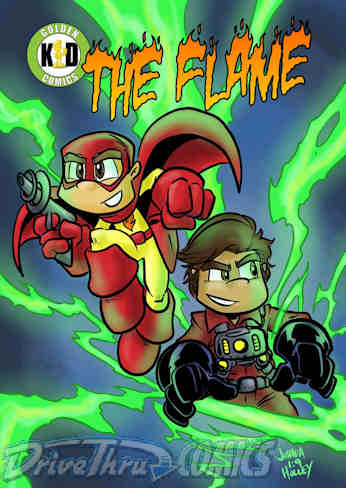
“Are you sure your contact lens is in here?”
The Flame #0
Golden Kid Comics (March, 2020)
“A Flicker In Time”
WRITER: Dan Johnson
ARTIST: Joshua 1:9 Holley
CO-COLORIST: Anna
EDITORS: Anne Belott & Jennifer King

“Are you sure your contact lens is in here?”
The Flame #0
Golden Kid Comics (March, 2020)
“A Flicker In Time”
WRITER: Dan Johnson
ARTIST: Joshua 1:9 Holley
CO-COLORIST: Anna
EDITORS: Anne Belott & Jennifer King
Catch more from Implicitly Pretentious on YouTube
Their first canonical team-up pre-Crisis had Clark and Bruce sharing a cabin on a cruise ship. When pirates attack it they learn each other’s identities, immediately team up to save everybody, and become friends on the spot. I miss those days.
It would seem this next section is going to be another multiparter to go through, but it is the final section of the season two writer’s guide for the original Star Trek. Last time we finally finished the terminology section, so now I have a whole new way to pad out the intro.
I’m not sure why there’s a “Some Questions And Answers” section. Maybe they were anticipating questions from new hires, especially the ones for whom this was the first science fiction gig. Maybe it’s questions asked by writers after earlier revisions of the writer’s guide. Remember this is the third revision, from April 17th of 1967, that I’m working from. That would make this something of an early FAQ (frequently asked questions, if you ever wondered what that acronym stood for), trying to answer as much as they could going into the second season. Whatever reason, there will be some new ground covered and possibly more clarification for that old ground in previous sections of the guide. I noticed one asking about the transporter, which was already gone over in the terminology section. That means my fingers will have more chances to misspell “transporter” as “transfporter” because for some reason my fingers keep hitting the “f” despite not being close enough to the “s” or “p” to happen EVERY @#$%$#%$# TIME I TRY TO WRITE TRANSPORTER! Sorry, it’s getting on my nerves and I was hoping I was done writing that world for this series.
This first batch of questions is a bit generic, going over writing science fiction in general for newbies to the genre and getting a better handle on the script writing processes specific to this show. We have eight pages total and we’ll be covering a page and a half just for this set of questions. I’ll try to keep this interesting, but even the terminology section was feeling long to me after a while. This is more about making a good writer’s guide, which is why the site I got this from posted it, but I do get to complain about modern storytelling. That’s always fun, right? So, how do you lay out an acceptable script for this series?

Still not a good remake of Pete’s Dragon.
Sonic The Hedgehog #77
Archie Comic Publications (December, 1999)
LETTERER: Jeff Powell
EDITOR: J.F. Gabrie
“Rebel Without A Pause”
WRITER: Karl Bollers
PENCILER: Fry
INKER: Andrew Pepoy
COLORIST: Frank Gagliardo
Tales Of The Great War: “For Better Or Worse”
WRITER: Ken Penders
PENCILER: Chris Allan
INKER: Jim Amash
COLORIST: Barry Grossman
WARNING: The drunken Scotsman swears a bit.
Catch more from The Critical Drinker on YouTube
What’s wrong with this trailer? The cringey “humor”? The race swaps? The gang that beats people up on stream? That outfit? Well, technically all of that, but since I’m late to the party and everyone else has already been all over that, allow me to go elsewhere.
While a lot of fans praise The Spectacular Spider-Man, it was the start of some troubling trends when it comes to bringing Spider-Man out of comics. It only got worse as further adaptations came out, to the point where the last few have been Spider-Man in name only, with the costume. Your Friendly Neighborhood Spider-Man up there can’t even claim that from either outfit we see them wear. I’m not even sure why they’re called Spider-Man adaptations when the only one to get it right comes from the preschool series.
I’m not going to go show by show because that could get long and boring. Instead I want to simply take a look at the trends in recent Spidey adaptations to see what each of them are doing wrong and how, surprisingly, the closest one seems to be Disney Junior, who is still making it’s own mistakes. Hang tough, true believers, because this going to be a ride of shame.
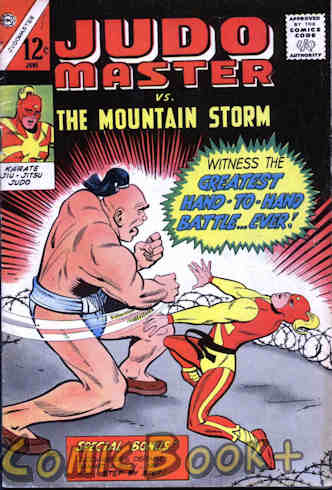
I don’t know a lot about judo, but I don’t think this ring is regulation.
Judomaster #89
Charlton Comics Group (May/June, 1966)
“Prisoner Of War”
WRITER/ARTIST: Frank McLaughlin
Since that’s the only credit, let me answer the question I’m guessing you’re wondering about: Why #89? Well, prepare for this journey into ye old magazine numbering to make the post office happy…somehow. Judomaster is continuing the numbering from Gunmaster despite that comic also having a #89. In turn, Gunmaster continued the numbering from Six-Gun Heroes, which continued from a Fawcett comic series the same way The Blue Beetle changed hands between Fox Features and Holyoke Publishing. Now this is just getting stupid. Neither of these were picked up by DC so they’ll have to wait until we get there on the Comic Book Plus virtual shelf.

 The Clutter Reports (my other site) Atop The Fourth Wall Crisis On Earth Prime Lean Into Artcast Bully Says “Comics Oughta Be Fun” Siskoid’s Blog of Geekery
 Cartoon Hero’s Lair SF Debris Four Million Years Later


 BW Media Spotlight