

Catch more from Implicitly Pretentious on YouTube
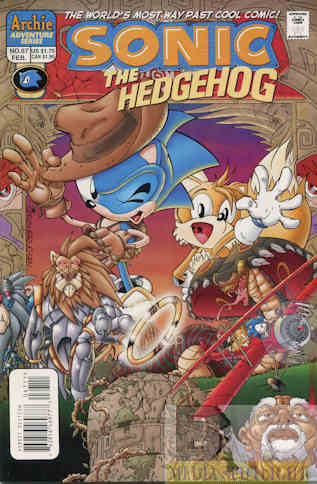
Knuckles The Echidna #17
Archie Comics Publications (October, 1998)
“Deep Cover” part 1
WRITER: Ken Penders
PENCILER: Manny Galan
INKER: Andrew Pepoy
COLORIST: Barry Grossman
LETTERER: Vickie Williams
EDITOR: Justin Gabrie
Catch more from Chris McFeely on YouTube
Personally I think the simple reasons for starting the war were the best. I don’t like the idea of evil Autobots unless it’s the Shattered Glass universe. It misses the themes of the two factions.

It’s amazing the things I’ve learned just from researching this article series. Maybe it’s because I started Sing Me A Story I never really thought about music as storyteller, just something to dance to or have on in the background, usually the latter. Since that time I’ve seen country songs based on Norse mythology, bouncy tunes about serial killers inspired by a ballad opera, and learned that songs can have sequels, sometimes by the original artist and sometimes not.
We last saw Marty Robbins in this article series with a standalone tale, “Big Iron“, telling the story of an Arizona Ranger with a gun Dirty Harry would be proud of. This time he brings us three songs telling the story of a lovesick fool who shouldn’t have broken out his gun. “El Paso” is a song I mostly heard the first few bars of during one of those compilation album ads but knew there was a story behind it. I decided this round to look into that story and found two sequels. “El Paso” comes from the same album as “Big Iron”, Gunfighter Ballads And Trail Songs from 1959. Both appear to be the first album on their side of the record according to Wikipedia (question the source).
What I wasn’t expecting looking into this was that this song had not just one but two sequels, one from the point of view of the “Mexican girl” at the heart of the story and the third…wait, it’s a MODERN RETELLING? Are you messing with me, Wikipedia? Well, let’s dive into this trilogy and find out what’s what, starting with the original take, told from the point of view of the young fool in love with a dancer at a cantina.
Catch more from Harbo Wholmes on YouTube
I wrote the following in the comments:
I wonder if the villain problem is tied to the format and run time. Classic Who had multiple episodes per story, time to further examine a villain, while the typical New Who, despite being double in length, really only got that chance if the showrunner created them (Sleevin and Weeping Angels for example) and really liked them. The cliffhanger also set them up as a serious threat at times. New Who doing the whole “season long subarc building to the finale” isn’t the same thing and it doesn’t give a villain a chance to be that menacing, especially the episodes where our heroes were more into making gags (“Tooth And Claw” is my least favorite episode of Davies’ run for that reason while at least “Love & Monsters” was stupid with original characters most of the time and it’s only the epilogue I hate). They need more time to make a threat menacing enough that fans want to see it again to further challenge the Doctor.
As for the settings, that’s bothered me as well. You have access to all space and time, but you don’t do anything with it. Is building a space set really that much harder for a show with modern special effects and presumably a larger budget than the original series that managed to put most of their episodes off world?
I added in a different comment’s response:
I do like that he (Steven Moffat) tried to set an episode in the TARDIS itself, though I don’t see the point of a room that’s just a cliffside with a giant waterfall. I do like the bigger wardrobe than the one in Classic Who, but we don’t see enough of the TARDIS in New Who while in the classic show we’ve seen bedrooms, the Zero Room, and a swimming pool and heard about rooms with a turkish bath and I think a library. I’d like to see the TARDIS be more than an RV.
That Other Avatar Movie Series And Why It’s Hated
Most people that think of “Avatar” will think of the Avatar: The Last Airbender, whether it’s the amazing animated series or the terrible live-action attempts. The reason the movie was just called The Last Airbender is because James Cameron got the rest of the people (I don’t have actual math here, folks) with his movie and the sequel, Avatar: The Way Of Water. Both movies are praised for their animation and some even have positive things to say about the worldbuilding when it comes to the Na’Vi and the “plug and play” connection between “man” and “nature” of Pandora. Do people who even wasted time on this movie remember?
Regardless, nobody praises this movie’s story except for James Cameron, who is convinced these two movies are some of his best work. It isn’t. I have yet to hear anything positive said about the movie’s story or writing outside of the worldbuilding. I think Cameron spent so much time on his lore and his theme of anticolonialism that he forgot to make the story…what’s that word…good. The question is WHY is the story so bad?
Well, Henry Boseley of The Closer Look on YouTube thinks he has the answer. And the problem may come from how Cameron approached his anticolonialism and “we should all get back to nature” theme…done using mostly computer effects that probably had nothing to do with nature outside of simulating one that doesn’t exist in reality. In the following video, Henry goes over the issues with how Cameron approached his themes and why they don’t work.
Continue reading →
Tell others about the Spotlight:
Posted by ShadowWing Tronix on April 17, 2024 in Movie Spotlight and tagged commentary, James Cameron's Avatar, script writing, writing tips.
5 Comments