BW’s Daily Video> Veteran’s Day Tribute

Catch more from Lemmy Audit You on YouTube

For my fellow Americans, if you see a Veteran, thank them for their service. Thank their family for standing by them, as they suffer along with a deployed soldier. Take some time today to remember those who risked all for the protection of all. Even if they came home, they may not be the same person that left. Have a happy and safe Veteran’s Day, but don’t forget why we celebrate it.

Jake & Leon #618> We Can All Agree

No matter who won, we can all be happy about that.

I hope I never have to see another one of these BS election ads again. At least now I can waste time dodging ads for Hero Wars. @#$% that game.

Over at The Clutter Reports this week I did some stuff for my dad and got a bit closer to finally doing that long overdue let’s play series. Fingers crossed.

With no appointments for this week, maybe I can get back to doing stuff! There’s the next installment of our Chapter By Chapter review of Tom Clancy’s Op-Center: Mirror Image and the writer’s guide for the original Star Trek to go over, plus whatever comes up this week. I’m hopeful (because that’s never gone wrong) that there will be feature articles, daily videos, and comic reviews all week, but we’ll see what happens. Have a happy Veteran’s Day, everyone! Thank a vet for their service.

BW’s Saturday Article Link> Christian Authors Vs Christian Fiction, Round 2?

Last week’s article link featured author Brian Neumeier making the case that Christian fiction shouldn’t be overly preachy, shouldn’t be just a Christian version of something else. (Kind of hard with porn. Heh.) While I linked to his website I first saw the article on Bleeding Fool, where it was crossposted.

That leads to this week’s article link, from fellow Bleeding Fool contributor A.H. Lloyd, in an article titled “Counterpoint: Christian Writers Should Write Whatever They Want”, where he shares Neumeier’s sentiment, but makes the case that Christian fiction can indeed be good. Neumeier himself offered a response before this post went live.

For my two cents, Proverbs & Parables up there is a collection of adaptations of tales from the Book Of Proverbs as well as the Parables used by Jesus to preach to the masses. In my review I stated that even if you aren’t a Christian it’s worth checking out for the different art styles used in the book, some of which are really good or at least really fun and still comes with a high recommendation from me. I guess the point is knowing what your target audience is and what you want to do. If you want to write something for Christians that boosts their faith, or something that reaches out to others, go for it. You may reach some people that way. Other people would have to be drawn in with something more broad, like Neumeier suggests, or at least would entertain without coming off as the same preachiness of so many “SJW/woke” stories.

Basically, both are an option, so long as story comes first and any message is properly worked into the themes of the story. Create believable people and have them act like believable people, or at least people believable in that world, in that situation, whether they would exist in the real world or not. Lloyd is right in that you should write the story you want, but Neumeier is right in that you have to put some thought into it.

Free Comic Inside> The Commandrons’ Last Ride

Free Comic Inside logo

Now that the Internet Archive is again among the functional we can conclude our look at the Commandrons. For those of you who missed the first three, here’s a synopsis.

Commandrons were a Tomy line that in the US was only available through McDonald’s Happy Meals, each of the four robots coming with a minicomic produced by DC Comics. On the planet Haven, which was one McDonalds the Murphy Family couldn’t drive to, the Commandrons were part of a Thunderbirds style team of secret rescue workers, in that people knew they existed but not who they are. Given that the team consisted of four AI robots and four pre-teens that’s probably for the best. Meanwhile, the obligatory evil rich schmuck Sylvester Slag is jealous of four robots he doesn’t own running around saving people for free and keeps trying to take them over or take them down. His last plan involved fake Commandrons.

His plan this time? Toys. Evil toys, because this is a DC comic and Toyman was still a villain. Though in today’s anti-geek culture they’d probably make him some basement dwelling toy collector or some crap. Lucky I’m obscure enough that I didn’t just give them ideas. Also, let’s reflect on the possibility that the minicomics that came with toys are about to do a story about evil toys. Would a fifth Commandron story have involved the evils of fast food, despite the client being McDonalds’? We’ll never know, but we do have this.

“I hope you washed these hands, pal!”

Commandrons #4

DC Comics/McDonalds (1985)

I’m always disappointed when these comics don’t have the credits, like the creators were ashamed to be working on this. And yet they agreed to have their names on some of the worst stories in regular sized comics. Hey, a job is a job and your job is still to tell a great story, even if the idea wasn’t made for comics and is hoping to sell toys. As if merchandising isn’t all the current DC owners care about.

[Read along with me here]

Continue reading

“Yesterday’s” Comic> Smash Comics #2

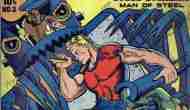
Oh, if Wertham had seen this cover.

Smash Comics #2

Everett M. Arnold (September, 1939)

Well, here’s a new one. And what a cover to start out on. The Grand Comics Database and Comic Book Plus are claiming this for Quality Comics but it just says “Everett M. Arnold” in the publisher credit. Maybe it became Quality like Atlas and National became Marvel and DC respectively?

[Read along with me here]

Continue reading

BW’s Daily Video> Star Trek: Lower Decks Did Something Right

Catch more from Salty+ on YouTube

Star Trek: Pitch & Guide> Guide part 2–The Script & The Ship

The guide section of our series may be shorter than I thought, but given I’ve also looked at the original sales pitch, back when the ship was the SS Yorktown and the captain was Robert April, this should still be a decent series of articles in the wider story bible review series. I thought each section was going to be longer than it is. Today we’re looking at the format for an average Star Trek script, after going over the show format last time. That’s kind of short, at one page, so we’ll also look at the next three pages, going over the USS Enterprise, and then next time go over the cast of characters in one go. What I do with the rest of the guide I’m not yet certain.

Since this is the version of the writer’s guide that came between seasons one and two they should already have the script format already down pat. You can break formula, and I imagine we’ll look into that when we get there, but only on rare occasions. The format, when done wrong, can become formulaic and dull if followed too closely each time, but when done right draws you into this futuristic world, with breaks to sell you laundry detergent (or just give you time to use the bathroom or refresh your popcorn). So how much is advice and how much is “law” is something to consider when putting these together and judging the script you see.

As for the Enterprise section, I’m expecting a description of the ship and any important facilities. I have a copy of Mr. Scott’s Guide To The Enterprise that came out some time after the NCC-1701-A was introduced and it’s fun to find the toilets (which nobody on television ever uses with rare exceptions), but what resources are writers supposed to consider when it comes to what the ship has to offer? That should also be fascinating. So let’s get started already.

Continue reading