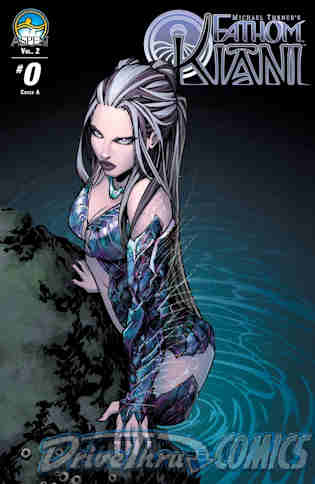
“Yesterday’s” Comic> Fathom: Kiani V2 #0

“Homo Aqua? What did you call me?”

Fathom: Kiani vol 2 #0

Aspen Comics (October, 2012)

I think I read this in the wrong order. I’m going by the dating at Drive Thru Comics, saying that this was updated on August 4, 2014 but first posted August 10, 2014. I don’t think I’m using the right info. I’ll have to remember to look into it before the next Fathom review.

“FATHOM” CREATOR: Michael Turner

WRITER: Vince Hernandez

ARTIST: Oliver Nome

COLORIST: John Starr

LETTERER: John Reed

Continue reading →

BW’s Daily Video> How Marvel Comics Is Treated In Japan

Catch more from Comics By Perch on YouTube

There’s something else Marvel and DC can learn from comics: sell your comics as the legacy they are.

What DC Comics Can–And Can’t–Learn From Manga

Remember this from yesterday? This was the part of the interview with Jim Lee, conducted by Japanese entertainment site Nikke X Trend about his work in DC Comics and it being adapted by James Gunn. All anybody who I saw post about this or in podcasts focused on one section in particular (translation by Google Chrome):

–Japanese comics are now gaining popularity overseas. For example, “Demon Slayer: Kimetsu no Yaiba” and “Chainsaw Man” have been made into movies and are hits in the US. As a legend in the American comic book world, how do you view Japanese comics? How do you analyze the reasons for their popularity?

Lee: I’m quite old (laughs), so I remember the late 1980s, when Japanese manga and anime first came to the US. I read Katsuhiro Otomo’s “AKIRA.” It was translated and published by Marvel. I read it and then bought the laser disc. Then I also read Masamune Shirow’s “Appleseed.” It hadn’t been translated, so I didn’t really understand the story, but I loved the illustrations.

But speaking of “this moment,” I think Asian culture and pop culture as a whole is booming. This is true for K-POP, Korean dramas, and Japanese anime. Young people want to discover something that is uniquely their own. The stories told in Japanese manga and anime are incredibly powerful. I often find myself wondering, “What is missing in Western comics, and why aren’t they able to achieve the same flavor?”

Also, I think manga has an advantage over American comics, which are mostly about superheroes, and that’s where the majority of sales and readers are concentrated. In Japan, it’s closer to “literature,” and anyone can read it, and it’s not just hero stories. There’s a much wider range of genres, like stories about cooking and soccer. You can draw stories from that. So I’m very happy that the manga has been so successful, because it gives me a goal to aim for.

The manga market is bigger than our industry, so the question becomes, “What can we learn from this?”

The question is, “How do we access that?” It’s not just a matter of art style, but a “sensibility” that’s involved. The stories that are successful in Japan are very different from the stories that are successful in the West. What can we learn from that? I think this is a debate that will continue forever. I don’t have the exact answer either, because if we did, we would already be getting the same sales and readership (laughs).

Long quote, I know, and I both combined paragraphs and emphasised the parts that people were commenting on. The rest is for context and the answer to his question is actually in the interview, including this part. Learning what manga is doing that DC isn’t and why it’s working is easy. People have been doing it. However, the problem isn’t just the things manga is doing right but what DC Comics stopped doing right. The US market and how average people connected to comics is different than how fans are connecting with Japanese comic stories. So while there are some things that they should totally be learning from the success of Japanese manga, there’s also some ideas that they shouldn’t because they need to go back to what was working.

Continue reading →

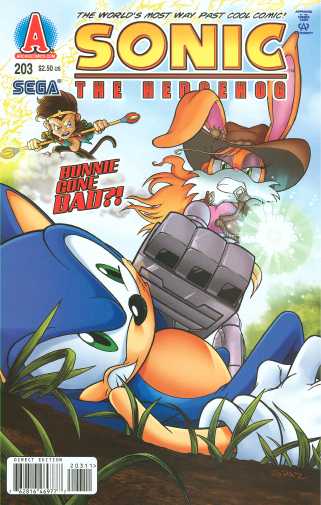
“Yesterday’s” Comic> Sonic The Hedgehog #203

“That was MY piece of carrot cake!”

Sonic The Hedgehog #203

Archie Comics (October 2009)

WRITER: Ian Flynn

INKER: Terry Austin

COLORIST: Matt Herms

LETTERER: John Workman

COVER ART: Patrick “Spaz” Spaziante

ASSISTANT EDITOR: Paul Kaminski

EDITOR: Mike Pellerito

“Heavy Is The Head” part 1: “Surprise Visit”

PENCILER: Steven Butler

CO-INKER: Jim Amash

“Friend In Deed” part 1

PENCILER: Jamal Peppers

Continue reading →

BW’s Daily Video> What’s Behind Anime’s US Success?

Catch more from PBS Newshour on YouTube

I usually disagree with some of their interpretations, but credit where it’s due. This video was fair to the subject.

DC’s Jim Lee Discusses DC To Japan

The above tweet caused quite a commotion when I woke up yesterday morning and I was prepared to write about it, and I still might for tomorrow. Then I went to the actual article for linking, Chrome decided to translate it for me, and then I saw a lot more to write about when it comes to Jim Lee’s comments. The article in question comes from Japanese entertainment site NikkieXTrend. Reporter Kaori Maeda asked the current DC Comics publisher/chief creative officer and the creator of the Wildstorm Universe about DC’s recent successes…and got a few facts incorrect. Then again, so did Lee.

Now, I don’t know if Lee was just trying to be nice but he’s not wrong in that currently Japanese comics are beating the daylights out of American ones in America. Before the fans get on my case, “manga” translates to “motionless pictures”, aka “comics”, and the previous name for the software I use to make my comics was “Manga Studio” in the US and “Comic Studio” out of Japan. Manga are comics. We favor no elitism here, even from fandoms. I will call them manga to set them apart from US comics easier and for the sake of argument, but if I mix them, deal with it! Yes, this is an issue with “manga” fans, including pronunciation for the really pedantic ones.

Credit where it’s due. Lee is a good storyteller and artist, which is why his work for both DC and Wildstorm has been praised to the hilt. His recent actions as COO, however, has left fans cold. The full interview is worth going over, but we’ll come back to the part the X-Twitter post focused on because that deserves its own article. The problem is so does the rest.

Continue reading →

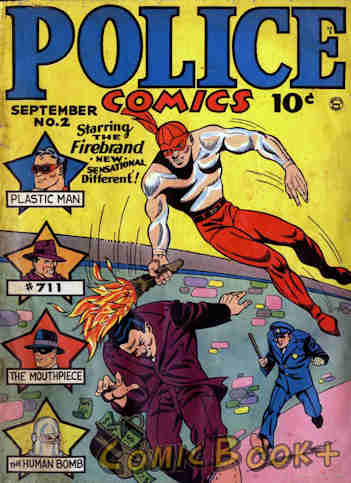
“Yesterday’s” Comic> Police Comics #2

Wait, isn’t that an actual torch? As in lit with real fire? Dude’s dead.

Police Comics #2

Comic Magazines, Inc (September, 1941)

I’ve already reviewed the first issue thanks to DC’s “Millenium Edition” reprint. I was going to just do an issue or two and then move to Plastic Man’s solo series, but I forgot two other heroes in the book who never got their own comic (or at least Comic Book Plus doesn’t have them) are also here: The Human Bomb and Firebrand. I haven’t heard of #711 or The Mouthpiece showing up, but those weren’t total losses, while the Human Bomb was part of Uncle Sam’s Freedom Fighters if memory serves and Firebrand would get replaced with a woman taking up his name and cause after he died, again if memory serves. So we’ll see all of these characters in their formative years along with the stretchy fellow.

[Read along with me here]

Continue reading →