
Okay, timeline time.
- In part one I posted a video by Patrick (H) Willems going over his six suspects as to who or what is responsible for the death of cinema.
- In part two, because that video and my response were both very long, I posted my response as a separate article.
So what’s with part three? Well, there are a few others to blame that I thought needed recognition. I’m apparently not alone in this as Willems himself posted a follow-up of other suspects…on his Nebula stream, which I’m not subscribed to because I have no money, and thus have not seen it. The follow-up he posted to YouTube was responding to YouTube and Discord comments. You can watch it if you want but I don’t feel I need to post it here.
Instead I want to list those few others from my point of view, and both of us alluded to some of them in our various entries. This should be a bit more detailed and should end this series on my end because I do want to talk about other things before the Christmas break, with next week being a review of the original A Christmas Carol book. So in addition to Willem’s suspects, which I’ve already commented on, who else is killing movies? Well, I think, regardless of his conclusions, that I KNOW who the REAL killer is! Yes, the guy who can’t solve a Scooby-Doo mystery has the answer, and if Ken Jeong can get three guesses right in a row in this season’s Masked Singer, any miracle is possible! However, before revealing that killer, what drove them to kill cinema?
At least I’m trying to not do all comic covers again.
The Corporate System
Everything else on this list can be traced back to the corporate mindset. There’s a difference between capitalism and what’s been dubbed “corporatism”. Capitalism works with the economy, trying to improve your product for the most money and following the rules of supply and demand. Corporatism is all about the monopoly, shutting down smaller companies to ensure they don’t become rivals, and various other things that allows them to pretend to be good little capitalists while actually ruining what capitalism means and functions. Corporatism has ruined the good name of capitalism. Capitalists want a lot of money. Corporatists want ALL the money.
Corporations are not very creative. They’re afraid of creativity because corporatism is adverse to risk. Just look at the history of Atari once Warner Brothers bought them? It’s not a new thing in entertainment. It’s the trading post the bandwagon leaves from. Pokémon was popular and so the knockoffs came out, or they looked for anything similar like Digimon. Yu-Gi-Oh and Dungeons Of Dragons made their form of gameplay popular and thus other companies wanted a piece of that. This can lead to forming new genres even out of ideas that have been around for years. I can connect Duel Monsters to Mille Bornes and Uno was based on Crazy Eights according to a recent episode of History Channel’s The Toys That Made America. It’s also how we had trends in movies: Westerns, war movies, superheroes…the old genres didn’t disappear, they were integrated into the movie flow. Even the Western found ways to come back, though with a “realistic” vibe. More on that later.
Corporations do not care about the end product. They only care about the money. So they’ll listen to marketing and so-called experts before they listen to the creators. Even then you have to have the right clout, which is why fans and other movie goers will never be listened to. In adaptations it means some of our other suspects can mess with the formula and ruin the end product for fans no matter how good the story itself is. For what few original products the studios are willing to take a risk on it means poor treatment because marketing has convinced them not to spend the money to promote it. or the trailers ruin the good parts of the movie because their job is not to help you enjoy the movie, it’s to get you to watch the movie. The studios aren’t paying attention and the masters of the charts don’t care, so the other suspects manage to sneak in or are forced to do what they do to get something out. All our troubles really start with the current Hollywood system and it’s why, like video games and comics, independent studios form to make what the unmarketed want to see.
And of course, as Starship once sang “Someone’s always playing corporation games. Who cares, they’re always changing corporation names.” With all the Borg-like absorptions between Warner and Disney it’s all slowly condensing into the one movie studio to rule them all. Disney is taking the worst of it at the moment, as Bob Iger–or “imagine if Michael Eisner was worse”–starting to lose ground even among his own people, who were all willing to work with him to screw over Bob Chapek. Now there’s a movement to get him out, and his allies so the next Chapek gets to be more than an Iger figurehead who thinks he’s in charge.
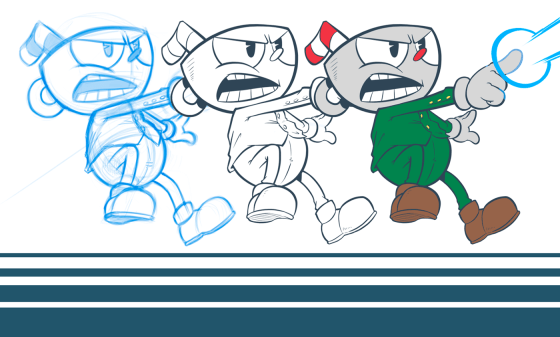
CupHead Urameshi by Leandro Cruzes is licensed under CC-BY-NC-ND 4.0 Fan art mixing Cuphead with Yu Yu Hakusho. I hope he’s careful picking his nose.
On the creator’s side…
…we have sins as well. Granted, some of these sins are forced, like the kid who has to steal food to eat. Because the corporates are so adverse to take risks, some creators can’t wait to get their vision out there and just ruin an adaptation. Others are like Todd Philips or Margot Robbie, who are convinced their version is better, so you get a Joker that is nothing like the actual character, or all the female characters ruined by Birds Of Prey: Harley Quinn. What she did to Cassandra Cain alone should be a crime.
With the studios focused on nostalgia adaptations and modern adaptations, putting it in the hands of people with less concern than the execs leads to trouble. In the comments video the Halo streaming series was brought up. It had all the right looks, but according to fans the characters were off. Master Chief was dressed down by Cortana, had an affair with someone out of character for Chief, and the biggest sin…REMOVING HIS HELMET! In the games we don’t know what he looks like and that’s on purpose, unless this has been changed in some later game. There’s also Netflix’s take on live-actionized anime (we talked yesterday about how animation is treated by the US) like Cowboy BeBop and Death Note, adaptations so botched that the creator of One Piece made sure he had veto power to keep his vision from being ruined. For example, they really want Luffy to have romantic relationships but that doesn’t match Eiichiro Oda’s vision for the show or the target audience, including women who wouldn’t want the show to change, for the manga and anime. Japan has a lot more respect for animation than the US in general, and Hollywood specifically, do, and it shows in that they have movies and shows for every age group, including adults. Watch the original Ghost In The Shell and compare it to the US remake and you’ll see what I mean. I watched it in reverse order (remember that before you click on my reviews) and could still see the superiority of the original.
If the studios were smart, and when it comes to creative products they clearly aren’t, they would take the money from the successful blockbusters and put it towards these smaller projects, giving them a better opportunity. The creators wouldn’t make (as many) bad adaptations if they could tell their stories and get a large crowd. That’s why they brought their script to a big studio, to get a wider audience. Instead they do some tweaking to an existing script and pass it off as an adaptation to surface-level viewers and thus the movie would chase off fans, and because their vision exceeded their talent not replace them with casual viewers because they wouldn’t know the genre was changed or that the reason the fans weren’t getting what they wanted is because the non-fans were in a package they didn’t want to open. That’s what happens when you don’t deliver something in the proper genre. At least the gay cowboy movie featured cowboys. Superhero stories that don’t involve superheroics loses the superhero fans and the fans of whatever genre you’re replacing superheroes with. Marvel Studios used to understand that when giving us “this genre but in a superhero universe” before Disney rolled around.
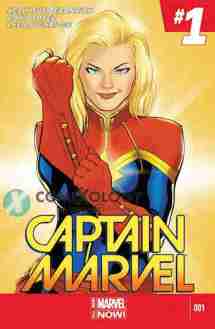
Why does it always look like she’s giving readers the finger? Perhaps because she has a fist while putting gloves on?
How about all those reshoots?
It’s tough to have a successful movie when you scrap the entire thing and reshoot everything. Joss Weadon’s reshoots because Warner Brothers wanted to change the tone of Justice League has nothing on what Disney’s done lately. We’ve heard about reshoots of whole movies already completed, and without changing the time table. This is one of the reasons the Marvel Studios special effects teams have decided to push back on Disney’s actions rather than being worn out while putting out way too many MCU movies and streaming shows.
Reshoots are nothing new. Something didn’t film right or a last-minute change now and then is normal. Once the script starts shooting it should be your final draft but I guess changing expensive celluloid for easily cleaned up hard drives makes them think they can redo the whole thing for various reasons. The crew, lighting, cast, and everything else that goes into making a movie costs money. When the digital effects team has set up a great shot with the practical effects team or the cinematographer and it all ends up on the cutting room…recycle bin, I guess now, money is lost, especially if you don’t want to change your theater date by much. This is costing the studios money, especially when the movie flops and flops hard. It doesn’t help when…

“What do you mean? I paid my color bill last week!”
Everything is so formulaic
When there’s more variety in a modern Hallmark romance movie, you’re doing something wrong. It’s not superhero fatigue, it’s that the stories are formulaic and boring. It has the same beats, the same type of humor, the same problem not even letting certain character types take risks, that you know what’s coming. There is little that sets these movies apart in their genre, according to what I hear in reviews. The smaller movies, the independents are still trying to play with formula but the big films are the same bland corporate blandness built out of the same need to not take risks. The only risk they take is buying other libraries. The stories don’t want to offend certain groups, so you know when they won’t let people of those groups, say a woman, show any weakness and their arc is about everyone realizing how awesome she is. The struggles of every beloved action heroine from Ripley to Alita have become the rarity rather than continuing to be the norm alongside male counterparts, so you expect nothing will change, and thus you don’t go to see it.
If you’ve seen one movie with this type of character or in this genre, you’ve seen them all. Willems wondered what happened to the comedy, using Jennifer Lawrence’s No Hard Feelings (because of course he pointed out the actress…still need to see that movie) as an example of the last good comedy. Romantic comedies have a formula. I know at some point the male character, played by Andrew Barth Feldman, who isn’t a celebrity yet and thus was ignored, will find out she was paid to date him just after she fell for him and will have to win him back. There’s enough variation in the genre and the comedy to make me want to see it, but the fact that she pays during the movie to agree to date their son’s “brains out” is something I wouldn’t expect to see. It’s the parents’ fault for naming their son Percy in 2004, but you won’t see Rachel Zegler agree to get smacked around in a comedy when she’s complaining about the Snow White dress. I already discussed actor egos in part two, but this is a variant on that problem.
There’s no guts, no incentive to innovate in any area, and that includes writing. Marvel keeps trying to emulate Joss Whedon and James Gunn, and we discussed what Taika Waititi has done with and to Thor. DC’s tried it as well, now putting Gunn in charge of their universe. Quirky jokes and Twitter speak is what marketing is telling the studios people want, even though we don’t, because they don’t do any actual research into what audiences want. Disney has outright admitted this recently. All this has allowed our final culprits a chance to ruin the whole system.
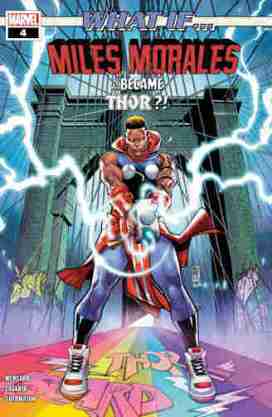
Just because I rarely discuss the activist creators, I haven’t forgotten them
In the comments reply video, Willems showed that he’s among many commentators who do not understand what critics (both conservative AND liberal by the way) mean by “woke media”, mentioning in the video that he has banned the usage of the word and anyone using it from his comments permanently. For a better example I point you to that video I posted from the Critical Drinker since he explains (and uses) it more than I do, but I’ll try to make this brief and to the point.
Let’s start with the example he uses in the comments video: The Little Mermaid. The problem wasn’t that the mermaid was now black, but that Ariel, Disney’s version of the character, had been race swapped. The original character in the novel didn’t even have a name as far as I know, and other versions had different names and personalities. Saban’s was named Marine, and I don’t remember what Shelly Duvall’s take named their mermaid. Meanwhile according to reviews, because I’m not watching any of the live-action demakes whether they’re “woke” or not, Eric also loses his position in the story, saving Ariel to prove to her father that humans can be trusted and are good people. Instead, worried about the girl being saved by a man, Ariel is the one to save the day. The “Kiss The Girl” song, and this I have seen, changes lyrics so that now Eric has to ask permission…despite the whole point of singing the song in the original was to GET Eric to kiss the girl! These were not changes to benefit the story but because of social viewpoints, and it ruins the romantic aspects of the story.
It doesn’t help that redheads are seeing themselves disappear in these race swaps more than other white people, leading to a belief that a narrative “gingercide” is going on in Hollywood. I think it’s because there were so few redheads in fiction, but now they seem to be the ones immediately disappearing. They wanted to race swap Red Sonja. There’s a reason she’s called Red Sonja, and it ain’t the blood she sheds. Just like how Snow White got her name for skin white as snow…though if you think about it, wouldn’t that make her a fair skinned albino?
Speaking of the girl who should avoid apples more than Eve, Ziegler has even bragged that they drained what little romance Snow White’s story had in favor of a “girl power” message, except that’s not really girl power, at least as I remember the Spice Girls using it. It wasn’t about tossing out or supplanting the male characters but to be seen as equals. This is the female heroes I grew up with, as I’ve written about numerous times. Teela didn’t replace He-Man in the original series but she come to his aid more than once. She earned her position as captain of the Royal Guard at around 20 years old. In the recent series she replaces He-Man as the main character and, which seems to be in line with the character since Rob David had any influence (see also the DC comics), became a total bitch.
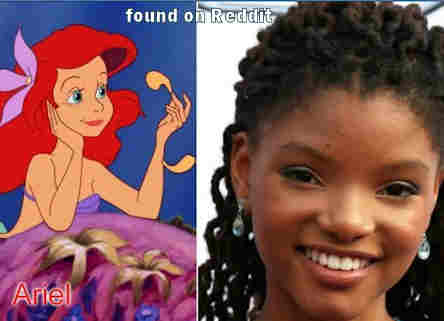
Sorry this turned out to be the longer entry. I usually don’t discuss it at all because it’s only a symptom of a larger lack of concern in putting story first or making fans happy.
The real problem isn’t the appearance of strong women, or black character, or even LGBT characters. Nobody calls the first Charlie’s Angels movie, Hollywood Shuffle, or Brokeback Mountain “woke”. Why is that? Because unlike the modern pander movies even when the focus was on their gender, race, or sexual orientation it only did so when it was important to the story. So many stories now are more interested in “the message” than “the story”. This leads to what I mentioned earlier, where strong female characters are depicted as flawless and more powerful than men, while men are jokes or the enemy, especially in growing numbers the white guy. That’s not exclusive but it happens more often than not, making straight romance movies difficult to produce, especially rom-coms where both sides are supposed to be shown with flaws but still coming together. When is the last time you saw a movie with black characters that didn’t put them in the projects, or only rich if they were criminals, crooked, or some kind of celebrity? No black CEOs, or so few you wouldn’t notice. And every woman’s story, every black character’s story, or every gay character’s story is about them being a gay black woman, or it’s their only real defining character trait…because they represent every black person, every gay person, or every woman ever. That’s a lot of pressure to put on one character, and it doesn’t lead to any character nuance, leading to every character having the same personality. Nobody in Hollywood can write a black girl who isn’t full of sass.
You know who is also noticing this? Not just the straight white guys, but women, people of color, and members of the LGBT community who have more in their lives than being activists. If the goal is to normalize these people, using stereotypes and chasing off anyone who liked the original characters is the wrong way to do so. Morgan Freeman and Denzel Washington called it out. George Takei told them NOT to make Sulu gay in the movies because he wasn’t on TV, and Takei is a gay rights activist. Dwarf actors had a fit when Peter Dinklage showed how little he knew about the folklore dwarves and ruined their part in Snow White. I’ve seen actresses and authors of the lady persuasion who have come to hate the term “strong female” because no effort is put into them so they become bad characters. In comics, I saw a trans person call out Magdalen Visaggio’s quest to make as many DC characters transgender as she can get away with, and Maggs showed how little she cared because it was more important to see “people like me” than properly write a character. (She’s a trans woman, for you non-comic folks.)
That’s where the race and orientation swaps have come from, because as commentator and comic publisher Eric July put it, they only see value in white characters, using the branding to make their “representation” versions because they don’t have enough faith in their characters to try to give them their own identity, so they steal a nostalgic character’s identity instead. Why not? Before the social activists got in, other creators were doing that with their own stories, dressing up as nostalgia when it wasn’t. Battlestar Galactica is proof you can do that and still be good, and people were so happy to see Spider-Man finally in the MCU they didn’t care that everything about the character’s supporting cast was wrong.
It wasn’t enough to make Green Lantern Alan Scott’s son gay because he wasn’t a big enough name, so they retconned Scott himself gay the moment they had an opening. If they don’t care enough about their characters to fight for them or make them interesting, and they certainly don’t care about making the gay black woman into anything other than a gay black woman or whatever the current cause du jour is, why should I care about their stories, whether original or adaptation. To cover their lazy butts they’ll call you sexist or a bigot if you don’t see their movie…AFTER telling you directly and indirectly that the movie wasn’t made for you. All of that is what “woke media” is, not because there’s a gay black chick in there.
If this was too long to you, it’s not a topic I bring up a lot because the activists only got in because social media convinced marketing they were the ones who knew despite often not even being typical or even part of the groups they claim to be working to represent, and that pandering is done through stereotypes to hide how little effort they want to put into a story and yet expect to be loved and fawned over like the celebrity they think they are. Before it was snobbery and marketing because the studios only wanted to redo old stuff rather than take a risk on supporting new stuff. Now they’re using people of color, women, and the LGBT+ community as a shield from any negative criticism. If they wrote good characters from that group in stories that were about more than their race (I don’t wake up saying “time to do straight white people things”) nobody would care…like in many times in the past. Unfortunately, Hollywood Shuffle is more relevant to the black acting experience than it was now. By the way, the guy who made that movie also made The Meteor Man, the ACTUAL first all-black cast superhero movie. Sorry, Marvel. You were late to the party. Ask Blade.
However, those were just the motives. Greed. Laziness. Attacking fans. Surface level research. Caring more about their story or their cause than a good story, nevermind a good adaptation. And studio execs who couldn’t care about putting out good product so long as they make a profit, not realizing all of that is losing them a profit because the audiences aren’t showing up. Ladies, gentlemen, and the rest of you, we’ve looked at the motives, but I present you the real killer (and sadly I don’t have a funny mustache on right now…or do I?)….
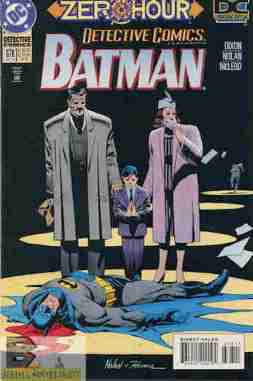
In hindsight Billy Eichner was the WORST choice to play Batman they came up with.
APATHY!
Studio execs apathetic or outright hostile to a good creative process. Marketing people apathetic to using something other than social media to learn what people want. Directors more interested in their vision than their job. Writers with their own agenda whether it’s political, snobbishness, or “I have a better idea”. And if you speak out against their version for whatever reason they’ll call you haters, bigots, and someone who hates their own (insert group here). These were the motives that led to audience apathy, because the big movie studios and creators seem to themselves be apathetic to telling good stories, taking chances on non blockbusters, or helping out the dying movie theater experience.
Why should the audience pay more money to go out, sit near rude people while eating overpriced snacks that aren’t nearly as good or varied as what they have in their own pantries, in seats only comfortable in certain theaters (and one of those near me shut down after the 2020 plague anyway), to watch a movie with preset sound quality that varies between theaters, when they can stay home for the money they’re already paying and sit together on the couch…provided Hollywood every makes anything that kids and parents WANT to watch together, so there’s another motive. If the man behind Netflix has a goal of killing theaters either for business reasons or personal bias it’s not like he doesn’t have a lot of help. Amazon owns MGM and they aren’t doing as much with theatrical releases. Also I just found out they’re making a movie called Pussy Island with Zoe Kravitz and I have questions I’m not sure I want the answer to.
What’s killing cinema and the movie experience? Apathy. Apathy by the studios at every level and apathy by the audience who are willing to wait or will just go watch old stuff they missed out on to get the stories they love. I guess Emily was wrong. A concept can be a killer…though she is right in how hard it is to arrest.
The solution to saving cinema is easy. Put adaptations in the hands of people who can please both fans and general audiences (the most beloved Star Trek movie was made by a man who knew nothing about the series so he watched the whole show), because fanboys would come with their own problem. Let those draw in the existing fans and casuals like you want. Make them good, using the right people regardless of skin color, race, gender, or whatever properly and make them all people instead of stereotypes. Don’t blow all your budget on multiple reshoots when you should at least try to get it right the first time. Use those funds to support smaller productions, or don’t try to kill off the smaller creators trying to make movies you wouldn’t anyway for an audience that feels left out. Find ways to make the theater experience affordable in the current economy without sucking the fun out of it, and make films worth going to. Accept the occasional niche audience, because another motive could be trying to make movies for everybody that end up pleasing nobody.
You don’t need all the profit, just enough to move on, and remember that awards are nice but won’t keep your company afloat to make more movies. You can be #2 and still have something to be proud of. You might do better next time, but you need to learn how to do that. Try not attacking the fans, and others in your audience when they put your product down. Cull out the bad reviews and actual bigots from those who state good reasons why they didn’t like your movie, learn from them, and grow as creators and studios. Especially if those critics are part of the group you were targeting in the first place. In other words, stop being lazy and try to make good movies, make a better theatrical experience, and maybe help smaller studios instead of crushing them. If you make good cinema, they will come.
Am I done now? Because I spent a lot more time on this than I thought I would when I first decided to post this video back on Monday. Not Seduction Of The Innocent levels of too much time, but that’s two articles on this topic over 4000 words and a third for the video that kicked this all off. So let’s talk about something else tomorrow, okay? Please? I have a comic to finish.





[…] Is Murdering Cinema: In this three part article (each word a different link), I responded to a video by Patrick (H) Williams going over why the […]
LikeLike