

![[VIDEO] WTF Is Up With YouTube (A Quick History)](https://bwspotlight.com/wp-content/uploads/2019/02/youtube-logo-e1551325894715.jpg?w=190&h=110&crop=1 "[VIDEO] WTF Is Up With YouTube (A Quick History)")
There is some swearing in this but she basically gave my whole commentary on the issue and we’ve never met.
Catch more Dannphan on her YouTube channel.

There is some swearing in this but she basically gave my whole commentary on the issue and we’ve never met.
Catch more Dannphan on her YouTube channel.
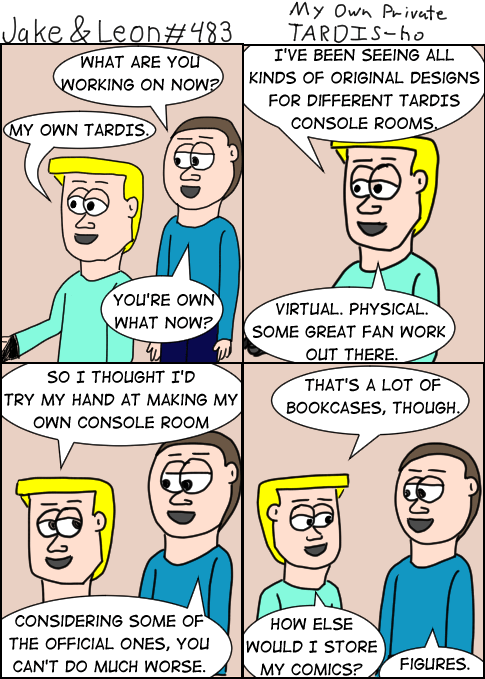
I’m sorry, but that “coral” room from the Davies period was ugly as heck, and13’s needs to bu a light bulb. A lamp. Something.
The only problem with this comic is what few indicators I managed to work into the art that shows he’s drawing were covered by the word balloons. That aside, I have seen all sorts of original TARDIS console room designs on YouTube lately. Some are made for games like Minecraft or Second Life, while others are based on types of TARDISes that appear in other media or are completely original designs either for their own Doctor or their own self. Those use software like Blender or Unity to create an actual animated TARDIS but you can’t really walk around that. You can even find people turning a shed into their own TARDIS media center. (Or “centre” if you’re in the show’s homeland.) Check it out sometime. There are some really cool designs.
Over at The Clutter Reports this week I took a look at my introduction to Choose Your Own Adventure books, Hyperspace.
Doing the updates lately is becoming a crap shoot. I know what comics are coming for the daily review, I know what I’m reviewing for Monday’s Chapter By Chapter book review (this week three short chapters from BattleTech: I Am Jade Falcon), but I never know what’s coming during the week lately. I say “I’m going to do this” and then I either have enough new things to talk about that it doesn’t leave me room, I only have time for something quick because my schedule’s a mess, or I have nothing to talk about and need to find a topic. So…articles are coming this week. I can at least be sure of that, barring some disaster I know is going to screw up even that plan. Hope you all have a good week and you like what’s coming up. We’ll be surprised together.
Ultraseven (or Ultra 7 in the US dub) was intended to be the end of the Ultra Series, but a large fanbase meant there was a market for this franchise. When Eiji Tsuburaya passed away his son Hajime took over Tsuburaya Productions, and decided to create Return Of Ultraman, the fourth series in the franchise. (I’m not sure if they’re counting Ultra Q, which we’ll get to next week actually. I was not planning on it but if I have the chance, go for it!) Originally it would feature the original Ultraman returning to Earth to battle new monsters, but out of respect for Eiji he became a new character instead, first “New Ultraman”, and eventually his more well known name of Ultraman Jack. (Not to be confused with Jack Shindo.)
Jack and his host, race car driver Hideki Go, were a bit different than the other two. Go wasn’t given a device to transform like his predecessors and most of his replacements. Instead he transformed through “willpower”, something that would be seen again with a few other Ultras or during emergency situations with the ones who did have items. He also had civilian friends, as he wasn’t originally part of the new anti-kaiju group on the block, the Monster Attack Team (MAT). (Certainly beats the team names from Ultraman Orb.) How did Go first merge with New Ultraman Jack? Tonight’s episode tells that tale. Enjoy!
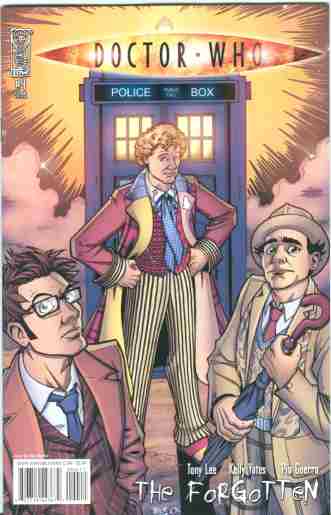
“Well here’s your problem, Doctor. You’re using a higher watt bulb in your logo.”
Doctor Who: The Forgotten #4
IDW Publishing (November, 2008)
“Survival”
WRITER: Tony Lee
ARTIST: Kelly Yates
FINAL PAGES PENCILER: Pia Guerra
FINAL PAGES INKER: Kent Archer
COLORISTS: Kris Carter & Charlie Kirchoff
SELECTED COVER ART: Nick Roche (Kirchoff on colors)
LETTERER: Richard Starkings
PRODUCTION: Neil Uyetake
EDITOR: Denton J. Tipton

You love books. You love games. So why not combine the two? Gamebooks are a different way to tell a story, one in which the reader is part of the story, sometimes directly and sometimes indirectly. It’s a unique reading experience, though one that has been replaced by the visual novel. There are different ways to control the story but the formula is very simple. As you read the book the story stops and gives the player a set of choices to make. For example:
You come to a set of doors. One has a bright light coming from it. The other is dark.
If you choose the bright door, go to this page. If you choose the dark door, go to this page. If you turn around and make a sandwich, go to this page.
Your choice will affect the story. One path may end the story early, possibly with you falling into a pit of lava or just enjoying a sandwich. Another will send you down a long corridor to a magical science realm and start the adventure. It’s not always done with a direct choice by the reader, though this is the norm. I’ve read some that require a roll of the dice or a flip of a coin, and one even required you to keep stats and an inventory. I don’t have that one anymore. I don’t remember what happened to it but it was way too involved for me, like a one person tabletop RPG. I even saw it done in comic form once in a Free Comic Book Day Adventure Time comic. So how does one go about making such a story and why would I not even try?

Hey intro, someone finally met George Jetson like you asked!
Scooby-Doo Team-Up #8
DC Comics (March, 2015, as featured in the second volume of the collection on comiXology)
“Future Shocked”
WRITER: Sholy Fisch
ARTIST: Scott Jeralds
COLORIST: Wendy Broome
COVER ART: Dario Brizuela & Franco Riesco
EDITOR: Kristy Quinn
It seems every showrunner needs to have at least one console room of their own when it comes to modern Doctor Who, sometimes two. In classic Who there was a similar design to the original: white walls with rondels all over, the same basic exterior door design, and an updated console. The screen moved from hanging from the ceiling to being embedded in the wall and the console got more switches and computer screens but that was it…except for a couple of seasons during Tom Baker’s run as the Fourth Doctor.
From this first appearance in “The Masque Of Mandragora” to the original’s return in “The Invisible Enemy” (K-9’s first appearance), the second control room, a wooden room with a more compact console, was the first time the TARDIS console room set underwent a massive change. This is rather normal for the franchise in the New Who era but the only time it happened in classic Who. (Though a change was planned for Silvester McCoy’s TARDIS even before the big change in the TV movie that had some radical differences. It didn’t end up being used before the original series was canceled but a mock-up was made when McCoy hosted a marathon of classic episodes.) Screenrant contributor Craig Elvy goes over the brief history of this alternate control room.


 The Clutter Reports (my other site) Atop The Fourth Wall Crisis On Earth Prime Lean Into Artcast Bully Says “Comics Oughta Be Fun” Siskoid’s Blog of Geekery
 Cartoon Hero’s Lair SF Debris Four Million Years Later


