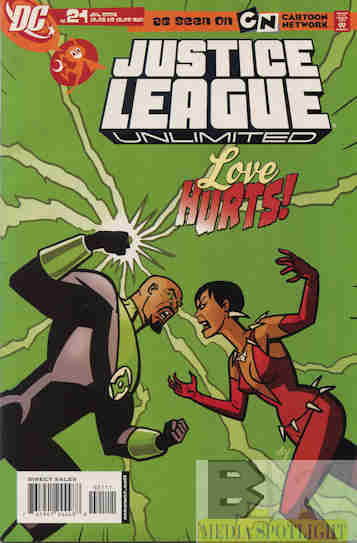
Justice League Unlimited #21
DC Comics (July, 2006)
“Stormy Weather”
WRITER: Adam Beechen
PENCILER: Carlo Barberi
INKER: Jesse Delperdang
COLORING: Heroic Age
COVER ART: Ty Templeton
LETTERER: Travis Lanham
EDITOR: Michael Wright
Justice League Unlimited #21
DC Comics (July, 2006)
“Stormy Weather”
WRITER: Adam Beechen
PENCILER: Carlo Barberi
INKER: Jesse Delperdang
COLORING: Heroic Age
COVER ART: Ty Templeton
LETTERER: Travis Lanham
EDITOR: Michael Wright
Catch more Video Game Story Time on YouTube.
Still think some of the changes are unnecessary and an alternate form of body shaming but now we know the rest of the story. Good day!
Apparently they’re not even going about it right and continuing to screw up distribution. Nobody knows what they’re doing over there, do they? At least I do a strip about something other than disease and rioting.
Over at The Clutter Reports this week I did some minor cleaning up. Nothing spectacular but the results were worth it. I also finally got my haircut since CT allowed them to open…after the one I’ve been going to for years and has been around since I was in high school wasn’t able to reopen because they were closed too long. At this point I’ll be surprised if Lake Compounce is allowed to keep its record of being the longest open amusement park, a record they kept by opening for a weekend during renovations one year.
The penultimate chapter of Spider-Man: Carnage In New York is coming up for this week’s Chapter By Chapter so we’re almost done with this book. Also this week Art Of Storytelling looks at the minicomic and I think that will be it for reviewing the various formats of comics. I may also try to get a Finally Watched in this week. Now we have a new reason for me to say “stay safe, everyone”.

ABC’s Saturday Superstar Movie featured a number of attempts to create animated versions of live-action series, some of them from shows that were no longer on television. It worked for Star Trek after all. Then again you have the Gilligan’s Island cartoons but that’s not important right now. Previously I brought up an animated version of The Munsters and tonight we go to another series, the campy sci-fi classic Lost In Space.
Irwin Allen’s classic series hadn’t originally planned to go into the silly stuff the show would be known for in later years (like carrot people). Watch the early shows and by 1960s standards the stories were more serious. Inspired by The Swiss Family Robinson, the series followed the adventures of the Robinson family, astronauts sent to a colony whose trip was ruined by an agent of a foreign power only to get themselves…well, guess from the title. There have been attempts to recreate the series, with questionable success. One of these attempts was Hanna-Barbera’s 1973 special for the Saturday Superstar Movie.
However, little made its way to this version. Instead of the Robinson family, the special follows Craig Robinson, who brought his little brother Link along on a trip to bring geologist Dina Carmichael and botanist Dr. Smith to a new planet only for them to…you know the drill. The ship is called the Jupiter 2, there’s a robot (named Robon in the special), and Smith was voiced by Jonathan Harris, who brought his usual personality to the character, but that’s pretty much all that remains of the original show. In the story the new crew comes upon a planet threatened by robots and with a lot of diamonds lying around. Our newish Smith isn’t the villain of the original but he’s still a greedy angry coward so this may not end well. Enjoy.
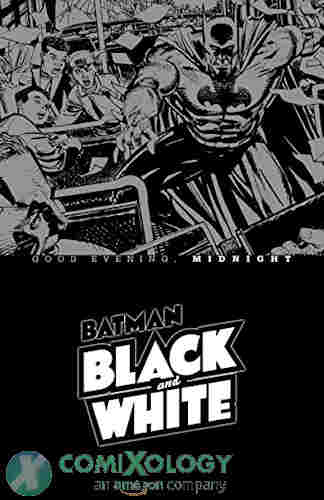
Batman Black & White: Good Morning, Midnight
DC Comics (posted to comiXology June, 2010)
WRITER/ARTIST: Klaus Janson
LETTERER: Bill Oakley

Previously in this sub-series of comics I did a brief overview, went into comic strips, and then into comic books. Now we get into comic books by another name and layout, the graphic novel. Before they turned into trade collections of longer comic books and the periodicals started writing for the trade the graphic novel was a unique form of comic, which is why when people call regular comic books “graphic novels” I know I’m dealing with an elitist who doesn’t know what they’re talking about or wants to admit they’re reading comics (because heaven forbid they read a “comic book”). It’s not more mature to call a comic book a graphic novel, it’s the wrong term. By the same vein a trade collection isn’t a graphic novel except in form. To continue the video analogy I’ve been going with (strips=shorts, comic books=TV series, graphic novel=movie) the trade collection is one of those so-called movies edited from various, maybe connected episodes of a TV series.
What sets a graphic novel apart from a trade collection? A graphic novel is an original story created for that format. It’s as simple as that really. It might be edited down into a miniseries, but we’ve seen movies edited into TV episodes, especially in kids shows of the 1980s (even Adventures Of Superman edited Superman And The Mole Man into the final episodes of the first season), but the intent was to create a movie…I mean graphic novel. How does the format set itself apart from the others?
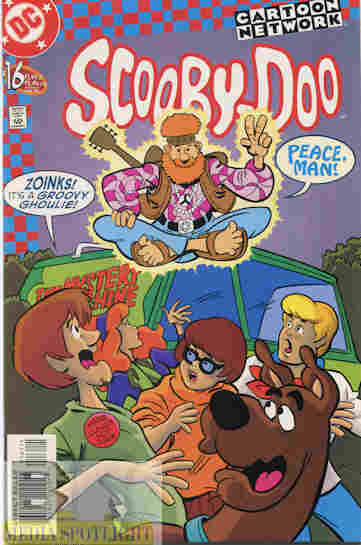
Scooby-Doo #16
DC Comics (November, 1998)
COLORIST: Paul Bectin
LETTERER: John Costanza
oddly, no editor credits
“Almost Live From Big Puce”
WRITERS: Joe & Hilarie Staton
PENCILER: Joe Staton
INKER: Scott McCae
“Guest Stars!”
WRITER: Chris Duffy
PENCILER: Manny Galan
INKER: Mike DeCarlo