
How can two shows with the same name and cast be so different, yet so very alike?
In a time where reboots are more like reimaginings as new creators slap old names on their new ideas and tell the ignorant studios execs it’s totally the same thing and fans will love it, DuckTales is one of those examples of how you do a reboot right? Is it the same as the original? Not really, but it is where it counts and fans of the original can see not only respect for the show but what it created. Let’s pop back in time a moment.
The original DuckTales was a syndicated cartoon series, inspired by the comic stories of Carl Barks, it reframed them in the more wholesome Disney style, since 1987 still believed in traditional Disney. The show did so well that it inspired more cartoons, forming the programming block known as The Disney Afternoon. I was in high school and you didn’t have to be a cartoon fan like me to enjoy the show. That was the power of Disney in those days, something Walt would be proud to have his name on.
In 2017 a new version of the show would premiere on Disney’s television channels. The Disney Channel existed in 1987, but they opted for first-run syndication, all but dead generally and very dead when it comes to kids television specifically. That is unless you count a few educational shows that only cater to a small group. No wonder kids moved to streaming for their entertainment. It’s the only place they can find it now. Disney XD, at that point the home of Disney produced and licensed action shows, would introduce a new version of DuckTales, leaning closer to Barks’ style and with a bit more of a edge to it. Even fans of the old show love the new show. I’m one of them.
So how did New DuckTales manage to form it’s own destiny without going full Battlestar Galactica and change everything? It’s a little thing called respect for the inspirations. Plural. It’s not the original, but it doesn’t hate the original, either.
Old DuckTales was still very much in the traditional Disney formula, built primarily around characters from it’s own libraries. It used Barks’ stories as inspiration but it was still in the style most non-comic readers were aware of. In the comics, Mickey would pick up a gun on occasion, Pooh could be a jerk at times in comic strips, and Donald didn’t just sit at home dealing with his nephews, he was taking them on adventures around the world. Meanwhile, we would get a new character, Scrooge McDuck. In the theatrical shorts and educational movies for schools, Scrooge would teach Huey, Dewey, and Louie about the importance of saving money, investing wisely, and spending it just as wisely.
In the comics, however, we saw how Uncle Scrooge made his fortune. Dealing with claim jumpers, protecting his very large bin of money because he didn’t trust the banks to protect it, and outsmarting villains due to his philosophy of “being tougher than the toughies and smarter than the smarties”. He followed his own cartoon counterpart’s advice but he was also a skinflint in the same tone as his namesake before that one Christmas night. Scrooge even got to play that namesake in Mickey’s Christmas Carol before DuckTales began. He was relatively obscure in the Disney crew before then. You had to know the comics or caught the educational series to know who he was.
Old DuckTales put Donald in the Navy, leaving the nephews in Scrooge’s care. At the same time he gained a new housekeeper, Mrs. Beakley, who brought her granddaughter Webbigail “Webby” Vanderquack. Scrooge also had a loyal butler named Duckworth and access to the forgetful scientist Gyro Gearloose, another Carl Barks period comic character who had his own comics. Like the comics, the show would have Scrooge keeping and adding to his pile of money, but there were also episodes just focused on crazy misadventures that comes from being comedy cartoon characters, just with more of an adventure edge. Most of the episodes focused on the adventures, eventually adding superhero Gizmoduck and the time-displaced caveman Bubba. They were a tight mix of family and friends, dealing with gold-seeking captains, the notorious crime family the Beagle Boys, and the witch Magica De Spell, seeking Scrooge’s first dime for the alleged ties to his luck in gaining his outrageous fortune to conquer the world. The Beagles, based on the Barker-Karpis gang. Ma Beagle was inspired by Ma Barker directly, except…let’s just say Ma Beagle must have been a looker once or just knew when to show up to the bar. Insert “Ace Of Base’s” “All That She Wants” here.
Other stories were more traditional Disney as the nephews dealt with normal life stuff along with their friend Doofus Drake, a fellow Junior Woodchuck (their version of the Boy Scouts) who was also a fan of Scrooge’s danger to the skies pilot Launchpad McQuack (another show original I believe), who was good at building planes, but not so good at flying them. Or driving. Or a lot of things. He would actually has enough fans that Disney brought him over to one of their other shows, Darkwing Duck, as the Batman/Shadow style hero’s sidekick.
That show wouldn’t have existed if not for the large fan base developed by DuckTales. Disney would build on that with Chip & Dale’s Rescue Rangers, reworking Donald’s old troublemakers who got their own series of shorts into secret crimefighters, at least to humans, joined by their own show original characters. While not having comics of their own, the show managed to find its own inspirations. Also a big hit, we soon had The Disney Afternoon, a syndicated programming block with other Disney comedy-adventure shows. While some of the shows also aired on network Saturday morning, they also had their own programs, most notably for our discussion Tailspin. It took inspiration from classic stories of cargo pilots in the jungle, using Baloo, Shere Khan, and Louie in reimagined roles alongside new characters. They also took an old NBC Saturday morning cartoon to help launch the block by bringing Adventures Of The Gummi Bears back to TV. There’s a whole list longer but these are what you need to know for now.
It was Saturday morning on a weekday before Fox Kids and Kids WB ruined weekday afternoons by taking time away from first-run syndication, essentially killing everything that wasn’t an infomercial, rerun, or court/talk show for syndication. It was also around this time that kids TV was being shoved into the kids only channels and away from “regular” television. DuckTales would last for four seasons, two movies (at least one in theaters), a comic revival by Boom Studios, and some beloved video games. It was a tough act to follow, but somehow they managed to do it.
DuckTales would get a reimagine in 2017, leaning closer to the comic inspirations and less of the traditional Disney wholesomeness for something a bit edgier. It focused more on the adventures, sometimes even making adventuring part of the theme of the show, especially in the final season. The art style matched the comics more than the traditional Disney art style, now regulated to a nostalgic remake of the NES video game and the Kingdom Hearts franchise. That would sadly be the last time Alan Young got to voice Scrooge McDuck before his passing in 2016. The new show brought in David Tennant, mostly known for Doctor Who and other shows in British television. Tennant was Scottish and had the accent, but he was also able to bring Scrooge to life in his own way. Nobody had a problem with his version. And there was only one of him. Sorry, that article was still fresh in my mind when I wrote this.
The new show would also make some other changes. Hewey, Dewey, and Louie being given original personalities and interests had been part of their character since the attempt at a Disney sitcom, Quack Pack. This Disney Afternoon show went back to the traditional Donald and his nephew shorts rather than the comics, but upped the cartoony aspects of their lives. Goof Troop it was not. New DuckTales would do a better job of making distinct version of the characters more interesting and likeable. Hewey maintained the original personality of the triplets, interested in being a Junior Woodchuck and wanting to maintain order…okay, that one was new. Dewey wanted to be rich and famous like Scrooge, had a fake late night show, and had to learn the “work smarter, not harder” philosophy of his Uncle Scrooge. Louie was lazy, looking for a get rich quick scheme, ignoring how much hard work Scrooge had done to gain his fortune.
Launchpad had no major changes to his character, though Darkwing Duck was now a TV character that, long story short, would gain a real life version. Fenton Crackshell, aka the superhero Gizmoduck, now became Latino Fenton Crackshell-Cabrera for some reason. His soap opera nagging mom, a connection to the comedy tone of the show and the non-adventure episodes, was tossed out in favor of an action police officer mom and I have mixed thoughts on her. “M’ma” could be annoying but Officer Cabrera (whose full name is an acronym of Mama) is ultimately just as one-note. Duckworth…is dead. His ghost still maintains the manor, but outside of the mystical being more woven into the show I don’t understand why they bothered. Also, everyone loves Duckworth. I don’t know. I don’t think Bubba ever made it to the show. Maybe an homage cameo I’m forgetting at best.
The biggest change to the show is Mrs. Beakley and Webby. Beakley is a former member of SHUSH, which in the old version came from Darkwing Duck, a spy organization who helped bankroll Drake Mallard’s life in exchange for acquiring his unique superhero services. It was a leftover from the initial concept of a spy that turned into a superhero show. Instead of the doting caretaker she’s retired but sometimes serves as bodyguard. Her life and Scrooge’s, who did some freelance work for SHUSH, crossed paths a few times and they had mutual respect for each other. The two Mrs. Beakleys are night and day and reflect the changes between the two versions.
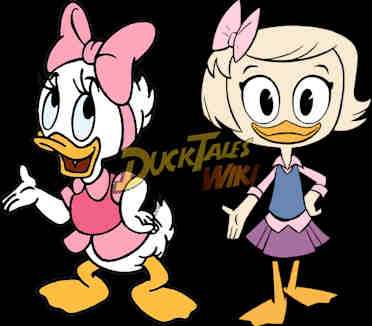
The biggest change, and what should be some serious annoyance as a result, was to Webby. The original Webbigail was a sweet little girl, a year or so younger than the nephews with a character design inspired by their comic book female counterparts–April, May, and June. (They would make an appearance in New DuckTales in a way too odd to go through in this article.) She didn’t lack talents that helped, but her younger age compared to the boys and wholesome design and nature was clearly traditional Disney in style, created for this show like her grandmother. I don’t think we ever learned what happened to her parents. New Webby, on the other hand, was the more adventurous type, wanting to follow in her grandmother’s secret agent footsteps, and was already in the manor growing up alone when Donald dropped the nephews off to find work. (All four were slightly aged up and closer in age, but not to the level of Quack Pack.) She’s also tied to that odd appearance I mentioned.
Obviously, those who aren’t fans of the more wholesome version that tried to give something to the girls watching hate old Webby and embraces the new Webby as she tries to learn there’s more to life than spy work while being a fun tomboyish heroine with her own mystical history. I rather like old Webby for what she was and kind of miss her and her Quacky Patch doll, but new Webby is such a good character that I can’t bring myself to hate her, and actually like the new version for what she is. Also, someone programming Google’s spell check was clearly a fan because I wrote “quackerpatch” for the doll and that was the correction, among other examples. No, I didn’t confuse it with Quackerjack!
The main reason for the change is the new versions of Beakley and Webby better match the new tone of the story. Launchpad didn’t need to change as he could easily be worked in to the Barks style. Duckworth’s death and Fenton’s going Latino when The Three Caballeros already taught us the chickens were the Mexican stand-ins were unnecessary but ultimately ignorable, and Fenton’s mom just found a new and admittedly less annoying way to not be interesting. Gyro going disgruntled scientist who puts science first regardless of the potential consequences will depend on how you attached you were to the absent-minded professor of the original show, though the original was actually MORE in keeping with the comics. There’s a few minor characters we could also bring up from both versions. Beakley and Webby’s original personas, however, would never have fit in this more boy-centered action-oriented take, where the normal but comedic life adventures were rare or mixed into the more actiony and sometimes mystical adventures that were the heart of the reboot. They kind of had to be changed or they’d be…pardon the pun…odd ducks in the cast.
What really made the show work, however, was how much love was obviously given to The Disney Afternoon in spite of the changes. Kit Cloudkicker from Tailspin and Don Carnage made appearances, Kit now aged up to take over Baloo’s spot since the Jungle Book references were all removed for probably licensing reasons, being based on Rudyard Kipling’s characters. There’s an episode where scientists looking to boost animal thought sort of create the Rescue Rangers as cameos, right down to Chip, Dale, Gadget, and Jack getting clothes and escaping on their own, though they never speak and I think make one other cameo. There’s even an episode paying tribute to Quack Pack and Goof Troop.
The Gummi Berry Juice from Adventures Of The Gummi Bears is also tied to Scrooge and Beakley’s history despite that show not being made for The Disney Afternoon, which I don’t think most people are aware of. On that show it could allow the heroes to bounce while humans gained temporary superstrength, though it tended to wear off rather quickly. The changes to Darkwing feel like a mid-series alteration from an homage to a new origin for Darkwing and Negaduck. Jim Cummings returned to voice the actor who played Darkwing in the show, and a new voice actor for wanna-be actor Drake Mallard, who was a huge fan along with Launchpad. That’s the big difference between the DuckTales remake and most of the remakes, reboots, and reimagines Hollywood and even comics shove at us today: respect. Even the new intro homages the comics the franchise was inspired by, while the show allows Donald to be more part of the adventures and bring in the nephews’ mother from the comic, Donald’s sister Della.
Aging up kids shows doesn’t have to mean darkening the tone, but they do. Characters are race and gender swapped willy-nilly, and even the ones that match the original race/gender/orientation lacks the personality and even beliefs and ethics of the original. If somehow the kid show actually remains a kids show, the changes reflect some new worldview and take shots at their “lame-o” predecessors, clearly not as good as this “superior” modern remake meant not just for a new generation but an entirely different audience seeking a completely different experience. If it isn’t attacking the original, it still doesn’t care about it. They just want to use the branding to make the story they really want to tell, rather than acknowledging an older property and trying to do something new.
That’s where the new version of DuckTales stands out. It’s a new take, admittedly less of the traditional Disney wholesomeness (much like most of modern Disney’s output) and more of the old comics mixed with new tastes. There are still some worldview changes that also ruin most projects. One of Webby’s new friends, original to this series, has gay parents in line with one programmer’s “not so secret gay agenda”, as she admitted she was doing on purpose in a leaked virtual meeting. I wouldn’t be surprised if that also tied into Webby, Beakley, and even Fenton and his mom’s alterations. And yet unlike so many they actually either benefitted the show or were easy to ignore because the spirit of the original was somehow left in there. Outside of Webby, they weren’t antagonistic to the old show, and some new fans hated the wholesome girl who loved animals and actually helped out because of it. So they got away with her changes rather easily, but she also fit better in the new tone of the show, which still maintained a sense of fun an adventure. One episode had the crew caught in a sitcom, with Donald dealing with wacky neighbor Goofy, both of whom had Disney Afternoon sitcoms. There was the new, but there was still respect to the old.
If more reboots followed that pattern maybe they’d be better adaptations. Some of them aren’t even good stories, but DuckTales was proof that both is possible, a good story that also works as a proper adaptation while still being its own thing. This is what “our version of…” looks like when done correctly. The show ended with three seasons, less than the original, but with the ongoing subplots all wrapped up there was nowhere to take the show. The original had the advantage of done in one stories with little to wrap up, while the new show had a few ongoing subplots and ended in one massive battle to save adventuring and become a family. It ended when it needed to and that was totally the right move for this show. There are other shows that could be an example of a reboot done right and even a few comics, but they’re few and far between the shows and comics that seem more interested in replacing or destroying the original. That’s why DuckTales worked better as a reboot and other rebooters should take note





[…] showed that you can do something different and make a good reboot that honors the source material. There’s a trick to it, though, and from what I’m seeing here the magician has left the […]
LikeLike