
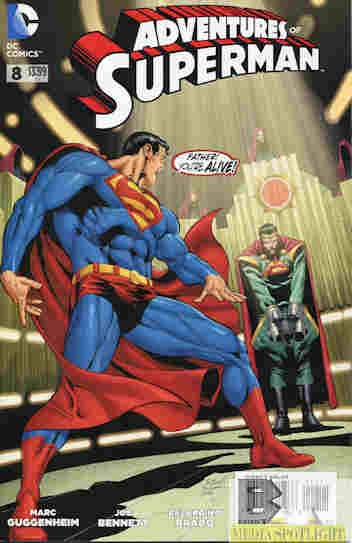
I’m starting to see a trend that bothers me, and it’s not just from the usual suspects. I understand where they’re coming from, but in a sense there’s a group of modern media critics in the superhero circles that don’t realize they’re doing the same thing as the Hollywood culture when it comes to superheroes and other cultural icons of fictional heroism like Indiana Jones or Luke Skywalker. They’re following the suggestion of Kylo Ren:
Only in their case it’s giving up. The commentary is “the stewards of your nostalgic favorites have culturally ruined these corporately owned characters, so forget them and create new characters”. I’m all for creating new characters. If the current writers, editors, directors, and whomever else gets blamed along the line refuse to do what these characters have come to stand for, then by all means create the characters that do what they used to.
That doesn’t mean we as fans have to completely abandon those characters, many of whom are recognized around the world. That’s why the usual suspects want to change them, either for some sociopolitical agenda or more often their own egos and preferences, using the culture war as a shield for their “improvements”. That’s also what they want. People who don’t follow the patterns of media and storytelling are used to seeing Superman and thinking they know what to expect. If they like that, they’re going to tune in. If not, they’ll go elsewhere and not realize these heroes no longer act heroic because the current creative team doesn’t believe in heroes, or at least doesn’t want you to. (Conspiracy theory goes here.) So they want you to give up, and there’s a very good reason we shouldn’t. The video I posted today is tied into that, so if you missed Real Fake Wizard’s commentary, go watch it now (it should open in a new tab) and come back here while I build off of that and explain why we need to be the ones protecting our heroes this time.
First, answer this: why do we know who Superman is? I’m not going to answer here. Legit question: why do we know Superman and why is he so important in pop and even normal culture? Okay…so why not Iman the Amazing Man? Why do we know Batman but not The Clock? When we think of Iron Man why is it Tony Stark in a suit of armor instead of Hugh Hazzard inside his robot named Bozo? There was a Daredevil and a Wonder Man in the Golden age but neither of them were related to the Marvel characters. Going back to Superman, name me any other character that appeared in Action Comics #1? Even diehard comic fans might know Zatara, but they’ll only know about him because of his more famous daughter, Zatanna of the Justice League, who sometimes hangs out with Batman or John Constantine. She was in my first Justice League Of America comic and managed to show up elsewhere in cartoons, and I still couldn’t tell you much about her.
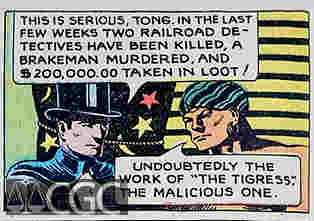
“Do you know me? Would you get an ‘American Express’ reference?”
Is it because Superman and Batman had cartoons, radio dramas, or serials? Well, Batman only had the last one outside of a guest appearance on the Superman radio “transcription feature”. Captain America and Captain “Shazam” Marvel had serials, but they were altered from the comics, especially Captain America. Blue Beetle had a radio drama, but I bet you don’t even know which version of Dan Garret unless you followed the Golden Age comics on your own or through my reviews. Do you even know the difference between Dan Garret and Dan Garrett outside of the extra “t”? Even then the Blue Beetle you’re more likely to know is either Ted Kord or Jaime Reyes.
Something about the characters we know managed to escape the Golden Age of the 1940s and continued to be memorable in 2026. It’s not just “nostalgia” because how many of today’s kids are going to be nostalgic for comic books at all, nevermind superheroes. There are a few superhero shows for preschoolers and then…nothing. At least nothing hitting the cultural zeitgeist like Power Rangers or the Ninja Turtles or He-Man did in their days. Bravestarr is nostalgia. He-Man might be, and Power Rangers seems ready to disappear into the Morphin Grid. Nickelodeon isn’t doing very well with the Ninja Turtles if we’re honest, certainly not the height they had in the 1980s. My favorite era was the 2003 Turtles and even that didn’t reach the original heights. Transformers, conversely, is still at least a concept we can get refer to every time we see a vehicle turn into anything. It doesn’t even have to be a robot; convert to flight mode and we still won’t connect it to MASK, we’ll connect it to Transformers.
In all of these situations some publisher or studio or toy company just wanted to sell a book, show, or toy. The same is true for video games, but Nintendo pays more attention to how Mario and Luigi are depicted than DC does the Green Lanterns right now. Walt Disney knew how to keep Mickey Mouse popular with fans by keeping the character consistent, leading to the creation of Donald Duck to do what Mickey couldn’t be allowed to, while modern Disney fails to even care, much less keep the same lessons when it comes to Mickey, Donald, and crew, or the IPs they’ve grabbed like Star Wars and Marvel. It’s clear they don’t care, and it follows that the fans don’t care about their version…because they’re version wants to replace the old heroes with new heroes they created. That way they get the royalties, they get the praise (or so they think and hope) of their characters becoming the new cultural icons, whether they’re trying to push a message or use the message pushers to keep them immune to criticism when what they really want is to just replace those characters with their characters. Again, check out Real Fake Wizard’s video.
Let’s then go back to my earlier question and ask a different one: why does Superman, Batman, Iron Man Tony Stark, or Daredevil Matt Murdock, matter to you? Are they just stories owned by a corporation, or do you remember a time when those characters were well written, had a message you could agree with, or could relate to those characters even if you weren’t yourself fighting crime? Tony Stark has a health issue. Does it matter if it’s yours? He regrets things he did in his past. Do you have to have your weapons used by horrible people to not relate to that? Why didn’t Steel connect with you when that was part of his backstory, not a later retcon? Is Superman less inspirational or Batman less cathartic because they’re owned by Warner Brothers or because you aren’t superpowered or filthy rich?
Choose a Green Lantern. Does he or she have to “look like me” to matter? Jessica Cruz’s social anxiety is something I relate to despite not being as bad as her, while I think Kyle Rayner is the best person to use the ring due to his being an artist and a geek, thus allowing him to having the strongest imagination to fully utilize the light construct creations. Hal was inspirational with the strongest willpower (why he’s the “greatest Green Lantern” in-universe), John was cool, Guy Gardner…was there, and I know nothing about Simon Baz beyond his depiction of wearing a ski mask and carrying a light construct gun because they couldn’t fit ALL the racist stereotypes in the design. I see none of that in any promotional material, creator interview, or deep dive review for HBO Max’s Greenless Lanterns.
The thing is these characters became popular because enough people needed or wanted something they offered. They grew beyond their corporate roots, but the people running the shows literally and figurately never made those connections. The corporations, and none of the everlasting characters were created by a large corporation, don’t understand that. National Comics wasn’t Warner Brothers. They bought National Comics because…wait, what is that, Google AI?
Warner Bros. did not buy DC Comics directly; instead, a parent company named Kinney National Company bought DC’s publisher in 1967 and bought Warner Bros. in 1969. (source is listed as Quora)
So if that is the case, and you can never fully tell with a Google AI search alone, they just had it. It wasn’t the same as when they bought, and ruined, Atari, the first well known video game company. Or when Disney bought Marvel a few years ago, starting the same trend WB did with Atari through different mistakes. Marvel still has a chance, but it means that those of us who enjoy these characters, and admittedly I’m more of a DC guy, need to find a better way to let the corpos know how they’re screwing up.
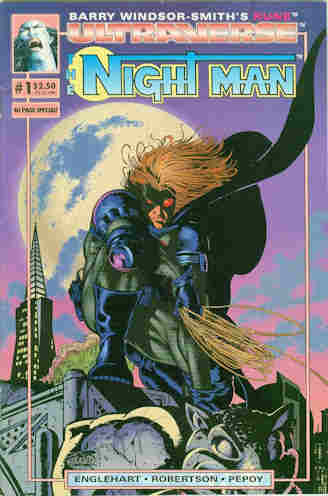
He had a TV show, by Glen Larson of all people, and he still isn’t as famous as Battlestar Galactica. Or even Manimal, and he made a guest apperance.
That means we have to somehow get past the marketing people who listen to the wrong advocates. Consultants like Sweet Baby Inc in the video game field don’t have fan interests in mind. Alex Kurtzman, who outright said his goal wasn’t to make Star Trek but use it to “send a message” doesn’t have fan interests in mind. Damon Lindelof, who just wants to use a Brand to tell his stories and has a surface level view of what an adaptation is doesn’t have fan interest in mind. I’m not sure they have anyone’s interest in mind outside of the “cool kids”, the award committees, and their likeminded everything for meeeeeeeeeee types. The corporations and the marketing people listen to the wrong folks and all the fans can think to do is make angry posts on social media.
Making new stuff that did what the characters used to–come to think of it, let me write that again. Making new stuff that did what the characters used to is a good thing. I emphasized that because it’s the important thing. Not to trash either creator and Eric July and Ethan Van Sciver may not like each other right now, but does Isom or Cyberfrog do for people what any other character on this list does to as large a group internationally? Maybe years in the future they might, and even July will tell you these classic characters earned their place over decades, but look at all the characters that didn’t in the past, or the ones that didn’t get a start in the present! Where Christian media often fails isn’t that they tried to create an alternative, but that it’s all the made: an alternative. Nothing stood out beyond that. Whatever it was that you were thinking made Superman, Batman, Spider-Man, or the modern versions of Blue Beetle, Daredevil, or Iron Man popular through multiple generations needs to be in those new characters. An alternative needs to do more than exist. People need to find out about them, but they also have to care.
That has to go beyond the creators’ fanbases or comic and superhero fans, and into the general populace. People who don’t bury themselves in superhero comics will go to a Superman or Spider-Man movie because they do like the characters and they do something for enough individuals. Pleasing the fans will lead to sales of merchandise, streaming, home video, and maybe the source material. All money in the bank that right now the studios and their corporate overlords aren’t getting. If the characters stopped being those things, then it’s up to fans to explain to the right people why those characters lasted long enough to make yet another movie, show, or game based on them. Meanwhile, the viewer who liked past Superman movies and shows while not being a fanboy/fangirl will not care about what Zack Snyder or James Gunn did with their namesakes.
The casual audiences aren’t going to know why. They don’t go over why stories matter to them because it’s not their main interest. They just know they liked or didn’t like something and moved on to their other hobbies. We need to get the word out without attacking actors. We can push back by trying to explain why they’re wrong, though they won’t listen. The directors and screenwriters don’t care, so we need to let the people who hire them why they should bring in creators that do. They don’t even have to be fans, but they need to be the right person for the job who respect the material and the genre. If the creators who don’t care want to create an alternative, let them. Convince the studios to make their stuff just to keep them away from ours. (Meaning the Mad Hatter in that one episode of Batman: The Animated Series kind of had the right idea.)
And since a lot of these creators WANT US to emphasize with the villains, that’s kind of fitting.
One of the reasons we gravitated to these heroes of the past is that they didn’t give up. They found a way to overcome. Replacing those heroes is exactly what the current bad stewards want to do, and critics who insist on the same thing are just part of the problem rather than the full solution. They might be owned by a corporation who is too soulless to understand what they have, so we reach them in ways they understand. The end goal should be to restore those characters AND create new ones for someone else to connect to, see if they add on the culture or become flashes in the pan. I’m all for creating new characters, finding new audiences, and telling our stories, but I want those who are ruining cultural icons to do the same, if only to allow those who want to bring the classic characters back to their heroic status a chance to remind us why some of these characters were around since there was only one World War. I want the things I loved, that inspired me as a person and a creator, to be that for someone else, while filling gaps with new stories and character. It’s not one or the other. And if they do fade away, it should be because they couldn’t or could no longer meld with the world, not that some creator tried to change what they are and what they stand for in hopes of changing the world.
Make new things, restore what went wrong, and still make new things. That’s how the world works everywhere else. Why not the stories that inspire us to be better, give us catharsis for the things we can’t handle, and bring us together because of the things we mutually love? I thought that’s what storytelling was about.




I’ve heard these people since 2014, at least. They probably predate that time period but that was my first encounter with the argument to kill the past.
As before, my answer is: “No.”
LikeLiked by 1 person
[…] reading list. Not that any of these characters are all that memorable, going back to a discussion earlier this week on why some characters make it and why they’re worth defending. Should any of these forgotten […]
LikeLike